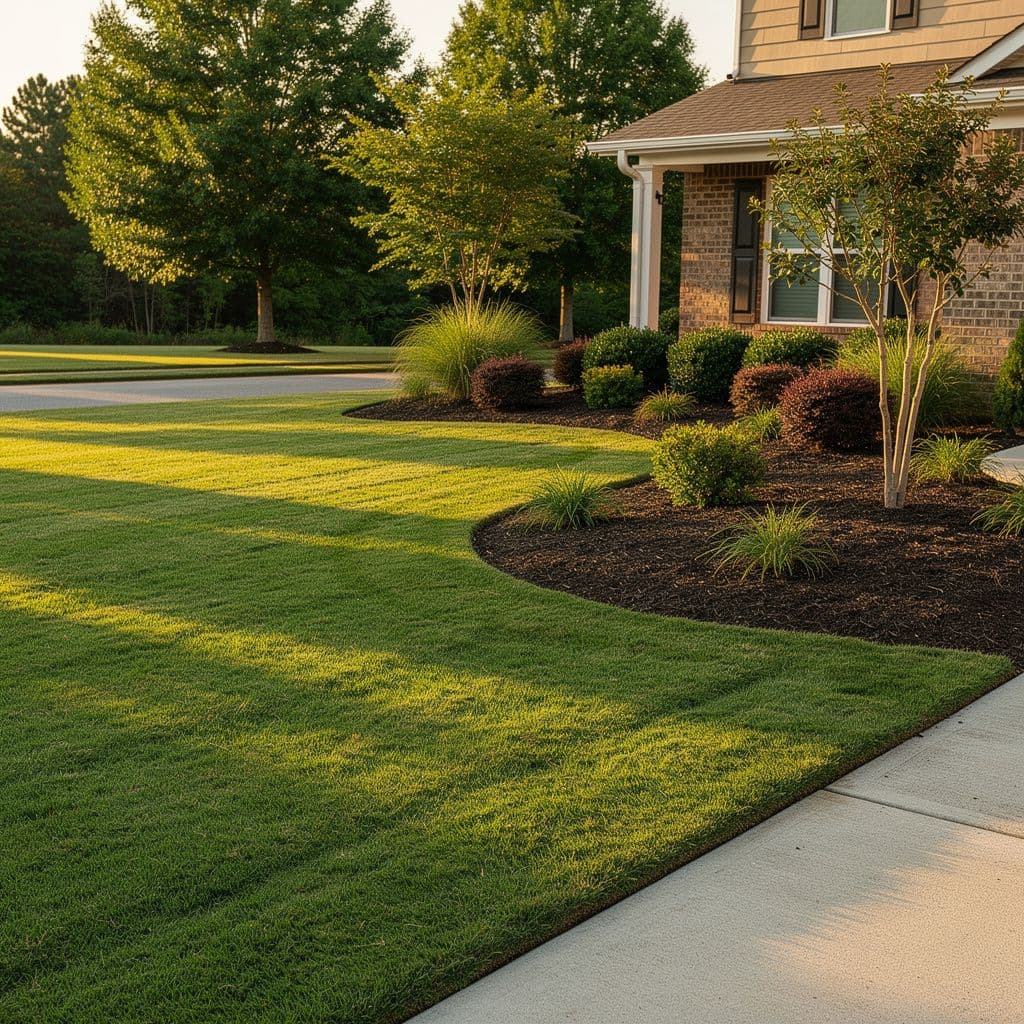
August Yard Maintenance Checklist for Henry County: 15 Essential Tasks for Your Lawn and Landscape
Published: July 21, 2026
August is the bridge month for Henry County homeowners. The brutal July heat has taken its toll on your lawn, your landscape beds are looking ragged, and fall is right around the corner — but it's not here yet. What you do in August determines whether your property powers into fall looking healthy and vibrant or limps in looking patchy, brown, and exhausted.
If you've been searching for "lawn service near me," "landscaping near me," or "yard maintenance services" in Locust Grove, McDonough, Stockbridge, or Hampton, this checklist gives you the exact tasks that matter most right now. No theory, no fluff — just the specific actions that keep your entire property looking its best during the toughest stretch of the Georgia summer.
Whether you handle your own property maintenance or work with a professional lawn care service, these fifteen tasks will protect your investment and set up your yard for a strong fall season.
Why August Maintenance Matters More Than You Think
August in Henry County brings some of the most challenging conditions of the year for your property. After three solid months of summer heat, everything in your yard is stressed — and August doesn't bring relief. Here's what your property is up against:
- Sustained heat: Daytime temperatures still regularly exceed 90°F, and soil temperatures in Georgia's heavy clay remain in the 85°F+ range that stresses root systems
- Cumulative soil compaction: Months of foot traffic, mowing equipment, and afternoon thunderstorms have compressed clay soil to near-concrete density
- Peak pest activity: Fall armyworms, white grubs, and chinch bugs are at their most destructive in August — a lawn that looked great in June can be destroyed in 48 hours
- Weed seed distribution: Crabgrass, nutsedge, and broadleaf weeds are actively dropping seeds that will germinate next spring unless you intervene now
- Landscape bed decline: Mulch has decomposed and thinned, summer annuals are fading, and perennials need deadheading
- Moisture volatility: Afternoon thunderstorms become less predictable in August, creating periods of drought punctuated by heavy downpours
The homeowners with the best-looking properties in Henry County aren't lucky. They're strategic. They know that August maintenance prevents September problems, and that the work you do (or don't do) right now directly impacts how your yard looks for the next six months.
Lawn Care Tasks for August
Task 1: Maintain Raised Mowing Heights
Keep your mower at the elevated summer setting through all of August. This is not the time to lower your deck — the heat is still intense and your grass needs every advantage.
Recommended August mowing heights for Henry County grass types:
- Bermuda grass: 2 to 2.5 inches (raised from the 1.5-inch spring setting)
- Zoysia grass: 2 to 2.5 inches
- Tall Fescue: 3.5 to 4 inches
- Centipede grass: 1.5 to 2 inches
Taller grass shades the soil surface, reduces moisture evaporation, encourages deeper root growth, and helps your lawn tolerate the heat stress that peaks in August. Continue mowing every 5 to 7 days for warm-season grasses and every 7 to 10 days for fescue.
Critical rule: Never remove more than one-third of the grass blade height in a single mowing. Cutting too much at once shocks the plant and triggers a stress response that can take weeks of recovery. If you've missed a week due to rain or travel, raise your mower rather than cutting back to the original height — then gradually lower it over subsequent cuts.
Keep those blades sharp. Dull blades tear grass rather than cutting it cleanly, creating ragged edges that lose moisture and invite disease. Sharpen every 20 to 25 mowing hours during summer.
Task 2: Monitor Daily for Fall Armyworms
August is peak armyworm season in Henry County, and these pests are the single most destructive threat to Georgia lawns. A fall armyworm infestation can transform a lush, green lawn into a brown, devastated patch in 48 to 72 hours.
What to look for:
- Brown patches that appear seemingly overnight and expand rapidly
- Flocks of birds feeding on your lawn (they're eating the caterpillars)
- Grass blades with chewed or ragged edges
- Small green, brown, or black caterpillars (1 to 1.5 inches long) on the grass surface, especially in the early morning or evening
What to do: If you spot armyworms, immediate action is critical. A professional lawn care service can apply a curative insecticide treatment within 24 hours that stops the damage before it spreads. Waiting even one extra day can mean the difference between a minor spot treatment and a full lawn renovation.
Read our detailed fall armyworm protection guide for identification photos, treatment options, and prevention strategies specific to Henry County.
Task 3: Practice Deep, Infrequent Watering
Your August lawn needs approximately 1 to 1.5 inches of water per week from rainfall, irrigation, or a combination. The strategy that produces the healthiest lawn is deep, infrequent watering — two to three sessions per week rather than daily shallow sprinkling.
Deep watering encourages grass roots to grow deeper into the soil, making the lawn more drought-resistant. Daily shallow watering trains roots to stay near the surface, where they dry out quickly and become dependent on constant moisture.
Best practices:
- Water between 5:00 AM and 9:00 AM to minimize evaporation and give grass blades time to dry during the day
- Never water in the evening — wet grass overnight is the primary cause of fungal disease in Georgia lawns
- If you have an irrigation system, verify coverage by placing straight-sided containers (like tuna cans) around your yard and measuring water depth after a cycle
- Check irrigation heads for clogs, misalignment, or broken components
For detailed irrigation scheduling and troubleshooting, see our complete lawn irrigation guide or our guide on how often to water your lawn in Georgia.
Task 4: Spot-Treat Weeds Strategically
August is not the time for broadcast herbicide applications — temperatures are too high, and you risk volatilization that can damage desirable plants. Instead, take a targeted approach:
- Nutsedge: Use a sedge-specific herbicide containing halosulfuron or sulfentrazone. Standard broadleaf killers won't touch it. Apply in early evening when temperatures begin to drop.
- Crabgrass: Hand-pull isolated plants before they drop seed. Each crabgrass plant can produce up to 150,000 seeds.
- Spurge and chamberbitter: Spot-treat with a broadleaf herbicide using a wipe applicator or precision sprayer.
- Dallisgrass and bahiagrass: These tough perennial grasses require professional treatment — DIY products are largely ineffective.
For a comprehensive year-round weed control strategy, read our complete weed control guide or learn about our professional weed control services serving Locust Grove, Stockbridge, McDonough, and all of Henry County.
Task 5: Hold Off on Fertilizer — With One Exception
For warm-season grasses (Bermuda, Zoysia, Centipede), skip fertilizer in August unless your lawn is showing clear signs of nitrogen deficiency — pale green or yellowish color, slow recovery from damage, or thinning coverage. Applying nitrogen during peak heat forces top growth at the expense of root development and significantly increases the risk of fungal disease.
The exception: If your soil test indicates a deficiency and your lawn's color has shifted dramatically, a slow-release nitrogen product applied at half the normal rate can help without triggering excessive growth. But this should only be done by a knowledgeable professional.
For Fescue lawns: Do not fertilize in August under any circumstances. Your fall fertilization window opens in mid-September. Now is the time to schedule fall lawn treatments with a professional service — wait times increase as September approaches.
Landscape and Bed Maintenance Tasks for August
Task 6: Refresh Mulch in Landscape Beds
By mid-August, your spring mulch application has likely decomposed significantly, thinned to less than an inch in places, and faded from rich brown to pale gray. A mid-summer mulch refresh is one of the highest-impact, lowest-cost improvements you can make to your property's appearance.
A fresh 2-inch layer of mulch provides three critical benefits:
- Weed suppression: Fresh mulch blocks sunlight from reaching weed seeds in the soil, dramatically reducing germination
- Moisture retention: Mulch acts as an insulating blanket, reducing water evaporation from the soil surface by up to 50% during August heat
- Root temperature regulation: Mulch keeps plant roots 10 to 15 degrees cooler than bare soil, which is especially important in Henry County's heavy clay that holds heat
Use double-shredded hardwood mulch for most landscape applications. For acid-loving plants like azaleas, camellias, hydrangeas, and blueberries, pine straw is an excellent alternative that also adds organic matter to the soil as it breaks down.
Critical detail: Never pile mulch against plant stems or tree trunks. This practice — known as "volcano mulching" — causes bark rot, invites insect pests, and promotes fungal diseases. Keep a 2 to 3-inch gap around the base of every plant.
Task 7: Prune Summer-Flowering Shrubs After Bloom
August is the correct time to prune shrubs that have finished their summer bloom cycle. Pruning immediately after flowering allows the plant to redirect energy into root development and new growth before dormancy.
Shrubs to prune in August in Henry County:
- Crape myrtles: Remove spent bloom clusters to encourage a second flush of flowers. Light tip pruning is fine — never "top" crape myrtles (the controversial practice called "crape murder" that destroys their natural form)
- Abelia: Shape and reduce size after the main flush of flowers fades
- Butterfly bush (Buddleja): Cut back spent flower spikes to encourage continued blooming
- Rose of Sharon: Light pruning to control size and shape
- Hydrangeas (panicle and smooth types): Light shaping only — avoid heavy pruning
Do NOT prune these in August: Azaleas, camellias, rhododendrons, forsythia, and other spring-flowering shrubs have already set their buds for next year. Pruning now removes next spring's flowers. Wait until immediately after they bloom next year.
For professional shrub and hedge care, our trimming services cover all of Henry County with proper technique and timing.
Task 8: Clean and Edge Landscape Beds
Take a slow walkthrough of every landscape bed on your property with a critical eye. By August, beds accumulate a surprising amount of debris and unwanted growth:
- Remove dead or dying annuals — summer heat has likely taken its toll on petunias, impatiens, and other warm-season annuals
- Cut back spent perennial foliage — plants like daylilies, coneflowers, and black-eyed Susans benefit from deadheading
- Clear fallen leaves and branches — debris harbors pests and fungal spores
- Pull established weeds — get them before they drop seed
- Remove volunteer trees and invasive seedlings — maples, sweetgums, and briars pop up everywhere in Henry County beds
- Redefine bed edges — use a spade to create clean, crisp lines between beds and lawn
Clean, well-edged beds dramatically improve curb appeal and make the entire property look maintained — even from the street. This is especially important if you're considering selling your home; potential buyers form their first impression before they ever step inside.
Task 9: Audit Irrigation for Landscape Beds
Landscape plants have different water requirements than turf grass, and August is when irrigation problems become obvious. Walk your beds and look for these warning signs:
- Wilting during the hottest part of the day — some wilting is normal, but plants that don't recover by evening need more water
- Yellowing lower leaves on established shrubs — often indicates overwatering in clay soil, which suffocates roots
- Dry, cracked soil at the base of plants — underwatering, common in beds that irrigation heads don't reach
- Brown leaf margins (edges) — salt buildup from over-fertilization or water stress
Adjust irrigation zones for beds separately from lawn zones if possible. New plantings from spring need consistent moisture through August to finish establishing root systems before winter dormancy. A professional landscaping service can evaluate your irrigation setup and recommend improvements.
Tree and Hardscape Tasks for August
Task 10: Inspect Trees for Storm Damage and Health Hazards
August brings some of the most severe thunderstorms of the year to Henry County. After every storm — and at least once mid-month regardless — walk your property and inspect your trees:
What to check:
- Hanging branches partially broken but still caught in the canopy — these are "widow makers" that can fall without warning
- Cracked or split limbs at branch unions
- Trees that have started leaning more than they were previously (possible root failure)
- Signs of decay: mushroom growth on the trunk, hollow sounds when tapping, large dead branches in the canopy
- Bark damage: peeling, cracking, or unusual sap flow
Trees near your home, driveway, power lines, or neighbor's property should be evaluated by a certified tree service professional. The cost of preventive tree work is a fraction of the cost of storm damage cleanup, insurance deductibles, or property damage.
For hazardous trees requiring removal, our team provides professional tree removal and storm damage cleanup throughout Henry County.
Task 11: Clean and Inspect Hardscape Surfaces
Your hardscaping — patios, walkways, driveways, retaining walls, and fire pit areas — takes a beating during Georgia summers. August is an ideal time for inspection and cleaning:
- Sweep and pressure wash paved surfaces to remove algae, mildew, and leaf stains that become slippery when wet
- Check pavers and stones for settling, shifting, or cracking — these issues worsen over winter as freeze-thaw cycles heave the ground
- Inspect retaining walls for bowing, leaning, or separation between blocks — early intervention prevents catastrophic failure
- Clean fire pit — remove ash, check for rust on metal components, and verify drainage
- Test outdoor lighting — replace burned-out bulbs, check for water damage in fixtures, and adjust timer settings as days get shorter
- Inspect drainage features — French drains, channel drains, and dry creek beds should be cleared of debris before fall rains arrive
Small repairs now cost a fraction of what you'll pay for major reconstruction later. For new hardscape installations — including patios, retaining walls, and fire pits — schedule consultations now so construction can begin when temperatures drop in September.
Planning Tasks for August
Task 12: Book Fall Aeration and Overseeding Now
If you do only one thing on this checklist, make it this: call a professional lawn care company and schedule fall core aeration. Do it before August ends.
Why the urgency?
The optimal window for core aeration and Fescue overseeding in Henry County is mid-September through late October. During this window, soil temperatures are warm enough for seed germination but air temperatures are cool enough to prevent heat stress. Miss this window and you're waiting an entire year.
Reputable lawn care companies in Henry County fill their fall aeration schedules by late August. If you wait until September to call, you'll either get pushed to October (still workable but not ideal) or November (too late — seed won't establish before winter).
For warm-season lawns (Bermuda, Zoysia): Schedule aeration for late August through September while the grass is still actively growing and can recover quickly from the process. See our complete aeration and overseeding guide for details.
Task 13: Plan Fall Landscape Projects
August is the planning month for fall landscape installations. Fall is the best season for planting in Georgia — cooler temperatures reduce transplant shock, and plants have months to establish root systems before next summer's heat arrives.
Start getting quotes in August for:
- New landscape beds or bed expansions around your property
- Tree and shrub planting — October and November are prime planting months
- Hardscape installations — patios, walkways, retaining walls, and outdoor living spaces
- Lawn renovation — for lawns that have declined over the summer and need seeding or sodding
- Drainage improvements — before fall and winter rains arrive
Our landscape renovation planning guide walks through the planning process step by step, from initial concept to final installation.
Task 14: Purchase Fall Lawn Care Supplies
If you handle your own lawn care, buy these items now. Quality products sell out by September in Henry County:
- Fescue grass seed — purchase high-quality, certified seed (Turf-Type Tall Fescue blend) before supplies dwindle
- Fall pre-emergent herbicide — apply in late September to prevent winter weeds (annual bluegrass, henbit, chickweed)
- Fall fertilizer — look for a product with a lower nitrogen ratio than your summer fertilizer
- Pine straw or mulch — for the fall refresh that every landscape bed needs
- Spring-flowering bulbs — daffodils, tulips, and hyacinths arrive at garden centers in September
Task 15: Evaluate Your Property Care Strategy
August is a natural checkpoint — the midpoint of the lawn care season — to step back and honestly evaluate whether your current approach is working.
Ask yourself:
- Does your lawn look as good as it did in May, or has it declined over the summer?
- Are your landscape beds contributing to your property's curb appeal, or do they look neglected?
- Have you spent more time and money on lawn care than you budgeted for?
- Are you seeing the same problems — weeds, bare spots, pest damage — that you dealt with last year?
- Would you rather spend your August weekends doing yard work in 95-degree heat, or doing literally anything else?
If any of these questions hit close to home, professional property maintenance services might be the smartest investment you make this year. A comprehensive service plan handles every item on this checklist — plus dozens of other tasks — for one predictable monthly cost. No more buying products at Home Depot that you use once and store in the garage. No more guessing at application rates. No more losing your weekends to the yard.
Professional Help for Your August Property Maintenance
Let's be honest: completing all fifteen tasks on this checklist takes real time. Significant time. In August heat. When most people in Henry County would rather be inside, at the pool, at Tanger Outlets in Locust Grove, or at Southern Belle Farm in McDonough rather than pulling weeds and spreading mulch in 95-degree weather.
That's where Hedgecoth Property Solutions comes in.
We provide comprehensive lawn care, landscaping, property maintenance, hardscaping, tree services, and leaf removal throughout Henry County — including Locust Grove, McDonough, Stockbridge, Hampton, Jonesboro, and Morrow. Our team handles every item on this August checklist and every other seasonal task your property needs throughout the year.
One call. One company. One predictable monthly plan that keeps your property looking its best no matter what Georgia weather throws at it.
Call 770-490-9519 or visit our contact page to schedule your free property evaluation. We'll assess your lawn and landscape, identify what needs attention right now, and build a customized service plan that fits your property and your budget.
Don't let August undo everything you've invested in your yard this year. Let's keep your property looking exceptional — through summer, into fall, and year-round.
Frequently Asked Questions About August Yard Maintenance in Henry County
How often should I mow my lawn in August in Georgia?
Most Henry County lawns need mowing every 5 to 7 days in August for warm-season grasses like Bermuda and Zoysia. Fescue lawns may only need mowing every 7 to 10 days as growth slows in the heat. Always follow the one-third rule: never remove more than one-third of the grass blade height per mowing. Keep your mower blade sharp and set to the tallest recommended height for your grass type.
Should I fertilize my lawn in August in Henry County?
For warm-season grasses (Bermuda, Zoysia, Centipede), skip fertilizer in August unless the lawn is clearly nitrogen-deficient. Applying nitrogen during peak heat increases fungal disease risk and stresses roots. For Fescue lawns, do not fertilize in August — wait until mid-September when soil temperatures drop. If your lawn looks pale or yellow, a soil test can determine whether nutrients are actually lacking.
When should I book fall aeration and overseeding in Henry County?
Schedule fall aeration by mid-August to guarantee a service slot. The optimal window for core aeration and Fescue overseeding in Henry County is mid-September through late October. Waiting too late means cooler nights and shorter days that slow seed germination and root establishment. For warm-season lawns, book aeration for late August through September. Call 770-490-9519 to schedule.
How do I protect my lawn from fall armyworms in August?
Check your lawn daily in August for brown patches that appear overnight, flocks of birds feeding on the grass, or visible caterpillars on the surface. Fall armyworms can destroy a healthy lawn in 48 hours. If you spot signs of infestation, contact a professional lawn care service immediately for curative insecticide treatment. The sooner you act, the less damage occurs.
Should I refresh mulch in my landscape beds in August?
Yes, a mid-summer mulch refresh is highly beneficial if your spring application has thinned to less than 2 inches. Fresh mulch suppresses weeds, retains soil moisture, and regulates root temperature during August heat. Apply a 2-inch layer of hardwood mulch, keeping it pulled back 2 to 3 inches from plant stems and tree trunks. For acid-loving plants like azaleas and camellias, pine straw is an excellent alternative.
What fall landscape projects should I start planning in August?
August is the ideal month to plan and request quotes for fall landscape installations. Priority projects include tree and shrub planting (October is prime planting season in Georgia), hardscape installations like patios and retaining walls, landscape bed redesigns or expansions, lawn renovation projects, and drainage improvements. Starting in August ensures work can begin when temperatures moderate in September and October.
Serving Locust Grove, McDonough, Stockbridge, Hampton, Jonesboro, Morrow, and all of Henry County, GA. Licensed, insured, and locally owned. Call 770-490-9519 for a free estimate.