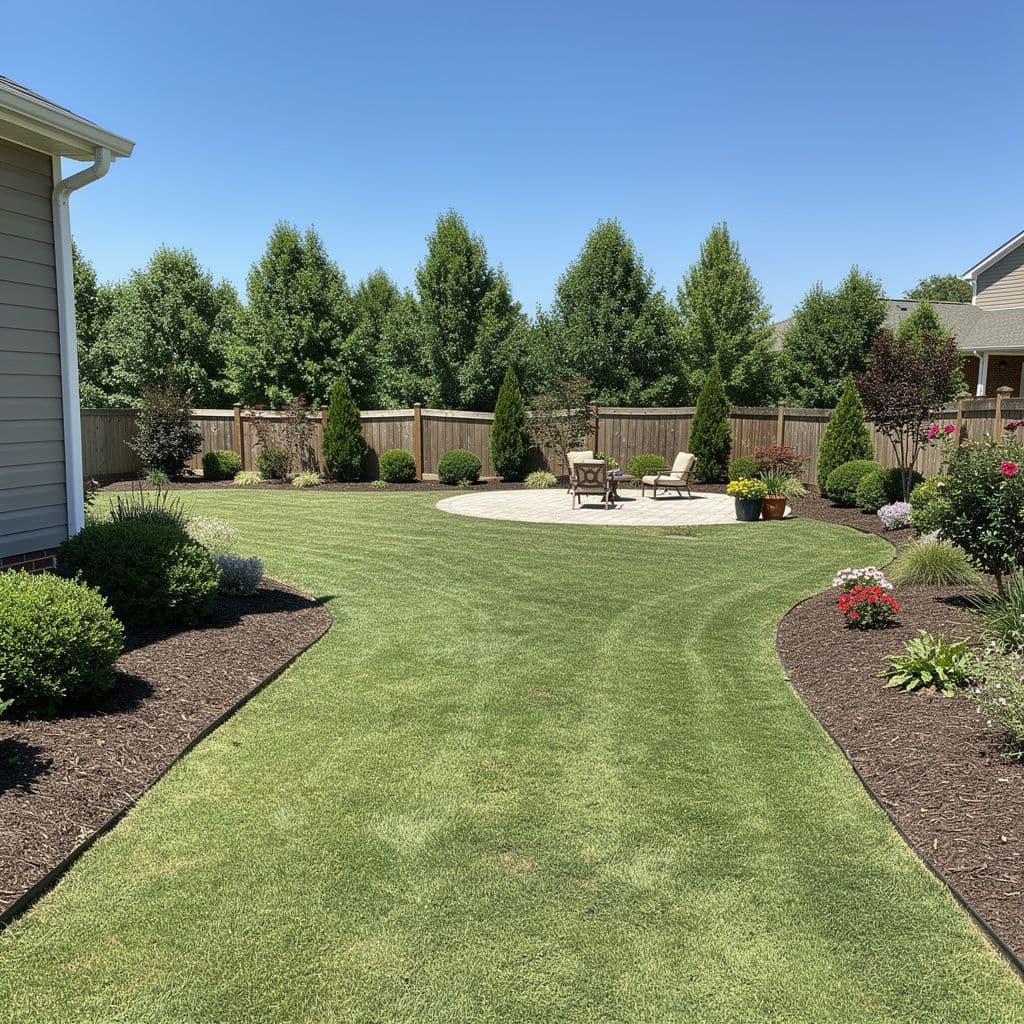
Affordable Backyard Cleanup and Landscaping Services in Hampton, GA
Updated August 31, 2026 — fall cleanup season is here. Jump to the Fall 2026 section below, or read the full cost guide.
Your backyard should be your retreat — the place where you grill on weekends, where the kids run through the sprinkler, where you unwind after a long day. But if you're like most Hampton homeowners, your backyard has probably turned into something closer to a project than a paradise.
Overgrown shrubs along the fence line. Weeds creeping through the flower beds. A patio that looked great five years ago but now needs serious attention. Branches from that oak tree scattered across the yard after every storm. The grass is patchy, the mulch is thin, and the whole space just feels tired.
You know it needs work. But you also know that backyard renovations can get expensive fast — and you're not trying to spend twenty thousand dollars turning your quarter-acre lot into a resort. You want practical, affordable improvements that make a real difference. Things you can actually enjoy without financing.
That's exactly what this guide covers. We'll walk through realistic backyard cleanup and landscaping options for Hampton, GA homeowners — what they cost, what delivers the most bang for your buck, and when it makes sense to call a professional versus tackling it yourself.
Fall 2026: The Best Window for Backyard Cleanup in Hampton
If you're reading this as summer winds down, your timing is right. September through early November is the best stretch of the year for backyard cleanup and landscaping work in Hampton:
- The growth slows but the ground's still workable — easier clearing, easier digging, less water stress on new plants.
- Storm-damage season piles up — late-summer storms leave branches and debris that smother grass if they sit all winter.
- Bed prep now = spring payoff — mulch refresh, hedge reshaping, and cool-season planting done in fall come back doubled in April.
- Scheduling is easier — before the November leaf-drop rush, Hampton crews have more availability and shorter lead times.
Hedgecoth Property Solutions runs fall cleanup and landscaping visits across Hampton, Locust Grove, McDonough, and Stockbridge — free on-site estimates, no contracts required. Call 770-490-9519, or keep reading for the full cost-and-options guide.
Why Hampton Backyards Need Special Attention
Hampton sits in the heart of Henry County, and its mix of established neighborhoods and newer developments creates some unique yard challenges.
The Soil Reality: Georgia Red Clay
If you live in Hampton, you already know about the red clay. It's heavy, it compacts easily, and it holds water like a sponge after rain. This creates two big landscaping challenges:
Drainage problems. When clay soil gets saturated, water sits on the surface instead of draining through. This drowns plant roots, kills grass, and turns low spots into muddy swamps. Many Hampton yards — especially in newer subdivisions where topsoil was stripped during construction — have serious drainage issues that complicate landscaping.
Hard, compacted ground. When clay dries out, it turns almost concrete-hard. Plants struggle to push roots through it. Water runs off instead of soaking in. And digging — whether for planting shrubs, installing edging, or putting in a fire pit — becomes an exhausting chore.
The solution isn't fighting the clay. It's working with it: choosing the right plants, improving soil structure with organic matter, and designing landscapes that account for Henry County's soil reality.
Hampton's Growth Means Newer Yards Need More Help
Hampton has been one of the fastest-growing cities in Henry County over the past decade. New subdivisions have popped up along Highway 20 and near the Atlanta Motor Speedway area, bringing thousands of new homes — and thousands of new yards that need serious work.
Builders typically lay down sod, maybe add a few foundation shrubs, and call it done. But the underlying soil is compacted construction clay. The grading may not direct water away from the foundation properly. And the "landscaping" is often the bare minimum to pass inspection.
If your Hampton home is less than ten years old, your backyard probably needs more help than you think. The good news is that affordable cleanup and strategic landscaping improvements can transform even the most barren builder-grade yard into something you'll actually enjoy.
Climate Considerations for Hampton Yards
Hampton's USDA Zone 8a climate means hot, humid summers and relatively mild winters. This affects backyard planning in several ways:
Summer heat limits plant choices. Plants that thrive in cooler climates simply won't survive a Georgia summer. You need heat-tolerant natives and adapted species that can handle 90+ degree days with high humidity.
Rainfall is feast or famine. Hampton gets about 48 inches of rain per year, but it comes in bursts. Spring and fall are typically wet; summer can bring drought or torrential downpours. Your landscaping needs to handle both extremes.
Growing season is long. Grass grows from April through October, which means maintenance is a seven-month commitment. Shrubs and hedges need trimming multiple times per season. A low-maintenance landscape design saves you time and money all year long.
Backyard Cleanup: What's Included and What It Costs
Before you can landscape, you probably need to clean up what's already there. Backyard cleanup is the foundation of any affordable yard improvement plan.
What a Professional Backyard Cleanup Includes
A thorough yard cleanup removes the accumulated mess and resets your outdoor space. Here's what's typically included:
Debris removal:
- Fallen branches and sticks
- Leaves and pine straw buildup
- Dead annuals and spent perennials
- Construction debris (if applicable)
- Old mulch that's decomposed into nothing
Overgrowth clearing:
- Trimming overgrown shrubs and hedges
- Cutting back vines (ivy, kudzu, jasmine)
- Removing sucker growth from trees
- Edge trimming along fences and structures
- Clearing fence lines and property boundaries
Weed elimination:
- Pulling or spraying weeds in beds
- Removing weeds from cracks in patios and walkways
- Treating weed-infested lawn areas
- Applying pre-emergent to prevent regrowth
Lawn assessment:
- Identifying bare spots and thin areas
- Checking for pest or disease damage
- Evaluating soil compaction
- Recommending next steps for lawn recovery
Pruning and shaping:
- Selective pruning of trees and shrubs
- Removing dead or diseased branches
- Shaping hedges and foundation plantings
- Cleaning up tree canopies for better light penetration
Backyard Cleanup Costs in Hampton, GA
Cleanup costs vary based on yard size, condition, and scope of work. Here's what Hampton homeowners can expect:
Light cleanup (minor debris, basic weeding, light pruning):
- Typical yard (0.25-0.5 acre): $150-$300
- Includes: debris removal, basic weeding, light pruning, cleanup haul-away
- Time: 2-4 hours
Moderate cleanup (overgrowth, heavy debris, significant weeding):
- Typical yard (0.25-0.5 acre): $300-$600
- Includes: everything in light cleanup plus shrub trimming, vine removal, bed renovation prep
- Time: 4-8 hours
Heavy cleanup (neglected yard, major overgrowth, storm damage):
- Typical yard (0.25-0.5 acre): $600-$1,200+
- Includes: everything above plus chain saw work, large debris removal, extensive bed renovation, grading corrections
- Time: 1-2 days with a crew
Factors that affect cost:
- Yard size (larger = more time and debris)
- How long since last cleanup (longer = more overgrowth)
- Accessibility (fenced yards, steep terrain, narrow gates)
- Debris volume (more to haul = higher disposal fees)
- Special conditions (poison ivy, invasive species, hazardous trees)
For an accurate estimate specific to your Hampton yard, contact Hedgecoth Property Solutions for a free assessment.
Affordable Landscaping Ideas for Hampton Yards
Once your backyard is cleaned up, you can start making strategic improvements. The key word here is strategic — you don't need to do everything at once. Here are the improvements that deliver the most visual impact per dollar spent.
1. Fresh Mulch and Bed Edging (Highest ROI)
If you do only one thing to improve your backyard, do this. Fresh mulch in defined beds transforms a yard's appearance overnight.
Why it works:
- Dark mulch contrasts with green grass and creates clean, defined spaces
- Edging creates a crisp line between beds and lawn (looks professional)
- Mulch suppresses weeds, retains moisture, and improves soil
- Instant visual upgrade — biggest bang for your buck
Cost:
- DIY: $100-$200 for materials (mulch, edging) for a typical yard
- Professional: $250-$500 including bed prep, edging installation, and mulch
- Hardwood mulch is the standard choice; pine straw is a budget alternative
Tips:
- Existing mulch color: brown mulch looks natural; black mulch looks dramatic; red mulch looks like 2005 — skip it
- Apply 2-3 inches (too thin = weeds; too thick = suffocates plants)
- Don't pile mulch against tree trunks (causes rot)
- Define bed edges with plastic or metal edging for a permanent clean line
2. Foundation Planting Refresh
Those builder-grade shrubs that came with your house? They're probably boxwoods or hollies planted too close together, already overgrown, and crowding each other out.
Affordable refresh options:
Option A: Renovate existing shrubs ($100-$300)
- Hard prune overgrown shrubs (removes 30-50% of growth)
- Remove dead or dying plants
- Shape remaining plants for natural form
- Add fresh mulch
- Result: Cleaner, more intentional look without buying new plants
Option B: Remove and replace ($300-$800)
- Remove old, overgrown shrubs
- Replace with appropriate-sized, low-maintenance varieties
- Consider native plants adapted to Hampton's climate
- Proper spacing for mature size (no crowding)
Best low-maintenance shrubs for Hampton:
- Dwarf Yaupon Holly (compact, heat-tolerant, no pruning needed)
- Carissa Holly (no berries, stays neat)
- Dwarf Gardenia (fragrant, compact)
- Loropetalum (colorful foliage, fast-growing)
- Indian Hawthorn (pink flowers, drought-tolerant)
3. Define a Sitting Area
You don't need a $15,000 paver patio to create an outdoor living space. A defined sitting area makes your backyard feel intentional and usable.
Budget options ($200-$800):
Gravel pad with edging:
- Excavate 4 inches, add landscape fabric, fill with pea gravel or decomposed granite
- Edge with steel, plastic, or pavers
- Add a fire pit, chairs, and a small table
- Cost: $200-$500 depending on size
Paver patio (small, DIY-friendly):
- 10x10 foot paver patio using basic concrete pavers
- Excavate, add base, level, install pavers, sweep in polymeric sand
- Cost: $400-$800 in materials
- Professional installation: $1,200-$2,500 (larger or more complex designs cost more)
Deck or platform:
- Pressure-treated lumber deck (ground level)
- 10x12 foot platform: $800-$1,500 materials
- Creates elevated sitting area, good for uneven yards
For professional patio installation in Hampton and throughout Henry County, Hedgecoth Property Solutions delivers quality work at fair prices.
4. Add Privacy Screening
Hampton's newer subdivisions often have minimal tree cover, meaning backyards feel exposed to neighbors. Affordable privacy solutions include:
Fast-growing privacy trees ($50-$150 per tree):
- Leyland Cypress (fast but disease-prone; plant with caution)
- Murray Cypress (better disease resistance, similar growth rate)
- Nellie Stevens Holly (dense, evergreen, moderate growth)
- Arborvitae 'Green Giant' (excellent choice, fast and disease-resistant)
Privacy hedges ($30-$75 per plant):
- Podocarpus (elegant, dense, heat-tolerant)
- Viburnum (fast-growing, drought-tolerant)
- Wax Myrtle (native, fast-growing, aromatic)
Spacing tip: Plant privacy trees 6-8 feet apart for hedging effect (closer = faster fill-in but more plants needed). For individual specimen trees, space 12-15 feet apart.
5. Install Landscape Lighting
Landscape lighting extends your backyard enjoyment into the evening and adds a surprising amount of perceived value. Solar lights have improved dramatically in recent years and offer the most affordable option.
Solar pathway lights ($5-$25 each):
- No wiring required, no electricity cost
- Stake into ground along pathways or bed edges
- 8-12 lights make a significant difference
- Replace batteries every 2-3 years
Low-voltage landscape lighting ($50-$200 per fixture + transformer):
- Professional-grade, brighter and more reliable than solar
- Requires transformer and wiring (can DIY or hire professional)
- Highlights trees, beds, and architectural features
- Transformer plugs into outdoor outlet
String lights ($20-$100):
- Outdoor-rated string lights across sitting areas
- Creates warm, inviting atmosphere
- Easy to install with posts or existing trees
- Replace bulbs as needed
6. Create a Fire Pit Area
A fire pit is one of the most popular backyard features — and one of the most affordable to install.
DIY fire pit ($100-$300):
- Pre-fabricated metal fire bowl on a gravel or paver base
- Portable, no construction required
- Good for occasional use
Built fire pit ($500-$1,500):
- Stone or brick construction
- Permanent feature, adds property value
- Gas insert optional ($300-$600 additional)
- Requires proper siting (away from structures, overhanging trees)
Safety notes:
- Check Hampton city ordinances regarding open burning and setbacks
- Keep fire pit at least 10 feet from structures and property lines
- Install on non-flammable surface (gravel, pavers, concrete)
- Have water source nearby
When to DIY vs. Hire a Professional
Not every backyard project requires professional help. But some projects absolutely do — and knowing the difference saves you money, time, and frustration.
DIY-Friendly Projects
These projects are reasonable for homeowners who are comfortable with basic tools and have a weekend to spare:
Mulching and bed maintenance: Buying bagged mulch and spreading it yourself is straightforward. The main challenge is volume — a typical Hampton yard needs 15-30 bags of mulch for full coverage. Bulk delivery is cheaper if you have a place to dump it.
Annual flower planting: Annuals (petunias, marigolds, begonias) are easy to plant and provide instant color. Just prepare the soil, plant at proper spacing, and water regularly.
Basic weeding and pruning: Hand-pulling weeds, pruning small shrubs, and deadheading flowers are all simple maintenance tasks. The key is doing them regularly before problems get out of hand.
Simple planting: Planting shrubs, trees, and perennials in prepared beds is a DIY project if you choose the right plants and plant them correctly. Call 811 before digging to mark underground utilities.
Installing solar lighting: No wiring, no expertise needed. Just stake them in the ground.
Projects Best Left to Professionals
These projects require expertise, equipment, or physical labor that makes DIY impractical or risky:
Large tree removal or trimming: Trees over 20 feet tall, trees near structures, or trees with significant decay should only be handled by insured professionals. Professional tree service is worth every penny when limbs are hanging over your roof.
Grading and drainage work: If your backyard has drainage problems — standing water, erosion, foundation runoff — proper correction requires heavy equipment, knowledge of grading principles, and sometimes permits. Done wrong, you can make problems worse.
Hardscape installation (patios, retaining walls): Patio installation and retaining wall construction require proper base preparation, leveling, and drainage. A poorly installed patio will settle, crack, and shift within a year or two.
Irrigation system installation or major repair: Underground irrigation systems require knowledge of water pressure, zone design, and proper head placement. A DIY irrigation system often has coverage gaps and efficiency problems.
Large-scale landscape renovation: If you're redesigning your entire backyard — removing all existing plants, regrading, installing new beds, hardscaping, and replanting — a professional landscape team can complete the project in days what would take you weeks of evenings and weekends.
The Real Cost of DIY
Many homeowners choose DIY to save money. But the real cost of DIY includes:
Time: A professional crew can complete a backyard cleanup in 4 hours that takes a homeowner two full weekends. What's your time worth?
Equipment: Renting a chipper, buying a quality chainsaw, renting a sod cutter — equipment costs add up fast. Professionals already have this equipment.
Mistakes: Planting the wrong plant in the wrong place, improper pruning that kills shrubs, poor drainage design that floods your yard — mistakes cost money to fix. Sometimes more than hiring a professional in the first place.
Physical risk: Backyard work is physically demanding. Heat exhaustion in Georgia summers, back injuries from heavy lifting, cuts and falls — these are real risks, especially for homeowners who aren't used to the work.
Disposal: Hauling away yard debris requires a truck or trailer and a trip to the dump. Professionals include disposal in their pricing.
For many Hampton homeowners, professional cleanup and landscaping actually costs similar to DIY when you factor in all the hidden costs — and delivers better results in a fraction of the time.
Seasonal Backyard Maintenance Calendar for Hampton, GA
Backyard maintenance isn't a one-time project — it's a year-round commitment. Here's a month-by-month guide to keeping your Hampton yard looking its best.
Spring (March-May)
March:
- Clean up winter debris (leaves, branches, dead growth)
- Cut back ornamental grasses and perennials
- Apply pre-emergent herbicide to beds
- Refresh mulch in beds
- Inspect irrigation system and make repairs
April:
- Plant new shrubs, trees, and perennials
- Begin regular mowing (weekly)
- Apply spring fertilizer to lawn
- Check for pest damage (aphids, scale on new growth)
May:
- Begin regular watering schedule
- Trim spring-flowering shrubs after bloom
- Install annuals for summer color
- Monitor for lawn diseases (brown patch)
Summer (June-August)
June:
- Raise mowing height for summer heat stress
- Apply slow-release fertilizer to beds
- Monitor irrigation (water deeply, infrequently)
- Begin pest monitoring (armyworms, Japanese beetles)
July:
- Maintain summer mowing height
- Water in early morning only
- Deadhead annuals for continued bloom
- Check for spider mites on shrubs
August:
- Continue summer maintenance
- Plan fall projects (patio, bed renovation, drainage)
- Order materials for fall installation
- Schedule fall aeration and overseeding
Fall (September-November)
September:
- Aerate and overseed lawn (cool-season grasses)
- Plant new trees and shrubs (ideal planting time)
- Apply fall fertilizer to lawn
- Begin leaf cleanup
October:
- Continue leaf removal (critical for lawn health)
- Plant spring-blooming bulbs
- Cut back perennials as they go dormant
- Clean and store garden tools
November:
- Final leaf cleanup
- Apply winter mulch
- Winterize irrigation system
- Plan next year's improvements
Winter (December-February)
December:
- Prune deciduous trees and shrubs (dormant season)
- Remove dead or hazardous trees
- Clean and sharpen tools
- Review yard plan for next year
January:
- Continue dormant pruning
- Plan spring projects
- Order seeds and plants for spring
- Check for winter damage after storms
February:
- Apply dormant oil to shrubs (pest prevention)
- Begin indoor seed starting
- Finalize spring plans and schedule services
- Watch for early spring weeds
Why Hampton Homeowners Choose Hedgecoth Property Solutions
Hedgecoth Property Solutions has been serving Hampton and the surrounding Henry County communities for years. We understand the specific challenges Hampton yards face — from the red clay soil to the builder-grade landscapes in newer developments to the drainage issues that plague flat lots.
What Sets Us Apart
We're local. We live and work in Henry County. We know the soil, the climate, the plant varieties that thrive here, and the ones that don't. We know which neighborhoods have drainage issues, which have tree canopy problems, and which have soil compaction from construction.
We're affordable. Our services are priced for real homeowners, not estates. We offer flexible service options — from one-time cleanups to ongoing property maintenance — so you get exactly what you need without paying for things you don't.
We're honest. We tell you what you need, not what makes us the most money. If a project is DIY-friendly, we'll tell you. If your yard needs work we don't do, we'll refer you to someone who does. Our pricing is transparent and upfront — no surprises.
We're full-service. From lawn care and cleanup to landscaping and tree service, we handle all your outdoor needs. One call, one company, one point of contact.
Our Service Area
We proudly serve:
- Hampton
- Locust Grove
- McDonough
- Stockbridge
- Jonesboro
- Morrow
- Throughout Henry County
If you're in or around Hampton, GA, we can help with your backyard cleanup and landscaping needs.
Our Process
Step 1: Free consultation. We visit your property, listen to your goals, assess your yard's condition, and discuss options. No pressure, no obligation.
Step 2: Written estimate. We provide a detailed, itemized quote. You know exactly what's included and what it costs before any work begins.
Step 3: Professional execution. Our experienced crew arrives on schedule, works efficiently, and cleans up thoroughly. We treat your property with respect.
Step 4: Follow-up. We check back to make sure you're satisfied. If any issues arise, we address them promptly.
Frequently Asked Questions About Backyard Cleanup and Landscaping in Hampton, GA
How much does backyard cleanup cost in Hampton, GA?
Backyard cleanup costs vary based on yard size and condition. Light cleanups (basic debris removal, weeding, light pruning) typically run $150-$300 for an average Hampton yard. Moderate cleanups with shrub trimming and bed renovation run $300-$600. Heavy cleanups involving major overgrowth or storm damage can run $600-$1,200+. Hedgecoth Property Solutions offers free estimates — call 770-490-9519 for a quote specific to your yard.
What's the cheapest way to improve my backyard?
The most cost-effective backyard improvements are: (1) Fresh mulch in defined beds ($100-$200 in materials), (2) Edging beds for a clean, professional look ($50-$150 in materials), (3) Removing overgrown or dead shrubs ($0 if you DIY), (4) String lights across sitting areas ($20-$100), and (5) Solar pathway lighting ($50-$150). These five improvements can transform a yard's appearance for under $500 total.
When is the best time to do backyard cleanup in Hampton?
Early spring (late February through March) and fall (October through November) are ideal for backyard cleanup. Spring cleanup removes winter debris and prepares beds for the growing season. Fall cleanup removes leaves, cuts back perennials, and prepares the yard for winter. However, cleanup can be done any time of year — the best time is whenever your yard needs it.
Do I need to be home for a backyard cleanup service?
No, you don't need to be home as long as we have access to the backyard (gate unlocked, dogs inside, etc.). Many of our Hampton customers schedule cleanups while they're at work. We take before and after photos, leave a note on your door when the work is complete, and send you an invoice. It's completely hassle-free.
Can you landscape a backyard on a budget?
Absolutely. Affordable landscaping is about prioritizing high-impact improvements and phasing the work over time. Instead of a $10,000 backyard renovation, start with cleanup and mulch ($300-$500), add a defined sitting area ($200-$800), install privacy trees ($200-$600), and refresh foundation plantings ($300-$800). A phased approach delivers results without overwhelming your budget.
How often should I have my yard professionally cleaned up?
Most Hampton homeowners benefit from two professional cleanups per year — one in spring and one in fall. Properties with large trees may need additional leaf removal in late fall. If you have regular maintenance service (weekly mowing, monthly bed maintenance), you may only need one annual deep cleanup. We offer both seasonal cleanups and ongoing maintenance plans.
What plants grow best in Hampton, GA backyards?
Hampton's Zone 8a climate and clay soil favor heat-tolerant, well-adapted plants. Top shrubs include Dwarf Yaupon Holly, Loropetalum, Carissa Holly, and Indian Hawthorn. Top trees include Crepe Myrtle, Dogwood, River Birch, and Willow Oak. Top perennials include Daylily, Coneflower, Black-Eyed Susan, and Lantana. Always consider sun exposure, drainage, and mature size when selecting plants — a professional can help you choose the right plants for your specific yard conditions.
How long does a backyard cleanup take?
Most Hampton yard cleanups take 2-8 hours depending on scope. Light cleanups are typically completed in 2-4 hours. Moderate cleanups take 4-8 hours. Heavy cleanups may take 1-2 days with a full crew. We provide a time estimate along with your quote so you can plan accordingly.
Ready to Transform Your Hampton Backyard?
Your backyard has potential — probably more than you realize. Whether it's been months or years since you've given it real attention, affordable cleanup and strategic landscaping can bring it back to life.
Here's what to do next:
Call Hedgecoth Property Solutions at 770-490-9519. We'll schedule a free consultation, walk your yard with you, and provide a straightforward estimate. No pressure, no sales pitch — just honest advice about what your backyard needs and what it'll cost.
Or contact us online to request a callback. Tell us about your yard, your goals, and your budget. We'll help you figure out the best path forward.
What you get:
- Free property assessment
- Itemized, transparent quote
- Flexible scheduling (we work around your schedule)
- Professional, insured crew
- Complete cleanup — we haul everything away
- Satisfaction guaranteed
What you don't get:
- High-pressure sales tactics
- Hidden fees or surprise charges
- Contracts you don't need
- Excuses instead of results
Your backyard should be an asset, not a burden. Let's make it happen — affordably, professionally, and without the stress.
📞 Call: 770-490-9519
🌐 Web: https://hedgecoth.pro
📍 Serving: Hampton, Locust Grove, McDonough, Stockbridge, Jonesboro, Morrow & Henry County
Affordable backyard cleanup and landscaping — done right, done locally, done for you.
Hedgecoth Property Solutions — Hampton's Trusted Yard Care Team