Lawn Aeration & Overseeding in Henry County, GA: The Complete Homeowner Guide
Published: May 8, 2026
If your lawn looks thin, patchy, or feels hard underfoot despite regular watering and fertilizing, the problem might be underneath the surface. Soil compaction is one of the most overlooked lawn issues in Henry County, and it's stealing your grass's potential every single day.
Lawn aeration is the fix. Combined with overseeding, it's the single most effective treatment for transforming a struggling lawn into a thick, resilient carpet of green. And here in Georgia, timing is everything — late spring is the ideal window for warm-season grasses like Bermuda and Zoysia, while early fall works best for Fescue lawns.
Whether you live near Heritage Park in McDonough, close to the Locust Grove Train Viewing Platform, or in a Stockbridge neighborhood off Highway 138, this guide covers everything you need to know about lawn aeration and overseeding for Henry County properties.
What Is Lawn Aeration (And Why Your Henry County Lawn Needs It)
Understanding Core Aeration
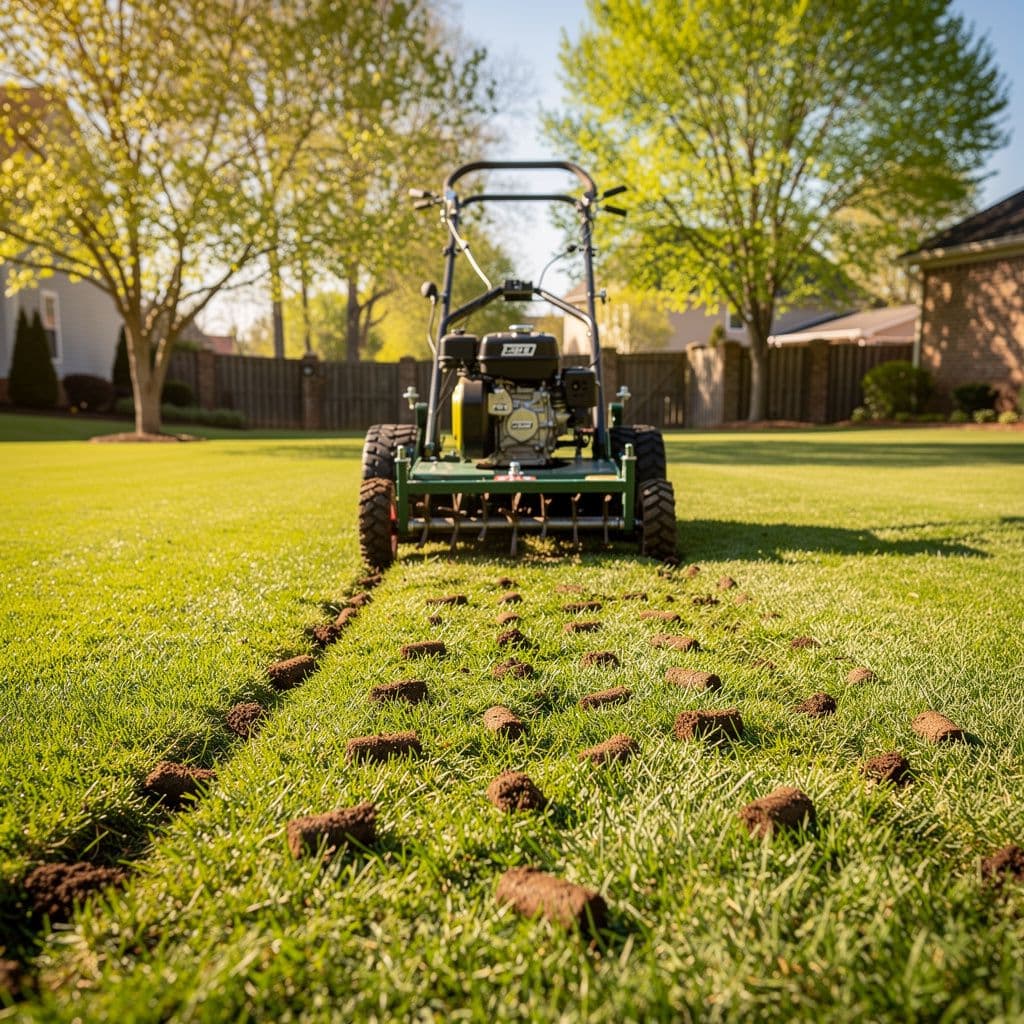
Lawn aeration is the process of mechanically removing small plugs of soil from your lawn to relieve compaction and improve the flow of air, water, and nutrients to grass roots. The most common method — core aeration — uses a machine equipped with hollow tines that pull cylindrical soil cores from the ground, depositing them on the surface where they break down naturally.
Think of it like this: Your lawn's soil is like a sponge. When it's compacted, it's a squeezed sponge — nothing can get in. Aeration releases that squeeze, allowing everything your grass needs to penetrate deep into the root zone.
Why Henry County Lawns Are Especially Vulnerable
Our area presents unique compaction challenges that make aeration particularly important:
Red Clay Soil:
- Henry County's predominant soil type is heavy red clay
- Clay particles are microscopic and pack tightly together
- Compaction happens faster and more severely than in sandy or loamy soils
- Common in neighborhoods throughout Locust Grove and Stockbridge
Foot and Vehicle Traffic:
- Kids playing in the yard, pets running, and regular mowing all compact soil
- Parking vehicles on lawns (common during gatherings) causes severe localized compaction
- Properties near busy areas like Tanger Outlets experience more foot traffic
New Construction Compaction:
- Many Henry County neighborhoods were built in the last 15-20 years
- Construction equipment compacts soil before sod or seed is ever laid
- The "new lawn" look fades after a few years as compaction catches up
- Subdivisions around Hampton, Morrow, and Jonesboro often show signs within 3-5 years
Weather Patterns:
- Georgia's heavy spring and summer rains pound soil particles together
- Drought periods cause clay to shrink and crack, then re-seal tightly when wet
- This cycle accelerates compaction year after year
Signs Your Lawn Needs Aeration
Not sure if your lawn is compacted? Look for these telltale signs common in Henry County yards:
- Water pooling or running off instead of absorbing into the soil
- Thin or bare patches that don't respond to fertilizer or watering
- Hard soil that's difficult to push a screwdriver or garden fork into
- Excessive thatch buildup (more than 1/2 inch of dead grass between soil and green growth)
- Weed dominance — compacted soil favors weeds like crabgrass and dandelions over turfgrass
- Shallow root systems visible at lawn edges near sidewalks or driveways
- Brown or yellowing patches despite adequate watering and fertilizing
If you're seeing three or more of these signs across your Locust Grove or McDonough property, your lawn is overdue for aeration.
The Science Behind Aeration: What Happens Below the Surface
Immediate Benefits
When core aeration opens up your soil, several critical processes kick into gear:
Improved Air Exchange:
- Grass roots need oxygen to function and grow
- Compacted soil limits oxygen, suffocating roots
- Aeration channels allow atmospheric oxygen to reach the root zone
- Root respiration increases, fueling healthier growth
Enhanced Water Infiltration:
- Compacted clay sheds water — it runs off instead of soaking in
- Aeration holes act as channels, directing water deep into the soil
- Reduces irrigation needs by 15-25% after recovery
- Prevents the standing water problems common in flat Henry County yards
Nutrient Accessibility:
- Fertilizer applied to compacted soil largely sits on the surface
- Aeration allows nutrients to reach the root zone where they're actually used
- Pre-emergent herbicides work better when they penetrate properly
- This is why we often combine aeration with lawn treatment services for maximum effectiveness
Thatch Decomposition:
- Soil cores deposited on the surface contain beneficial microorganisms
- These microbes break down excess thatch naturally
- Eliminates the need for power raking in most cases
- Healthier thatch layer (1/4 to 1/2 inch) actually benefits the lawn
Long-Term Root Development
The real magic of aeration happens over the following weeks and months:
- Grass roots expand into the aeration channels, growing deeper and stronger
- Deeper roots access water and nutrients stored further below the surface
- This creates drought resistance — critical during Georgia's hot summers
- Root systems become more extensive, creating a denser, more resilient lawn
- The lawn becomes naturally more competitive against weeds
When to Aerate Your Lawn in Henry County
Timing by Grass Type
Georgia homeowners typically grow one of two categories of grass, and the aeration timing is different for each:
Warm-Season Grasses (Bermuda, Zoysia, Centipede, St. Augustine):
- Best time: Late spring to early summer (May through June)
- The grass is actively growing and recovers quickly
- Soil temperatures are warm enough for rapid root development
- This is NOW — don't wait if you have a warm-season lawn
- Ideal for properties throughout McDonough, Stockbridge, and Hampton
Cool-Season Grasses (Tall Fescue, Kentucky Bluegrass):
- Best time: Early fall (September through October)
- Allows new seed to establish before winter
- Fall rains help with germination and root development
- Avoid spring aeration for Fescue — it invites crabgrass and weed invasion
- Common in shadier yards in Jonesboro and Morrow
Soil Moisture Matters
The soil needs to be moist — but not wet — for effective aeration:
- Too dry: Tines can't penetrate the hard clay, and you get shallow, ineffective holes
- Too wet: Soil sticks to the tines, holes collapse immediately, and you cause more compaction
- Just right: Soil is soft enough for 2-3 inch penetration, and cores hold their shape when deposited
Henry County tip: Water your lawn deeply (1 inch) 24-48 hours before aeration. Our clay soil needs this advance preparation more than sandy soils.
How Often Should You Aerate?
For most Henry County lawns:
- Heavy clay soil: Once per year (compaction returns quickly)
- High-traffic areas: Twice per year (spring and fall for warm-season)
- Sandy or loamy soil: Every 1-2 years
- New construction (under 5 years): Twice per year for the first 2-3 years
- Established, healthy lawns: Once per year as preventative maintenance
Overseeding: Pairing With Aeration for Maximum Impact
Why Overseed After Aeration
Aeration creates the perfect seedbed. The holes give grass seed direct contact with soil, protect seeds from washing away, and provide the moisture retention seeds need to germinate. It's the difference between scattering seed on concrete versus planting it in a garden.
The aeration-overseeding combo delivers:
- Thicker lawn: New grass plants fill in thin and bare areas
- Improved color: Younger grass plants are more vibrant
- Weed suppression: Dense turf naturally blocks weed germination
- Disease resistance: Mixed-age grass stands are more resilient
- Erosion control: More roots mean better soil holding, important on Henry County's rolling terrain
Choosing the Right Seed for Henry County
For Bermuda lawns (most common in our area):
- Bermuda spreads aggressively — overseeding is less common
- If thinning is severe, use certified Bermuda seed or sprigs
- Focus more on aeration to stimulate existing growth
For Zoysia lawns:
- Zoysia is slower to establish but worth the wait
- Use Zoysia plugs or sod for bare areas rather than seed
- Aeration stimulates the spreading growth habit
For Fescue lawns:
- Fescue benefits enormously from annual overseeding
- Use a tall fescue blend suited for Georgia's transition zone
- Apply 4-6 pounds of seed per 1,000 square feet after aeration
- This is where the aeration-overseeding combo really shines
Overseeding Best Practices
- Aerate first — always before seeding, never after
- Apply seed evenly using a broadcast spreader
- Use a starter fertilizer high in phosphorus to fuel root development
- Water lightly and frequently — 2-3 times daily for the first two weeks
- Mow high — keep the first mow at 3+ inches to protect new seedlings
- Avoid herbicides for 4-6 weeks after overseeding — they'll kill new grass too
DIY vs. Professional Aeration: What Henry County Homeowners Should Know
The DIY Approach
Renting an aerator from a local hardware store is possible, but there are real considerations:
Pros:
- Lower upfront cost for a single treatment
- You control the timing exactly
Cons:
- Rental aerators are often lighter and less effective than professional equipment
- Henry County's clay soil requires heavy, commercial-grade aerators for proper penetration
- Transporting a 200+ pound machine requires a truck or trailer
- Operating the machine is physically demanding, especially on uneven terrain
- You miss the professional assessment of your lawn's specific needs
- No guidance on seed selection, fertilizer timing, or follow-up care
Professional Aeration With Hedgecoth Property Solutions
Our property maintenance team provides comprehensive aeration and overseeding services designed for Henry County's specific conditions:
What you get:
- Commercial-grade aerators that penetrate 2-3 inches into clay soil
- Pre-treatment lawn assessment to identify specific problem areas
- Customized overseeding with grass varieties suited to your property
- Starter fertilizer application timed for maximum germination
- Professional-grade seed at proper application rates
- Follow-up care instructions tailored to your lawn
Why it matters locally:
- We understand Henry County's soil types, from the heavy clay in Locust Grove to the slightly looser soils near the Flint River
- Our equipment is maintained for optimal clay soil performance
- We time treatments based on local weather patterns, not generic calendars
- We serve Locust Grove, McDonough, Jonesboro, Stockbridge, Morrow, Hampton, and all of Henry County
Post-Aeration Lawn Care: The First 30 Days
What you do in the 30 days after aeration makes or breaks the results. Here's your week-by-week guide:
Week 1: Protection and Hydration
- Water 2-3 times daily for 10-15 minutes per zone (if overseeded)
- Keep off the lawn — limit foot traffic, keep pets and kids off for at least a week
- Don't mow — let seedlings establish roots before any cutting
- Don't apply weed control — herbicides will damage new seedlings
Weeks 2-3: Gentle Growth
- Reduce watering to once daily, increasing duration
- First mow when new grass reaches 3-4 inches (cut to 2.5-3 inches)
- Apply a light follow-up fertilizer if not done during aeration
- Monitor for weeds but continue to avoid herbicides
Week 4 and Beyond: Establishment
- Transition to normal watering schedule (1-2 times per week, deep watering)
- Regular mowing at the proper height for your grass type
- First weed treatment if needed (new grass should be established enough)
- Evaluate results — most Henry County lawns show dramatic improvement by week 4-6
Common Aeration Mistakes Henry County Homeowners Make
1. Aerating dry soil. Our clay needs moisture for the tines to penetrate. Water 24-48 hours before.
2. Using spike aerators instead of core aerators. Spike aerators push soil aside, actually increasing compaction around the holes. Always use core (plug) aeration.
3. Aeration at the wrong time. Aerating warm-season grasses in fall or cool-season grasses in spring invites weed invasion and stresses the lawn during its off-season.
4. Skipping the follow-up. Aeration alone helps, but without proper watering, fertilizing, and possibly overseeding, you're leaving 50% of the benefits on the table.
5. Ignoring the thatch layer. If thatch exceeds 1 inch, you may need dethatching before aeration. Most Henry County lawns don't need this, but heavily neglected properties might.
The Cost of Neglecting Aeration
Skipping aeration doesn't save money — it costs more in the long run:
Without aeration, you'll spend more on:
- Extra water trying to hydrate compacted soil (15-30% increase)
- Additional fertilizer that can't reach the roots
- Weed control products fighting a losing battle against compacted-soil weeds
- Lawn repair and renovation when thin areas fail completely
- Emergency treatments during summer heat stress
With annual aeration, you'll:
- Reduce watering costs by up to 25%
- Need less fertilizer as nutrients actually reach the root zone
- Naturally suppress weeds through thicker turf density
- Build drought and heat resistance for Georgia summers
- Increase your property's curb appeal and value
Professional lawn care that includes annual aeration pays for itself in reduced water bills, fewer chemical treatments, and a lawn that stays healthier year-round.
Frequently Asked Questions About Lawn Aeration in Henry County
How long does it take for aeration results to show?
Most homeowners in Locust Grove and McDonough notice improved water absorption within days. Grass thickening and color improvement typically appear within 2-4 weeks after aeration. If you've overseeded, expect to see new growth within 7-14 days, with full establishment taking 4-8 weeks depending on grass type and weather conditions.
Will aeration mess up my yard?
Core aeration leaves small soil plugs on the lawn surface, which dissolve back into the soil within 1-2 weeks. The holes themselves are barely noticeable from a standing position. Your lawn may look slightly disrupted for a few days, but it recovers quickly — and the long-term improvement far outweighs any temporary appearance change.
Can I aerate and apply weed control at the same time?
It depends on the type of weed control. Pre-emergent herbicides should be applied after aeration so they penetrate deeper. Post-emergent weed sprays should be applied before aeration or wait 2-3 weeks after. If you're overseeding, avoid all herbicides for 4-6 weeks to protect new seedlings. Our team can create a customized treatment schedule for your Henry County property.
How much does professional lawn aeration cost in Henry County?
Professional aeration in the Locust Grove, McDonough, and Stockbridge area typically ranges based on lawn size, condition, and whether overseeding is included. We provide free estimates for all Henry County properties. Contact us at 770-490-9519 or visit our contact page for a personalized quote.
Is core aeration better than liquid aeration?
For Henry County's heavy clay soil, core aeration is significantly more effective. Liquid aeration products use wetting agents and enzymes to improve soil structure, but they cannot physically relieve compaction the way core removal does. Core aeration provides immediate, measurable improvement in soil density and drainage — something liquid products simply cannot match in our dense clay conditions.
What's the difference between aeration and dethatching?
Aeration removes soil cores to relieve compaction and improve root zone access. Dethatching (power raking) removes the dead grass layer between soil and live grass. Most Henry County lawns need aeration annually but rarely need dethatching. If you're unsure which your lawn needs, our team can assess your property and recommend the right treatment.
Ready to Aerate? Let's Get Your Lawn Right
If you're a homeowner in Locust Grove, McDonough, Stockbridge, Jonesboro, Morrow, or anywhere in Henry County, don't let another growing season pass with a compacted, struggling lawn. Aeration and overseeding is one of the highest-return investments you can make in your property — and May is the perfect time for warm-season grasses.
Call Hedgecoth Property Solutions today at 770-490-9519 or contact us online to schedule your aeration and overseeding service. We'll assess your lawn, recommend the right treatment plan, and get your yard on the path to being the thickest, greenest one on the block.
Your lawn deserves better than compacted soil. Let's fix it together.
Hedgecoth Property Solutions provides professional landscaping, lawn care, and property maintenance services throughout Henry County, Georgia — including Locust Grove, McDonough, Stockbridge, Jonesboro, Morrow, and Hampton. Licensed, insured, and locally owned.