Pine Straw vs Mulch: Which Ground Cover Is Best for Your Henry County Landscape?
Published: June 11, 2026
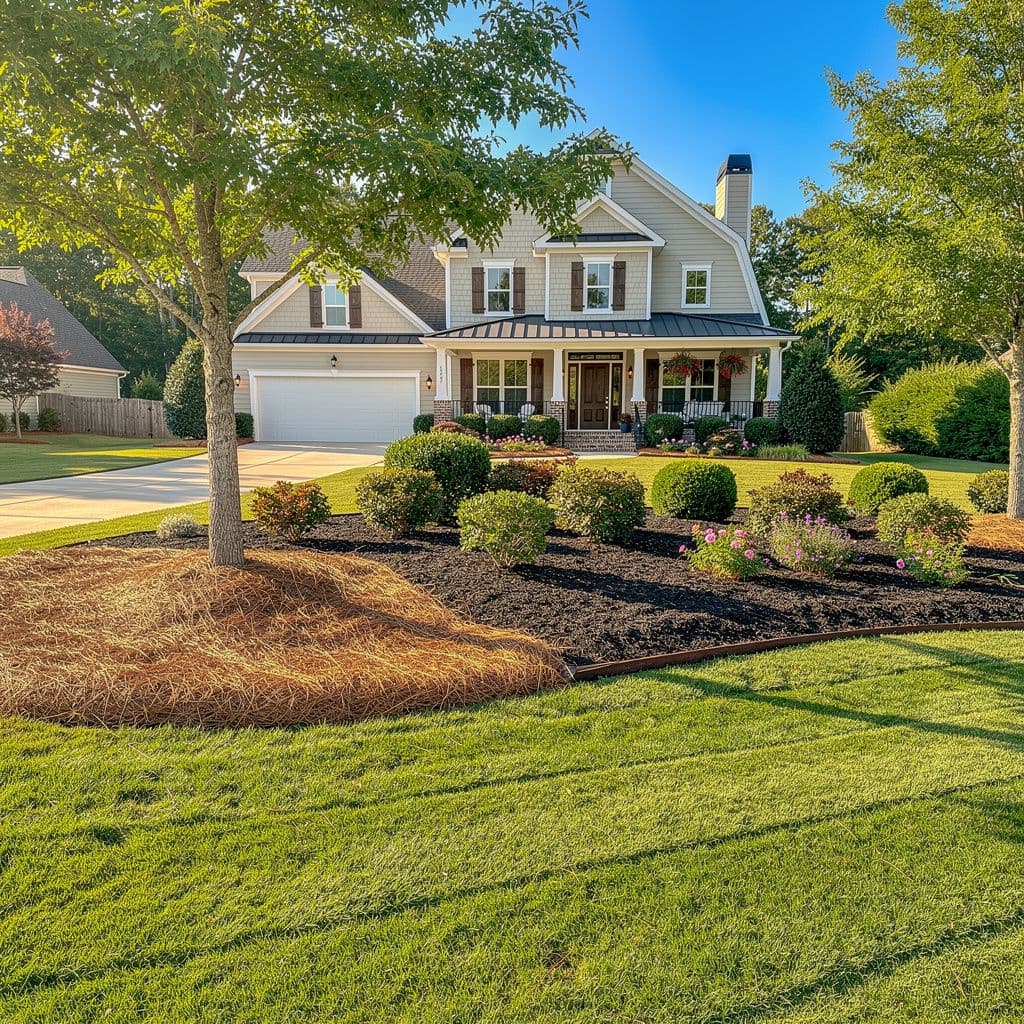
If you've ever walked through a Henry County neighborhood in spring, you've seen the two camps: yards blanketed in rich, dark hardwood mulch and homes framed by golden-brown pine straw. Both look great when done right. But which one is actually better for your landscape?
It's not a simple answer. Pine straw and mulch each have distinct advantages depending on your soil type, the plants you're growing, your budget, and how much maintenance you're willing to take on. And in a place like Locust Grove — where Georgia red clay meets longleaf pines and summer temperatures regularly hit the mid-90s — the right choice can make a real difference in how your landscape performs.
At Hedgecoth Property Solutions, we install both pine straw and mulch for homeowners across McDonough, Stockbridge, Jonesboro, Morrow, and throughout Henry County. We've seen firsthand how the right ground cover transforms a property. Here's our honest comparison to help you decide.
What Is Pine Straw and Why Is It So Popular in Georgia?
Pine straw is exactly what it sounds like — the dried needles that fall naturally from pine trees, baled and spread across landscape beds. In Georgia, it's been the go-to ground cover for generations, and for good reason.
Types of Pine Straw Available in Henry County
Longleaf Pine Straw (Premium Grade)
- Needles are 12-14 inches long
- Rich, reddish-brown color that lasts
- Interlocks tightly, resisting washout on slopes
- Slower to decompose than shorter varieties
- Usually the most expensive option
Slash Pine Straw (Standard Grade)
- Needles are 8-10 inches long
- Lighter golden-brown color
- Good coverage for flat landscape beds
- More readily available locally
- Mid-range pricing
Loblolly Pine Straw (Economy Grade)
- Shorter needles, 6-8 inches
- Faster to decompose
- Best for natural areas and large spaces
- Most affordable option
- Common at big-box stores
You'll see longleaf pine straw used in the manicured beds around Southern Belle Farm and the well-kept neighborhoods near Heritage Park in McDonough. It's the premium choice for a reason — it looks refined and stays put.
Why Georgia Homeowners Love Pine Straw
Natural and Local
Georgia is one of the largest pine straw producing states in the country. The needles are harvested from managed pine forests right here in the Southeast, making pine straw one of the most sustainable ground cover options available. When you spread pine straw in your Locust Grove landscape, you're using a product that came from within a few hundred miles — not trucked across the country.
Lightweight and Easy to Spread
A bale of pine straw weighs about 25 pounds and covers roughly 40-50 square feet at a 3-inch depth. Compare that to a bag of mulch that weighs 40+ pounds and covers maybe 12 square feet. For a homeowner in Hampton with a dozen landscape beds, that difference in weight adds up fast — especially if you're doing it yourself.
Acidifies the Soil Naturally
Pine straw has a pH of around 3.5-4.5 when fresh, and as it breaks down, it gradually lowers the pH of the surrounding soil. In Henry County, where many areas have alkaline clay soil, this natural acidification is a real benefit for acid-loving plants like azaleas, camellias, gardenias, blueberries, and dogwoods.
Excellent on Slopes
The interlocking nature of pine needles makes it one of the best ground covers for sloped terrain. If your Stockbridge property has banks or graded landscape beds, pine straw is far less likely to wash away during heavy Georgia thunderstorms than loose mulch.
What About Mulch? The Case for Wood-Based Ground Cover
When most people say "mulch" in a landscaping context, they're talking about shredded hardwood mulch — though there are several other types worth considering. Mulch has been gaining ground in Henry County landscapes, particularly in newer developments where a polished, uniform look is prized.
Types of Mulch for Henry County Landscapes
Shredded Hardwood Mulch (Most Popular)
- Deep brown color that darkens with age
- Shredded texture mats together and resists blowing
- Excellent weed suppression
- Breaks down and improves soil structure
- Available in bulk or bags
Double-Shredded Hardwood (Premium)
- Finer texture with more consistent appearance
- Compacts tightly for superior weed control
- Smoother, more refined look
- Less likely to float or blow away
- Preferred for front-yard beds and visible areas
Pine Bark Mulch (Nuggets or Mini-Nuggets)
- Chunky texture adds visual interest
- Long-lasting — doesn't break down quickly
- Good for pathways and natural areas
- Larger pieces can float in heavy rain
- Excellent for acid-loving plants
Dyed Mulch (Black, Brown, Red)
- Color-enhanced for visual impact
- Color typically lasts one full season
- Same base material as hardwood mulch
- Black mulch creates dramatic contrast with green plants
- Popular in newer Locust Grove subdivisions
Why Homeowners Choose Mulch
Superior Weed Suppression
Hardwood mulch is denser than pine straw and creates a more effective barrier against weed germination. A proper 3-inch layer of shredded hardwood mulch can block up to 95% of weeds — compared to roughly 70-80% for pine straw. If you're tired of pulling weeds from your landscape beds, mulch gives you the upper hand.
Moisture Retention
Mulch holds moisture better than pine straw. The wood fibers absorb water and release it slowly into the soil, reducing your irrigation needs by up to 50%. In a Henry County summer where temperatures hover above 90°F for weeks at a time, that moisture retention can be the difference between thriving plants and crispy ones.
Soil Improvement
As hardwood mulch decomposes, it adds organic matter to your soil — something Georgia's heavy clay desperately needs. Over time, decomposed mulch improves soil structure, drainage, and nutrient-holding capacity. Pine straw also improves soil, but hardwood mulch contributes more substantial organic material.
Clean, Polished Appearance
There's a reason you see mulch in the landscape beds of commercial properties along Highway 81 and the shopping centers near Tanger Outlets in Stockbridge. Mulch delivers a crisp, manicured look that says "this property is professionally maintained."
Head-to-Head Comparison: Pine Straw vs Mulch
Let's get specific. Here's how pine straw and mulch stack up across the factors that matter most to Henry County homeowners.
Cost Comparison
Pine Straw:
- $4.50-$7.00 per bale (covers ~40-50 sq ft)
- Approximately $0.10-$0.15 per square foot installed
- Needs replacing 1-2 times per year
- Annual cost for average landscape beds: $200-$400
Hardwood Mulch:
- $3.00-$5.00 per bag (covers ~12 sq ft) or $35-$55 per cubic yard bulk
- Approximately $0.15-$0.25 per square foot installed
- Needs replacing once per year (with top-dressing possible)
- Annual cost for average landscape beds: $300-$600
Winner: Pine Straw on raw material cost, but Mulch wins on cost-per-year when you factor in that pine straw may need two applications annually in high-traffic or wind-exposed areas.
Weed Control
Pine Straw: Good weed suppression (70-80%) but gaps between needles allow some weeds through. Needs to be applied thickly (3-4 inches) for best results.
Hardwood Mulch: Excellent weed suppression (90-95%) due to dense mat. Double-shredded varieties perform best. Creates a near-impenetrable layer when properly applied.
Winner: Mulch — significantly better at keeping weeds out of your landscape beds.
Moisture Retention
Pine Straw: Moderate moisture retention. Allows water to pass through easily but doesn't hold as much in the root zone.
Hardwood Mulch: Superior moisture retention. Absorbs water like a sponge and releases it slowly. Reduces watering needs by up to 50%.
Winner: Mulch — especially important during Henry County's hot, dry summer stretches.
Durability and Longevity
Pine Straw: Breaks down in 6-8 months in Georgia's heat and humidity. Fades from rich brown to gray relatively quickly. Can blow around in strong winds.
Hardwood Mulch: Lasts 10-14 months before significant decomposition. Color holds well (especially dyed varieties). Stays in place even in heavy rain.
Winner: Mulch — lasts longer and maintains its appearance throughout the season.
Slope and Erosion Control
Pine Straw: Excellent on slopes. The interlocking needles resist washout better than almost any other ground cover. First choice for banks and graded areas.
Hardwood Mulch: Can wash down slopes during heavy rain, especially fresh applications before it settles. Better on flat terrain or gentle slopes.
Winner: Pine Straw — the clear choice for sloped landscapes.
Soil Health Benefits
Pine Straw: Gradually acidifies soil. Adds some organic matter. Best for acid-loving plants like azaleas, camellias, hydrangeas, and gardenias.
Hardwood Mulch: Adds significant organic matter as it decomposes. Improves clay soil structure. Neutral pH won't change your soil chemistry.
Winner: Tie — depends entirely on what you're growing. Pine straw wins for acid-loving plants; mulch wins for everything else.
Appearance and Aesthetics
Pine Straw: Natural, woodland appearance. Golden-brown color that complements rustic and traditional landscapes. Looks at home in established Henry County neighborhoods.
Hardwood Mulch: Polished, manicured appearance. Dark brown to black color that creates strong contrast with green plants. Works well in formal and contemporary landscapes.
Winner: Subjective — depends on your home's style and your personal preference.
Which Plants Prefer Pine Straw vs Mulch
One of the biggest mistakes we see in Henry County landscapes is using the wrong ground cover for specific plants. Here's a guide to help you match your ground cover to your plantings.
Plants That Love Pine Straw
- Azaleas and Rhododendrons — require acidic soil (pH 4.5-6.0)
- Camellias — acid-loving Southern classics
- Gardenias — thrive in acidic conditions
- Blueberries — need soil pH between 4.0-5.0
- Dogwoods — prefer slightly acidic soil
- Hydrangeas (blue varieties) — acid soil keeps blooms blue
- Magnolias — Southern evergreens that appreciate acidity
- Ferns — woodland plants that pair naturally with pine straw
- Hostas — shade garden staples that like acidic conditions
Plants That Prefer Mulch
- Roses — need rich, well-drained soil with neutral pH
- Vegetable gardens — benefit from organic matter addition
- Annual flowers — prefer consistent moisture that mulch provides
- Daylilies — thrive in the rich soil mulch creates
- Ornamental grasses — prefer neutral to slightly acidic conditions
- Herb gardens — most herbs prefer alkaline to neutral soil
- New plantings — mulch provides better moisture retention for establishing roots
- Foundation plantings — mulch creates a cleaner, more finished look
Can You Use Both? Absolutely.
Here's a strategy that many of our best-looking Henry County properties use: pine straw in the back and sides, mulch in the front.
The back and side yards — with their slope-prone banks, natural areas, and acid-loving shade plants — get pine straw. It's cost-effective, looks natural, and stays put on slopes.
The front yard — with its foundation plantings, entryway beds, and high-visibility garden areas — gets hardwood mulch. It looks polished, suppresses weeds better where everyone can see them, and creates that professional, well-maintained impression.
This hybrid approach gives you the best of both worlds and is something we often recommend during our landscape consultations. It's practical, looks fantastic, and can reduce your annual ground cover costs compared to using mulch everywhere.
Seasonal Timing: When to Apply Pine Straw and Mulch in Henry County
Timing your ground cover application correctly makes a big difference in how it performs and how long it lasts.
Spring Application (March – May)
The most popular time for both pine straw and mulch installation in Henry County. Spring application gives your landscape beds a fresh look heading into the growing season and provides weed suppression when weeds are most aggressive.
Best for: Full refresh of all ground cover, new landscape beds, spring planting projects.
Fall Application (September – November)
An often-overlooked but highly effective timing. Fall application protects plant roots from winter temperature fluctuations, prevents winter weeds, and gives you a head start on a clean landscape come spring.
Best for: Winter protection, pre-emergent weed control, maintaining appearance through the off-season.
Summer Touch-Up (June – August)
If your pine straw has faded or your mulch has thinned, a summer touch-up keeps your landscape looking sharp during the months when your yard gets the most use and attention.
Best for: Pine straw color refresh, thin mulch areas, spot treatments.
Professional Installation vs DIY: What Henry County Homeowners Should Know
Both pine straw and mulch can be DIY projects, but there are some important considerations before you load up the truck.
The DIY Approach
Pros:
- Lower upfront cost (materials only)
- Work at your own pace
- Complete control over the result
Cons:
- Pine straw bales are bulky — a typical Locust Grove lot needs 30-50 bales
- Mulch is heavy — 30-40 bags or 3-5 cubic yards for an average property
- Proper bed prep (weeding, edging, pre-emergent) takes significant time
- Uneven application leads to poor weed control and inconsistent appearance
- No equipment to move bulk materials efficiently
Professional Installation by Hedgecoth Property Solutions
What we include:
- Complete bed preparation — weeding, edging, and cleaning existing beds
- Pre-emergent application — preventing weeds before they start
- Proper depth application — 3-4 inches of pine straw or 2-3 inches of mulch
- Clean edges and borders — crisp lines that make your beds look professional
- Complete cleanup — no mess left behind
- Material delivery — no loading, hauling, or unloading for you
For most Henry County homeowners, professional installation costs only slightly more than DIY when you factor in materials, your time, equipment, and the inevitable second trip to the store. And the results are noticeably better.
How to Maintain Your Ground Cover Throughout the Year
Whether you choose pine straw or mulch, proper maintenance keeps it looking great and performing well.
Pine Straw Maintenance
- Fluff periodically — use a leaf blower or rake to re-flatten areas
- Add fresh bales when color fades to gray (typically every 4-6 months)
- Keep depth at 3-4 inches — add more as it compresses and decomposes
- Watch for matting — break up compressed areas to allow water penetration
- Remove leaf debris — leaves caught in pine straw can create bald spots
Mulch Maintenance
- Rake annually — break up compacted areas and refresh the surface
- Top-dress as needed — add 1 inch of fresh mulch to maintain 2-3 inch depth
- Avoid mulch volcanoes — keep mulch 3-6 inches away from tree trunks and plant stems
- Watch for fungus — proper depth and airflow prevent most fungal issues
- Refresh color — dyed mulch may need annual refreshing for best appearance
Our property maintenance plans include seasonal ground cover maintenance, taking one more thing off your plate.
FAQ About Pine Straw and Mulch in Henry County
Is pine straw or mulch better for clay soil in Henry County?
Both improve clay soil over time, but they work differently. Pine straw adds acidity and some organic matter, which can help break up clay. Hardwood mulch adds more substantial organic material as it decomposes, improving soil structure and drainage. For pure clay improvement, mulch has the edge. For plants that need acidic conditions in clay, pine straw is the better choice.
How much pine straw or mulch do I need for my yard?
For pine straw, plan on one bale per 40-50 square feet at a 3-inch depth. For mulch, you need approximately one cubic yard per 100 square feet at a 3-inch depth. Hedgecoth Property Solutions provides free measurements and estimates — call 770-490-9519 to schedule yours.
Does pine straw attract termites or bugs?
Pine straw does not attract termites. Unlike wood mulch, pine needles don't contain the cellulose that termites feed on. However, both ground covers can provide habitat for beneficial insects. If termite control is a concern, pine straw is the safer choice around your foundation.
Can I put mulch over existing pine straw or vice versa?
Yes, you can layer them, but it's not ideal. The best approach is to remove the old ground cover (or work it into the soil if it's decomposed) before applying a new layer. Mixing pine straw and mulch can create an uneven appearance and may not provide consistent weed control.
How often should I replace my ground cover in Georgia?
Pine straw typically needs refreshing every 6-8 months due to decomposition and fading. Hardwood mulch lasts 10-14 months before needing replacement. Most Henry County homeowners refresh pine straw twice a year (spring and fall) and mulch once a year (spring).
Which is better for preventing weeds — pine straw or mulch?
Hardwood mulch provides superior weed suppression (up to 95%) compared to pine straw (70-80%). The dense mat of shredded hardwood blocks more light and creates a thicker physical barrier. For areas where weed control is your top priority, mulch is the clear winner.
Ready to Upgrade Your Ground Cover? Let's Talk.
Choosing between pine straw and mulch doesn't have to be complicated. Whether you want the natural look of pine straw on your wooded property, the polished appearance of dark mulch around your front foundation, or a hybrid approach that uses both — Hedgecoth Property Solutions has you covered.
We deliver and install both pine straw and mulch throughout Locust Grove, McDonough, Jonesboro, Stockbridge, Morrow, Hampton, and all of Henry County. Our team handles everything — from bed preparation and edging to delivery, spreading, and cleanup.
Call 770-490-9519 today for a free estimate, or contact us online to schedule your consultation. Your landscape deserves the right ground cover — and we'll help you choose and install it perfectly.
Published by Hedgecoth Property Solutions — Professional lawn care, landscaping, and property maintenance serving Locust Grove, McDonough, Jonesboro, Stockbridge, and Henry County since 2016.
Phone: 770-490-9519 | hedgecoth.pro