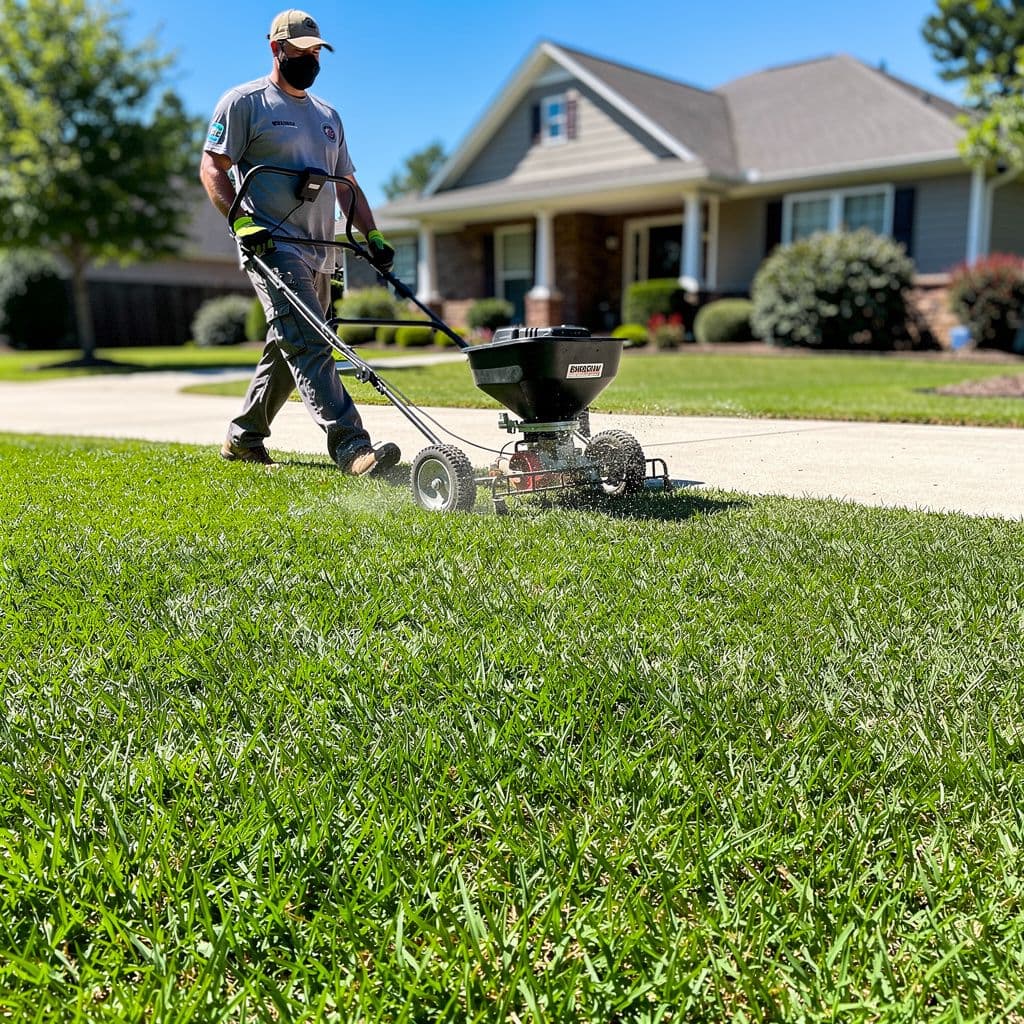
Lawn Treatment Services in Locust Grove, GA: The Complete Guide to Professional Fertilization, Weed Control & Soil Care
Published: July 20, 2026
If your lawn in Locust Grove is looking thin, patchy, or full of weeds despite regular mowing, the problem probably isn't your mower — it's your treatment program. Mowing keeps grass at the right height, but fertilization, weed control, and soil health treatments are what actually feed your lawn, eliminate competition, and create the conditions for thick, green turf. Without a proper lawn treatment plan, you're maintaining a lawn that will never reach its full potential.
At Hedgecoth Property Solutions, we provide professional lawn treatment services to homeowners throughout Locust Grove, McDonough, Hampton, Stockbridge, and across Henry County. After years of treating lawns in our area, we've learned exactly what works in Georgia's heavy clay soil, when to apply each treatment for maximum effectiveness, and how to build a year-round program that keeps lawns healthy through every season.
This guide breaks down everything Locust Grove homeowners need to know about professional lawn treatment services — what's included, how it works, what it costs, and why professional treatment beats the DIY approach every time.
What Are Lawn Treatment Services?
Lawn treatment services are the applications and processes that go beyond basic mowing to actively improve your lawn's health, appearance, and resilience. While lawn care covers the physical maintenance — mowing, edging, blowing — lawn treatments focus on the chemical and biological processes that feed your grass, eliminate weeds, and improve your soil.
Core Lawn Treatment Services
A comprehensive lawn treatment program typically includes:
Fertilization — Regular applications of nitrogen, phosphorus, potassium, and micronutrients tailored to your grass type and soil conditions. Fertilization is the foundation of any treatment program. Without it, your grass simply doesn't have the nutrients it needs to grow thick, green, and strong.
Weed Control — Both pre-emergent (preventive) and post-emergent (reactive) herbicide applications that stop weeds before they germinate and kill existing weeds without harming your grass. Henry County lawns face relentless weed pressure from crabgrass, dandelions, clover, nutsedge, and dozens of other invasive species.
Soil Testing and Amendment — Professional soil analysis that identifies pH imbalances, nutrient deficiencies, and organic matter shortfalls in your soil. Based on results, targeted amendments like lime, sulfur, or compost are applied to create optimal growing conditions.
Pest and Disease Control — Preventive and curative treatments for common Georgia lawn threats including fall armyworms, white grubs, chinch bugs, brown patch fungus, and Pythium blight.
Aeration and Overseeding — Annual core aeration to relieve soil compaction, combined with overseeding to introduce improved grass varieties and fill in thin areas.
Why Locust Grove Lawns Need Specialized Treatment
Not all lawns are created equal, and not all treatment programs work in every location. Locust Grove presents a specific set of challenges that generic, one-size-fits-all lawn treatment plans simply can't address.
The Clay Soil Factor
Locust Grove sits on some of the heaviest red clay soil in Henry County. This clay creates several treatment challenges:
Nutrient lock-up. Clay soil is naturally rich in minerals, but its chemistry makes many of those nutrients unavailable to grass roots. A soil pH that's too acidic (common in Locust Grove, often 5.0-6.0) causes calcium, magnesium, and phosphorus to become locked in the soil. Professional soil testing identifies these issues, and targeted lime applications correct the pH so your grass can actually use the nutrients you're paying for.
Slow absorption. Dense clay absorbs fertilizers slowly. Surface-applied fertilizers can wash away in heavy rains before they ever reach the root zone. Professional applicators use slow-release formulations and proper timing to ensure nutrients penetrate the soil instead of running off into storm drains.
Compaction. Clay soil compacts under normal foot traffic and rainfall, squeezing out the air pockets that roots need to breathe. Compacted soil also prevents fertilizer and water from penetrating, which means your treatment dollars are literally washing away. Annual core aeration is essential for Locust Grove lawns.
The Locust Grove Climate
Locust Grove's weather patterns create a unique treatment calendar:
Spring (March-May): Rapid green-up period. Pre-emergent weed control must be applied before soil temperatures reach 55°F — usually by mid-March in Locust Grove. Spring fertilization kicks off the growing season for warm-season grasses.
Summer (June-August): Peak heat and humidity. Insect populations surge. Fungal diseases thrive in our humid nights. Treatments shift to pest monitoring, disease prevention, and careful fertilization that doesn't push too much growth during heat stress.
Fall (September-November): The most important treatment window of the year. Fall fertilization builds root reserves for winter. Post-emergent weed control eliminates perennial weeds before they go dormant. Aeration and overseeding repair summer damage.
Winter (December-February): Dormant season. Pre-emergent applications for winter weeds. Soil amendments like lime break down slowly during dormancy, preparing the soil for spring green-up.
Local Pest Pressures
Locust Grove's mix of suburban developments and rural acreage creates ideal conditions for lawn-damaging pests:
- Fall armyworms — Moths lay eggs in late summer, and the resulting caterpillars can strip a lawn bare in 48 hours. Properties near agricultural areas and open fields around Locust Grove are especially vulnerable.
- White grubs — Japanese beetles and June bugs lay eggs in summer, and grub larvae feed on grass roots through fall. By the time you see damage, the roots are already destroyed.
- Moles and voles — These burrowing animals are attracted to grub populations and can tunnel through a lawn overnight, leaving raised ridges and dead patches.
Professional lawn treatment services include monitoring for all of these threats and applying targeted controls before damage becomes severe.
Professional Lawn Treatment vs. DIY: Why It Matters in Locust Grove
Many Locust Grove homeowners start with a DIY approach — buying bags of fertilizer from the hardware store, spraying weed killer from a hose-end attachment, and hoping for the best. Here's why that approach usually fails and why professional treatment services deliver dramatically better results.
Product Knowledge and Access
Professional lawn care companies have access to commercial-grade products that aren't available at retail stores. These products are typically more concentrated, more effective, and formulated for specific conditions. A professional applicator knows exactly which product to use, at what rate, and under what weather conditions for maximum effectiveness.
DIY products from big-box stores are formulated for general use across the entire country. They don't account for Georgia's clay soil, our specific weed varieties, or our unique climate. The fertilizer you buy at the store might be great for a lawn in Ohio but wrong for your Locust Grove yard.
Timing Precision
Lawn treatment is all about timing. Pre-emergent herbicide applied one week too late means crabgrass all summer. Fertilizer applied before a 2-inch rainstorm means wasted money and nutrient runoff. Grub control applied at the wrong time of year is completely ineffective.
Professional services track soil temperatures, weather forecasts, and pest life cycles to apply each treatment at the exact right moment. Locust Grove homeowners doing their own applications often miss these windows because life gets busy — and once you miss a treatment window, you can't get it back.
Proper Application Rates
Over-application of fertilizer can burn your lawn. Under-application means wasted effort and no visible results. Professional applicators use calibrated equipment to apply exactly the right amount of product evenly across your entire lawn. DIY spreading with a broadcast spreader almost always results in uneven coverage — stripes of dark green and pale green, or worse, burned patches where too much fertilizer was applied.
Cost-Effectiveness
Here's what most DIYers don't calculate: the cost of products, the cost of equipment, the value of your time, and the cost of fixing mistakes. When you add it all up, professional lawn treatment services are often comparable in cost to doing it yourself — and the results are dramatically better.
A typical Locust Grove homeowner might spend $300-500 per year on fertilizer, weed killer, pest control products, a spreader, a sprayer, and soil test kits. Plus 15-20 hours of time reading labels, calibrating equipment, and making applications. Professional treatment services for a typical residential lawn in Locust Grove cost roughly the same or slightly more — but deliver professional-grade products, perfect timing, zero wasted weekends, and dramatically better results.
What's Included in a Professional Lawn Treatment Program
At Hedgecoth Property Solutions, our comprehensive lawn treatment program for Locust Grove homeowners includes:
Round 1 — Early Spring (February-March)
- Pre-emergent weed control to prevent crabgrass and other summer annual weeds
- Spring weed cleanup targeting existing broadleaf weeds
- Slow-release fertilizer to jumpstart spring green-up
Round 2 — Late Spring (April-May)
- Second pre-emergent application for extended crabgrass control
- Broadleaf weed control for dandelions, clover, and other common weeds
- Balanced fertilization to support active growth and spreading
Round 3 — Early Summer (June)
- Slow-release summer fertilizer to maintain color without pushing excessive growth
- Grub preventive treatment to stop larvae before they damage roots
- Spot weed treatment for any breakthrough weeds
Round 4 — Mid-Summer (July)
- Heat-stress fertilization with lower nitrogen rates to avoid burn
- Insect monitoring and treatment for armyworms, chinch bugs, and other pests
- Fungus monitoring with preventive fungicide applications if conditions warrant
Round 5 — Late Summer (August-September)
- Fall fertilization with higher potassium to build root reserves
- Post-emergent weed control for perennial weeds preparing for winter
- Aeration recommendation — late summer is the ideal time for core aeration in Locust Grove
Round 6 — Fall (October-November)
- Winterizer fertilizer to strengthen roots for dormancy
- Pre-emergent for winter weeds (poa annua, chickweed, henbit)
- Soil amendment applications (lime if needed based on soil test)
Round 7 — Winter (December-January)
- Winter weed monitoring and spot treatment
- Soil testing to plan next year's program
- Program review and adjustments based on your lawn's performance
This 7-round program provides year-round protection and nutrition for your Locust Grove lawn. Each round is customized based on your grass type (Bermuda, Zoysia, Fescue, or Centipede), your soil conditions, and what we observe during each visit.
Customizing Treatments for Your Grass Type
Different grass types need different treatment approaches. Here's how we adjust our program based on what's growing in your Locust Grove yard:
Bermuda Grass
Bermuda is the most common warm-season grass in Locust Grove and responds dramatically to proper fertilization. We use higher nitrogen rates during peak growing season (May-August) to encourage aggressive spreading and dense turf. Pre-emergent timing is critical for Bermuda — it's sensitive to some herbicides during spring green-up, so we adjust our product selection accordingly.
Zoysia Grass
Zoysia needs less nitrogen than Bermuda but benefits from more frequent, lighter fertilizer applications. Its dense growth habit naturally suppresses weeds, but it's prone to thatch buildup, so we monitor thatch levels and recommend aeration when needed. Zoysia is also more susceptible to brown patch fungus, so we include preventive fungicide applications during humid periods.
Tall Fescue
Fescue lawns in Locust Grove require a completely different approach. As a cool-season grass, fescue needs fertilization in fall and spring (not summer), and it requires overseeding each fall to repair summer damage. We use specialized fescue blends and adjust our weed control products to avoid damaging this less-tolerant grass.
Centipede Grass
Centipede is a low-maintenance option popular on larger Locust Grove properties. It needs very little fertilizer — too much nitrogen actually harms it. We use specialized low-phosphorus formulations and monitor for the iron deficiencies that centipede commonly develops in our clay soil.
How Much Do Lawn Treatment Services Cost in Locust Grove?
Pricing for professional lawn treatment services in Locust Grove depends on your lawn size, grass type, and the specific treatments included. Here are typical ranges for our area:
Full-Season Treatment Program (7 rounds):
- Small lawn (under 5,000 sq ft): $400-550 per year
- Medium lawn (5,000-10,000 sq ft): $550-800 per year
- Large lawn (10,000-20,000 sq ft): $800-1,200 per year
- Acreage (1+ acres): $1,200-2,000+ per year
Individual Treatments:
- One-time fertilization: $60-120
- Weed control application: $50-100
- Core aeration: $150-350
- Soil testing: $25-50 (often included free with annual programs)
- Grub treatment: $75-150
- Fungicide application: $75-125
Most Locust Grove homeowners find that an annual treatment program costs less per round than individual applications, and the consistent, scheduled approach produces much better results. For a detailed breakdown tailored to your property, contact us for a free estimate.
Signs Your Locust Grove Lawn Needs Professional Treatment
Not sure if it's time to call in the professionals? Here are the most common signs we see on Locust Grove lawns that need treatment services:
1. Weeds are winning. If you see crabgrass, clover, dandelions, or nutsedge spreading across your yard, your current weed control strategy isn't working. Professional pre-emergent and post-emergent applications can eliminate these invaders and prevent them from coming back.
2. Your lawn is pale or yellow-green. Healthy warm-season grass should be a deep, rich green during the growing season. Pale or yellowish grass indicates nitrogen deficiency, iron deficiency, or soil pH problems — all of which professional treatment can correct.
3. Bare patches and thin areas. If parts of your lawn are bare or thinning, the grass doesn't have the nutrients or soil conditions it needs to spread and fill in. Professional fertilization combined with aeration can transform thin lawns into thick, dense turf.
4. Brown spots appearing suddenly. Sudden brown patches can indicate insect damage (grubs or armyworms), fungal disease, or fertilizer burn. A professional can diagnose the cause and apply the correct treatment before the damage spreads.
5. Your lawn isn't improving. If you've been fertilizing and treating weeds yourself but your lawn looks the same year after year, something in your approach isn't working. A professional assessment can identify the gaps and get your lawn on track.
6. You're spending weekends on lawn care instead of family time. This is the reason many of our Locust Grove clients ultimately switch to professional services — their time is worth more than the cost of treatment.
Why Choose Hedgecoth Property Solutions for Lawn Treatment in Locust Grove
There's no shortage of lawn care companies serving the Locust Grove area, from national chains to independent operators. Here's why local homeowners trust Hedgecoth Property Solutions with their lawn treatment services:
We're local. We live and work in Henry County. We understand Locust Grove's soil, climate, and pest pressures because we deal with them every day. National companies use the same treatment schedule whether you live in Locust Grove or Savannah — we customize based on hyper-local conditions.
We're comprehensive. Our treatment programs don't just cover fertilization and weed control. We handle property maintenance, landscaping, leaf removal, tree service, and hardscaping — making us your one-stop property care provider.
We communicate. You'll know exactly what we applied, why we applied it, and what to expect next. We provide before-and-after notes, treatment notifications, and recommendations for improving your lawn between visits.
We're licensed and insured. Professional pesticide and fertilizer applications require proper licensing in Georgia. We carry all required licenses and insurance, giving you peace of mind that your property is in qualified hands.
We guarantee our work. If you're not seeing results, we'll re-treat at no additional cost. Our treatment programs are backed by our satisfaction guarantee.
Getting Started with Lawn Treatment Services
Starting a professional lawn treatment program with Hedgecoth Property Solutions is straightforward:
-
Free lawn evaluation — We visit your Locust Grove property, assess your lawn's current condition, identify problem areas, and take soil samples if needed.
-
Customized treatment plan — Based on our evaluation, we recommend a treatment program tailored to your grass type, soil conditions, and lawn goals.
-
Scheduled applications — We begin your treatment program at the right time for your lawn's current condition and our local climate.
-
Ongoing monitoring — Each visit includes a lawn inspection. We adjust treatments based on weather conditions, pest activity, and your lawn's response.
-
Results you can see — Most Locust Grove homeowners see noticeable improvement within 4-6 weeks of starting treatment, with dramatic transformation over a full season.
FAQ
What does a lawn treatment service include?
A professional lawn treatment service typically includes fertilization, weed control (both pre-emergent and post-emergent), soil testing and amendment, pest monitoring, and disease prevention. At Hedgecoth Property Solutions, our 7-round annual program covers all of these elements with applications timed specifically for Locust Grove's climate and growing conditions.
How often should my lawn in Locust Grove be treated?
For optimal results, Locust Grove lawns should receive treatments every 4-8 weeks throughout the year, with the exact schedule depending on your grass type and lawn condition. Warm-season grasses (Bermuda, Zoysia) need 5-7 treatments between February and November. Cool-season fescue lawns need a different schedule focused on fall and spring applications.
When should I apply pre-emergent weed control in Locust Grove?
Pre-emergent herbicide for summer weeds (crabgrass, goosegrass) should be applied in late February to mid-March, before soil temperatures reach 55°F. For winter weeds (poa annua, chickweed), apply pre-emergent in early fall (September-October). Timing is critical — once weeds germinate, pre-emergent won't work.
Is professional lawn treatment safe for pets and children?
Yes. All products we use are EPA-approved for residential lawn care. We recommend keeping pets and children off the lawn until the treatment has dried completely, which typically takes 1-2 hours depending on temperature and humidity. We provide specific instructions before and after each application.
How long does it take to see results from lawn treatment services?
Fertilizer applications typically produce visible color improvement within 7-14 days. Weed control results are visible within 5-10 days for post-emergent treatments. However, transforming a struggling lawn into a thick, healthy, weed-free yard is a process that takes a full growing season. The lawns that look the best in Locust Grove are the ones that have been on a consistent treatment program for 2-3 years.
Can I just get weed control without fertilization?
Technically yes, but we don't recommend it. Weed control without fertilization creates a vicious cycle — you kill the weeds, but the grass is too weak to fill in the bare spots, so new weeds move in. Fertilization strengthens your grass so it naturally crowds out future weeds. The most effective approach is always a combined fertilization and weed control program.
Ready to Transform Your Locust Grove Lawn?
Stop spending your weekends mixing fertilizer and spot-treating weeds. Let the professionals at Hedgecoth Property Solutions give your Locust Grove lawn exactly what it needs, exactly when it needs it.
Our lawn treatment services are designed specifically for Henry County's clay soil, warm-season grass varieties, and year-round growing challenges. Whether your lawn needs a complete overhaul or just a better treatment program, we'll build a customized plan that gets results.
📞 Call 770-490-9519 for a free lawn evaluation
📍 Serving: Locust Grove, McDonough, Jonesboro, Stockbridge, Hampton, Morrow, and all of Henry County
🌐 Request a quote: hedgecoth.pro/contact
Your neighbors already have great lawns. Isn't it time yours did too?
Hedgecoth Property Solutions — Professional Lawn Treatment, Fertilization & Weed Control
Locust Grove • McDonough • Stockbridge • Jonesboro • Morrow • Hampton • Henry County
Licensed & Insured • Call 770-490-9519