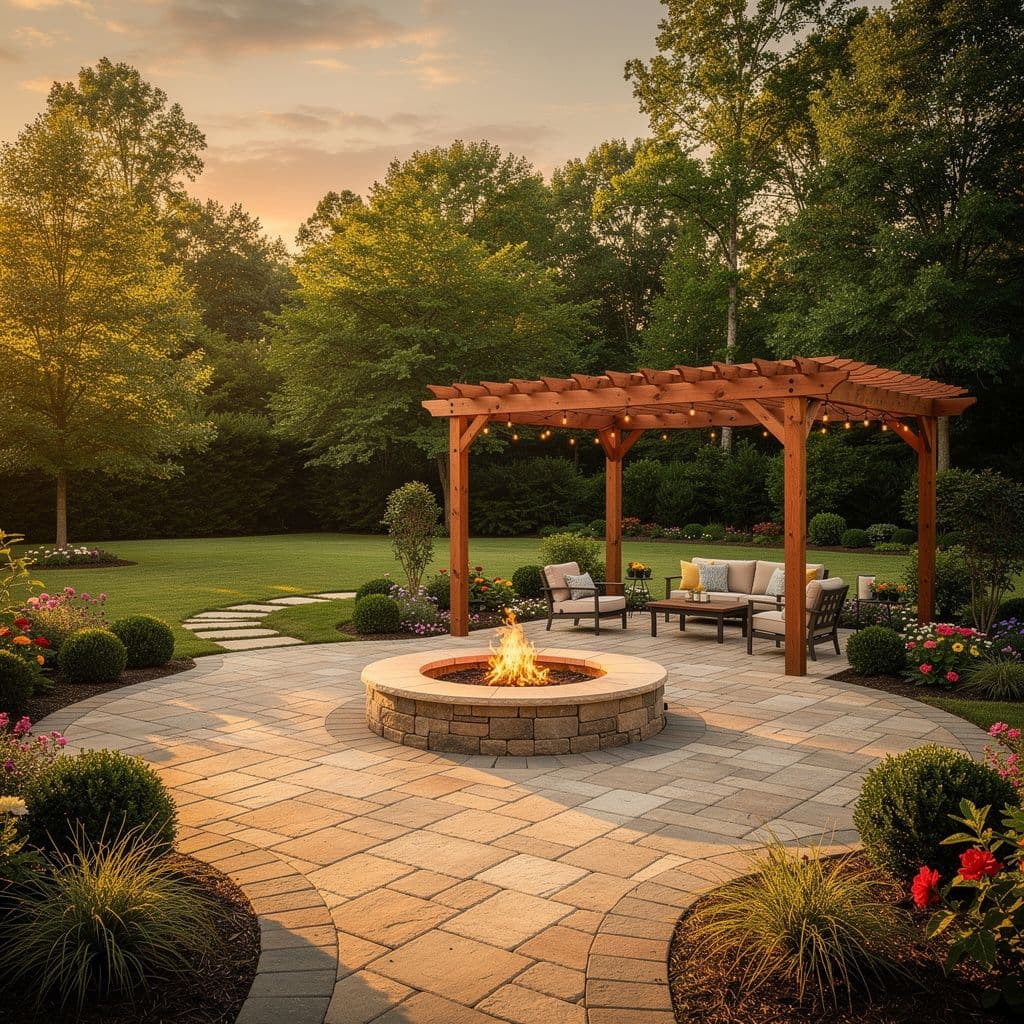
Landscaping Henry County GA: Backyard Ideas & Outdoor Living Design Guide
Published: June 30, 2026 · Updated: August 7, 2026
Your backyard has more potential than you think. If you're like most homeowners in Henry County, you probably use your front yard to make a good impression on the neighbors — and your backyard to actually live. It's where the kids play, where the dog runs, where you grill on Saturdays, and where you unwind after a long day.
But if your backyard right now is just a rectangle of grass with a fence around it, you're leaving a lot of that potential on the table.
Outdoor living spaces — patios, fire pits, garden beds, seating walls, walkways, and more — turn a basic backyard into an extension of your home. In neighborhoods across Locust Grove (30248), McDonough (30252 & 30253), Stockbridge (30281), Hampton (30228), Jonesboro (30236), and Morrow (30260), homeowners are investing in backyard transformations that increase property value, create usable space, and make spending time outdoors genuinely enjoyable.
If you've been searching for landscaping Henry County GA or "landscapers near me," this guide is for you. We'll walk through the best backyard landscaping ideas for Georgia homes — what works in our climate, what adds the most value, and how to get started.
Why Backyard Landscaping Matters in Henry County
Henry County's climate is uniquely suited to outdoor living. Our long warm season — typically April through October — means you can use your backyard for seven-plus months out of the year. The combination of abundant sunshine, moderate rainfall, and warm evenings makes outdoor spaces not just usable but genuinely comfortable for most of the year.
But the same conditions that make outdoor living great also make backyard landscaping essential. Without proper design and maintenance, Georgia's clay soil, aggressive weed growth, and summer thunderstorms will turn an unplanned backyard into a muddy, overgrown mess. Good landscaping in Henry County GA isn't just about aesthetics — it's about creating a functional, durable space that holds up to our climate.
The ROI of Outdoor Living Improvements
According to the National Association of Realtors, well-designed outdoor living projects can recover 50–80% of their cost in added home value. But the real return is in quality of life. A backyard with a patio, fire feature, and intentional landscaping becomes the place where your family actually wants to spend time — not just a yard you look at through the window.
In Henry County's growing real estate market, homes with professional landscaping and outdoor living features consistently sell faster and at higher prices than comparable homes without them. Appraisers and real estate agents in the McDonough and Locust Grove markets specifically point to patios, fire pits, and mature landscape beds as features that set listings apart — especially in sought-after communities like Eagle's Landing and the Heritage Park area. Learn more about how landscaping increases property value in Henry County.
10 Backyard Landscaping Ideas That Work in Henry County
Not every landscaping idea translates well to Georgia's climate and soil conditions. These ten ideas are proven to work in Henry County — they're practical, they're durable, and they're designed for the way people actually use their yards.
1. Paver Patios: The Foundation of Outdoor Living
A paver patio is the single most impactful backyard improvement you can make. It creates a flat, usable surface for seating, dining, and entertaining — and it defines the space, giving your backyard structure and purpose.
In Henry County, paver patios work particularly well because they handle our clay soil better than poured concrete. Clay expands and contracts with moisture changes, which cracks rigid concrete slabs. Pavers flex individually, so they move with the soil without cracking. A properly installed paver patio with the right base preparation will last decades in Georgia conditions.
Popular paver styles in neighborhoods around Locust Grove (30248) and the Avalon subdivision include natural stone looks, brick patterns, and large-format modern slabs. Colors that complement Georgia's warm landscape tones — grays, warm browns, and terracottas — tend to age the best.
For more details on patio materials, costs, and installation, check our complete patio installation guide.
2. Fire Pits: Year-Round Gathering Spots
A fire pit extends your outdoor living season by three to four months. Even when evening temperatures drop into the 40s in October and November, a fire feature makes your backyard comfortable and inviting.
Fire pits come in two main types:
- Wood-burning fire pits — The classic campfire experience. Lower cost, more ambiance, but require firewood, produce smoke, and need careful placement away from structures and trees.
- Gas fire pits — Clean, instant, and controllable. Can be turned on and off with a switch. Higher upfront cost but dramatically more convenient. Many homeowners in the Eagle's Landing community and along the Jonesboro (30236) corridor opt for gas features for their convenience and clean look.
Either way, a fire pit creates a natural focal point for your backyard. Add hardscaping like seating walls around it, and you've got a gathering space that works for everything from family s'mores night to entertaining guests.
3. Retaining Walls and Seating Walls
Henry County's rolling terrain means many backyards have slope issues. A retaining wall solves erosion problems, creates level planting areas, and adds visual structure to a sloped yard. But retaining walls aren't just functional — when built at seating height (18–22 inches), they double as outdoor seating.
In neighborhoods with hilly terrain around Hampton (30228) and the Heritage Park area in McDonough (30252), retaining walls transform unusable slopes into terraced garden spaces. Materials like fieldstone, concrete blocks, and boulders blend naturally with Georgia's landscape.
Pair a retaining wall with a hardscaping project like a patio, and you've created a complete outdoor room with defined edges, built-in seating, and visual interest. If you're planning a full property upgrade, our landscape renovation planning guide for Henry County walks through the entire process step by step.
4. Foundation and Border Planting Beds
The fastest way to make your backyard look intentional and designed — rather than just "grass with a fence" — is to install planting beds along the perimeter, near the patio, and around the foundation of your home.
In Henry County, the best foundation plantings combine:
- Evergreen shrubs (like Hollies, Boxwoods, and Ligustrum) for year-round structure
- Flowering perennials (like Daylilies, Coneflowers, and Knock Out Roses) for seasonal color
- Ornamental grasses (like Muhly Grass and Fountain Grass) for texture and movement
- Ground cover (like Liriope or Creeping Jenny) to suppress weeds and define edges
A well-designed planting bed uses mulch or pine straw to retain moisture, regulate soil temperature, and create a clean, finished look. Fresh mulch is one of the highest-impact, lowest-cost improvements you can make to your backyard's appearance. For front yard-specific planting ideas, see our front yard landscaping guide for Henry County.
5. Walkways and Pathways
A walkway does more than get you from point A to point B. It guides movement through your yard, connects different outdoor spaces, and adds visual flow. In a backyard with a patio, a garden area, and a fire pit, a connecting walkway ties the spaces together.
Popular walkway materials in Henry County include:
- Flagstone — Natural, irregular shapes that blend with the landscape
- Stepping stones — Spaced through grass or gravel for a casual look
- Paver walkways — Match your patio material for a cohesive design
- Gravel paths — Affordable, drainage-friendly, and cottage-style
A walkway also solves a practical problem: it keeps foot traffic off your grass, preventing the worn, bare paths that develop when people walk the same route across a lawn. If you struggle with worn paths in your yard — a common issue in the high-traffic subdivisions around Stockbridge (30281) and the Tanger Outlets area — a stepping stone walkway is an immediate fix.
6. Outdoor Lighting
Outdoor lighting is one of the most underrated backyard improvements. It extends the usability of your outdoor space into the evening hours, improves safety along walkways and steps, and adds a warm, inviting ambiance that makes your backyard look professionally designed.
Effective backyard lighting typically includes three layers:
- Path lighting — Low fixtures along walkways and patio edges for safety
- Accent lighting — Uplights on trees, architectural features, or garden beds
- Ambient lighting — String lights, lanterns, or fire features for overall warmth
In particular, uplighting on mature trees — which established Henry County neighborhoods like Eagle's Landing and the older subdivisions of Morrow (30260) have in abundance — creates a dramatic nighttime effect that completely transforms the look of your backyard after dark.
7. Garden and Landscape Islands
A landscape island is a freestanding planting bed in the middle of your yard — not connected to the house, fence, or property line. Islands break up large expanses of flat lawn and create visual interest from every angle.
A typical island might include a central specimen tree (like a Japanese Maple, Crape Myrtle, or Dogwood), surrounded by lower shrubs and perennial flowers, edged in stone or steel, and mulched for a clean finish.
Islands work particularly well in the larger lots common in rural areas of Henry County, particularly around Locust Grove (30248) and the Atlanta Motor Speedway area near Hampton (30228), where quarter-acre and half-acre backyards are standard. In a big, open yard, a well-placed landscape island prevents the space from feeling like a vacant lot.
8. Shade Structures: Pergolas and Arbors
Georgia summers are sunny, and by July, a backyard with no shade becomes uncomfortably hot by mid-afternoon. A pergola over your patio creates filtered shade that makes the space usable throughout the day, while an arbor over a walkway adds vertical interest and supports climbing plants.
Pergolas can be freestanding or attached to your home. Modern designs use either cedar wood (warm, natural, traditional) or low-maintenance fiberglass/vinyl (clean, contemporary, no staining required). Adding a climbing vine like Confederate Jasmine or Carolina Jessamine — both Georgia natives — softens the structure and adds fragrance.
A pergola also defines an outdoor "room" without walls. It creates the sense that your patio is an intentional space — a destination in your yard, not just a slab of stone. Homeowners in the Avalon subdivision and throughout McDonough frequently request pergolas to extend patio usability during peak summer months.
9. Lawn Areas for Recreation
Even in a fully landscaped backyard, most families want a section of open lawn. Whether it's for kids to run, dogs to play, or setting up a game of cornhole, a well-maintained grass area is a functional part of any backyard design.
The key is right-sizing your lawn area. Too much grass means high maintenance and wasted space. Too little means no room for activities. A professional lawn care plan keeps your recreation turf thick, healthy, and bare-spot-free — even with heavy use.
For large properties, consider how the lawn connects to other spaces. A grass path between a patio and garden bed, for example, creates a transition zone that feels natural and intentional. Our property maintenance services ensure your landscaping stays in top shape year-round.
10. Drainage Solutions Disguised as Landscaping
Many Henry County backyards have drainage issues — standing water after thunderstorms, soggy low spots, or erosion on slopes. The best backyard designs solve these problems while making them look like intentional landscape features.
- Dry creek beds — A channel of river rock that handles water flow during storms but looks like a decorative stream bed year-round
- Rain gardens — A planted depression that collects and absorbs runoff, filled with moisture-loving native plants
- Berms and swales — Subtle changes in grade that direct water away from your patio and foundation
Proper drainage protects your landscaping investment. Without it, patios shift, plants drown, and grass dies — a frequent concern for homeowners near the Heritage Park area and other low-lying sections of McDonough (30253). For a full breakdown of drainage approaches, see our yard drainage solutions guide.
How to Plan Your Backyard Landscaping Project
A great backyard doesn't happen by accident. It starts with a plan. Here's how to approach the process.
Step 1: Define How You Want to Use the Space
Before picking materials or plants, think about function. Do you want a space for entertaining? A quiet retreat? A play area for kids? A garden? Most homeowners want a combination — and that's where intentional design comes in.
Write down your top three uses for the backyard. That list becomes the foundation for everything else.
Step 2: Set a Realistic Budget
Backyard landscaping projects in Henry County typically range from:
- $2,000–$5,000 for basic improvements (mulch, planting beds, small patio)
- $5,000–$15,000 for mid-range projects (paver patio, fire pit, lighting, landscaping)
- $15,000–$40,000+ for full transformations (large patio, retaining walls, outdoor kitchen, comprehensive lighting and landscaping)
The most impactful projects tend to be in the mid-range — a well-designed patio with a fire feature, planting beds, and lighting transforms a backyard for less than the cost of a kitchen remodel.
Step 3: Work With a Local Professional
Henry County's clay soil, drainage patterns, and plant compatibility require local expertise. A design that works on paper might fail in practice if it doesn't account for our soil conditions, slope, or sun exposure.
A professional landscaping company handles everything from design and material selection to installation and ongoing property maintenance. They'll identify potential issues — drainage problems, utility lines, HOA restrictions — before they become expensive mistakes. Not sure how to find the right one? Read our guide on finding the best landscapers in Henry County GA.
Seasonal Considerations for Henry County Backyards
Summer (June–August)
Summer is peak outdoor living season, but it's also the harshest time for new landscaping. If you install plants or sod during summer, they'll need extra water and attention to establish. Hardscape projects — patios, walkways, retaining walls — can be installed any time of year.
Fall (September–November)
Fall is the best time for planting in Georgia. Cooler temperatures and reliable rainfall help plants establish root systems before winter. It's also an ideal time for hardscape projects, as the moderate weather is comfortable for outdoor construction.
Winter (December–February)
Winter is planning season. With leaves off the trees and grass dormant, you can see your yard's underlying structure clearly. Use winter to plan your spring project, so installation can begin as soon as the weather breaks.
Spring (March–May)
Spring is the most popular time for landscaping projects. The weather is ideal, garden centers are fully stocked, and everything is growing. Book your project early — reputable landscapers in Henry County fill their spring schedules by February.
Low-Maintenance Backyard Landscaping Tips
Not everyone wants a high-maintenance backyard. If your goal is to relax in your outdoor space — not spend every weekend maintaining it — these strategies help:
- Choose native plants adapted to Henry County's rainfall patterns (they'll need less water and fertilizer)
- Use mulch or pine straw in all planting beds to suppress weeds and retain moisture
- Install drip irrigation in garden beds (more efficient than hand-watering)
- Opt for hardscaping (patios, walkways) in high-traffic areas to reduce lawn size
- Group plants by water needs so irrigation is efficient
- Use landscape fabric under mulch to dramatically reduce weed growth
For more low-maintenance strategies, see our guide to low-maintenance yard ideas for Henry County homes. You can also browse our lawn care guide for Stockbridge for region-specific turf tips.
Frequently Asked Questions
What does professional landscaping cost in Henry County, GA?
Backyard landscaping in Henry County typically costs between $5,000 and $25,000 depending on scope. A basic project with planting beds, mulch, and a small paver patio might run $3,000–$7,000. A full outdoor living space with a large patio, fire pit, retaining walls, lighting, and comprehensive landscaping typically ranges from $15,000–$30,000. Homeowners in McDonough (30252/30253), Stockbridge (30281), and Locust Grove (30248) can request a free on-site consultation to get an accurate estimate tailored to their property.
Do I need a permit for a patio or fire pit in Henry County?
Most residential hardscape projects — including paver patios and fire pits — do not require a permit in unincorporated Henry County, though HOA approval may be needed in planned neighborhoods like Eagle's Landing or the Avalon subdivision. Structures with a roof (like covered pergolas), outdoor kitchens with gas lines, and retaining walls over four feet typically do require permits. Always check with Henry County Building Department and your HOA before starting construction.
What are the best low-maintenance plants for landscaping in Henry County, GA?
The best low-maintenance plants for our area include Crape Myrtles, Hollies, Boxwoods, Liriope, Daylilies, Knock Out Roses, Muhly Grass, and Confederate Jasmine. These plants are adapted to Georgia's heat, handle clay soil well (common throughout Hampton 30228 and Jonesboro 30236), and require minimal pruning and fertilization once established. See our native plants guide for a complete list.
How long does a backyard landscaping project take in Henry County?
Most backyard landscaping projects in Henry County take 1–3 weeks from start to finish. Small projects (planting beds, minor hardscaping) can be completed in 2–5 days. Mid-size projects (patio, fire pit, landscaping) typically take 1–2 weeks. Large transformations with multiple hardscape elements, retaining walls, and extensive lighting may take 3–4 weeks. Weather can affect timelines, especially during our summer thunderstorm season.
Can I install a patio myself, or should I hire a professional for landscaping in Henry County GA?
While DIY patio kits exist, proper installation in Henry County requires significant excavation, base preparation, and grading to handle our clay soil — especially in areas around Morrow (30260) and the Tanger Outlets area where drainage can be tricky. Without the right base — typically 4–6 inches of compacted gravel plus a sand setting bed — pavers will settle, shift, and become uneven within a year or two. For a patio that lasts decades, professional landscaping installation is strongly recommended.
What's the best time of year to start a landscaping project in Henry County, GA?
Fall (September–November) and early spring (March–April) are ideal for planting, as moderate temperatures help plants establish. Hardscape projects (patios, walkways, retaining walls) can be installed year-round in Georgia, though most homeowners prefer to schedule them for spring or fall to have the space ready for peak outdoor season. Book spring projects early — by late January — to secure your preferred timeline. Popular neighborhoods near the Atlanta Motor Speedway and Heritage Park area tend to book up fastest.
Ready to Transform Your Backyard?
Your backyard should be more than grass and a fence. It should be the place where your family spends summer evenings, where friends gather for birthdays and barbecues, and where you can actually relax at the end of a long day.
At Hedgecoth Property Solutions, we design and build outdoor living spaces across Locust Grove, McDonough, Stockbridge, Jonesboro, Hampton, and throughout Henry County. From paver patios and fire pits to comprehensive landscape design and ongoing property maintenance, we handle every aspect of your backyard transformation — start to finish.
Whether you have a clear vision or just know you want something better, we'll help you design a space that fits your home, your lifestyle, and your budget.
Call 770-490-9519 or contact us online to schedule your free backyard consultation. Let's build something you'll enjoy for years.