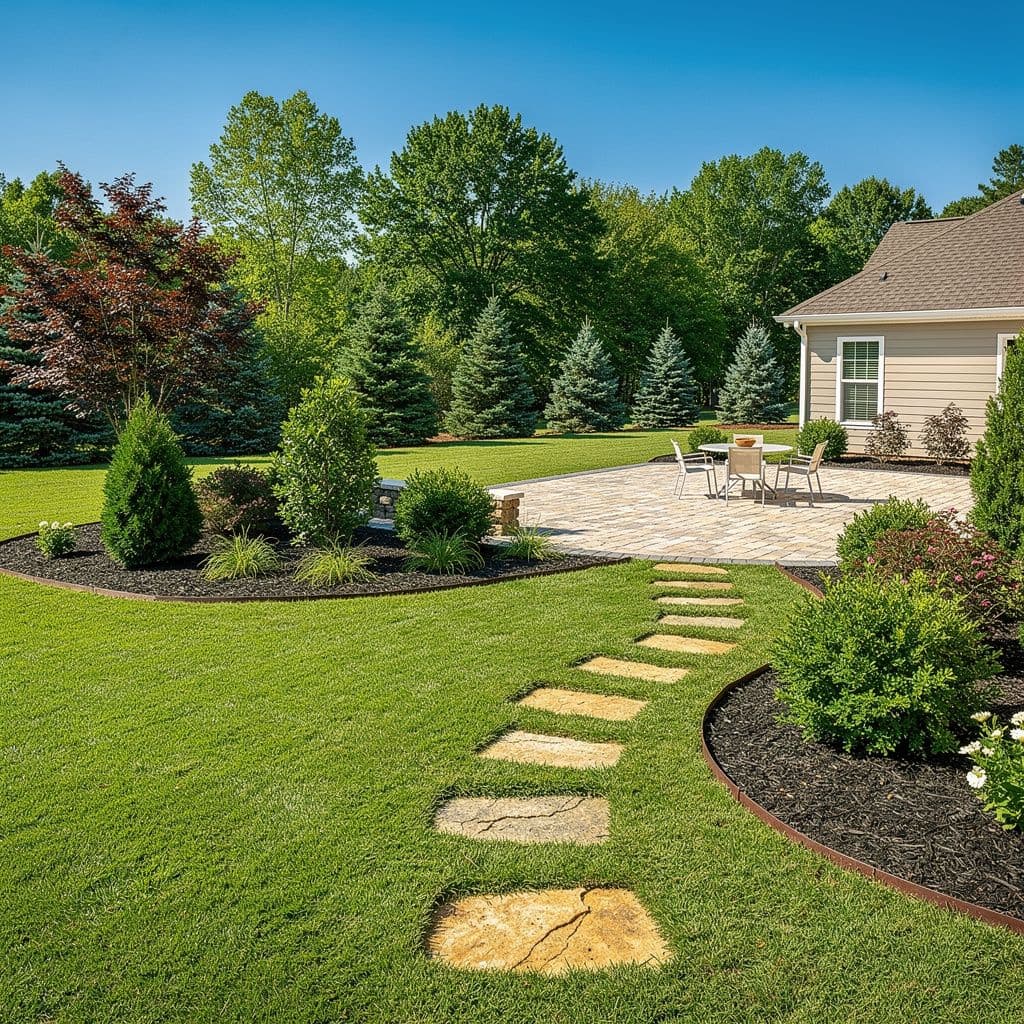
Low-Maintenance Yard Ideas for Henry County, GA: Spend Less Time Working, More Time Enjoying
Published: May 19, 2026
Every Saturday morning, the same routine plays out across Henry County. You roll out of bed, grab coffee, and head outside — not to enjoy your yard, but to wrestle with it. Three hours of mowing, edging, pulling weeds, trimming hedges, and spreading mulch later, your weekend is half gone and your back is screaming.
What if your yard could look amazing without consuming every free hour you have?
A low-maintenance yard isn't about letting things go. It's about designing and maintaining your landscape so it works with Georgia's climate instead of against it. The right plant choices, smart hardscaping, proper lawn care practices, and strategic mulching can cut your yard work by 50-70% while actually making your property look better.
At Hedgecoth Property Solutions, we've helped homeowners throughout Locust Grove, McDonough, Stockbridge, Jonesboro, and Morrow transform high-maintenance yards into easy-care landscapes. Here's exactly how to do it.
Why Henry County Is Perfect for Low-Maintenance Landscaping
Before you think "low-maintenance" means rocks and cacti, consider this: Georgia's climate is one of the best in the country for easy-care landscapes when you choose the right approach.
Our advantages:
- Long growing season — plants establish quickly and fill in fast, meaning less bare ground to weed
- Abundant rainfall — 50+ inches per year means less irrigation once plants are established
- Mild winters — less winter damage, less spring repair, no months of brown dormancy for evergreens
- Warm-season grasses — Bermuda, Zoysia, and Centipede naturally spread and fill bare spots without reseeding
- Native plants thrive — Georgia natives are adapted to our heat, humidity, and clay soil with zero extra care
The secret is working with what grows well here naturally instead of fighting against it. A landscape filled with plants that love Henry County's conditions will practically take care of itself.
The Five Pillars of a Low-Maintenance Yard
Pillar 1: Choose the Right Grass (Or Replace It Entirely)
Your lawn is usually the highest-maintenance part of your property. The right grass choice — or strategic grass reduction — makes the biggest impact on your weekly workload.
Best low-maintenance grasses for Henry County:
Zoysia Grass (Top Recommendation)
- Dense growth naturally chokes out weeds
- Slow vertical growth = less mowing (every 10-14 days vs. weekly for Bermuda)
- Excellent heat and drought tolerance
- Beautiful carpet-like appearance
- Varieties: Palisades (shade tolerant), Zeon (fine-bladed, premium look)
Centipede Grass (Lazy Man's Grass)
- Nicknamed "the lazy man's grass" for good reason
- Requires less fertilizer than any other warm-season grass
- Tolerates poor soil (great for Georgia clay)
- Lower nitrogen needs = less fertilizing
- Mow every 2-3 weeks during peak season
Bermuda Grass (If You Want Durability)
- Most wear-tolerant — great for kids and pets
- Fast growth fills bare spots quickly
- Drought tolerant once established
- Downside: requires weekly mowing during summer
Consider reducing lawn area:
The most effective low-maintenance strategy is having less grass to care for. You don't need to eliminate your lawn — just shrink it strategically:
- Replace grass on slopes (hard to mow, erosion-prone) with ground covers or terraced beds
- Convert narrow side-yard strips to mulched pathways or gravel
- Expand existing landscape beds by 2-3 feet to reduce mowing area
- Use hardscaping — patios, walkways, seating areas — to replace grass in high-traffic zones
Every 100 square feet of grass you replace is 100 square feet you never have to mow, water, fertilize, or weed again.
Pillar 2: Plant Smart — Georgia Natives and Adapted Species
Plant selection is where most homeowners go wrong. They buy what looks pretty at the garden center without considering how much care it will need in their specific yard. The result? High-maintenance plants that need constant watering, pruning, spraying, and babying.
Low-maintenance shrubs for Henry County:
Evergreen foundation shrubs (plant once, enjoy for decades):
- Carissa Holly — compact, no pruning needed, drought tolerant
- Distylium — pest and disease resistant, tolerates clay and shade
- Fatsia — large tropical leaves, shade loving, zero maintenance
- Podocarpus — upright, narrow growth, great for tight spaces
Flowering shrubs (seasonal color without replanting):
- Loropetalum — purple foliage year-round, pink flowers in spring
- Knockout Roses — disease resistant, blooms April through November
- Viburnum — spring flowers, fall color, wildlife friendly
- Oakleaf Hydrangea — Georgia native, stunning summer blooms, fall color
Low-maintenance ground covers (replace grass in shady or problem areas):
- Mondo Grass — looks like grass but never needs mowing
- Liriope (Monkey Grass) — indestructible, shade tolerant, evergreen
- Creeping Jenny — bright chartreuse, spreads fast
- Asiatic Jasmine — dense, evergreen, chokes out weeds
The "right plant, right place" rule:
This single principle eliminates 80% of landscape maintenance problems. Every plant has ideal conditions for sun, soil, and water. Put the right plant in the right spot and it thrives with minimal care. Put the wrong plant in the wrong spot and you'll fight it forever.
Before buying any plant, ask:
- How much sun does this area get? (Full sun = 6+ hours, part shade = 3-6, full shade = less than 3)
- How's the drainage? (Clay soil holds water — some plants rot, others love it)
- How big will this plant get? (Planting too close to the house means constant pruning)
- Is this plant cold-hardy for USDA Zone 8a? (Henry County's zone)
Pillar 3: Master Your Mulch Game
Mulch is the single most effective low-maintenance tool in your landscape arsenal. A properly mulched bed reduces weeds by 90%, retains soil moisture, moderates soil temperature, and looks polished — all with zero weekly effort.
Why mulch is your best friend:
- Suppresses weeds — 3-4 inches of mulch blocks sunlight from weed seeds
- Retains moisture — reduces watering needs by 25-50%
- Regulates soil temperature — keeps roots cool in summer, warm in winter
- Prevents erosion — critical for Henry County's sloped properties
- Improves soil — organic mulches break down and feed your soil over time
- Looks professional — instantly makes any landscape bed look maintained
Mulch types for Henry County:
Hardwood mulch (best overall):
- Long-lasting (1-2 years before refresh needed)
- Stays in place on slopes
- Available dyed (brown, black, red) or natural
- Our recommendation for most landscapes
Pine straw (best for large areas and slopes):
- Most cost-effective for large beds
- Interlocks and stays put on steep slopes
- Natural Georgia look (pine forests are native here)
- Slightly acidifies soil (great for azaleas, camellias, hydrangeas)
- Needs refreshing 1-2 times per year
Pine bark nuggets (best for decorative beds):
- Attractive, chunky texture
- Very long-lasting
- Doesn't blow or wash away easily
- Best for flat, visible beds near entryways
How much mulch do you need?
For a 100 square foot bed at 3 inches deep:
- Approximately 1 cubic yard covers 100 sq ft at 3 inches
- Order by the cubic yard for large areas (cheaper than bags)
- Hedgecoth delivers and installs — saving you the heavy lifting
The mulch maintenance cycle:
- Year 1: Apply 3-4 inches of fresh mulch
- Year 2: Refresh top 1-2 inches (don't remove old mulch)
- Year 3: Full refresh or top-dress
- Repeat
Compared to weekly weeding, this is a fraction of the effort.
Pillar 4: Smart Hardscaping — Beautiful, Zero Maintenance
Hardscaping — patios, walkways, retaining walls, and decorative stone areas — is the ultimate low-maintenance solution. Stone, concrete, and pavers don't grow, don't need water, don't get diseases, and look great year-round.
High-impact hardscaping projects for Henry County:
Patios and outdoor living areas:
- Replace high-maintenance grass with a functional outdoor room
- Paver patios last 25-50 years with minimal upkeep
- Extends your living space and increases home value
- Perfect for entertaining near Heritage Point in Stockbridge or off Hwy 81 in Locust Grove
Walkways and pathways:
- Connect driveway to front door with a clean stone or paver path
- Eliminates grass in narrow strips (the hardest areas to mow)
- Reduces mud tracked into the house
- Materials: flagstone, concrete pavers, brick, gravel with edging
Retaining walls:
- Transform steep, unmowable slopes into level, usable space
- Create terraced planting beds that are easy to maintain
- Prevent erosion on Henry County's rolling terrain
- Materials: concrete block, natural stone, timbers
Decorative stone areas:
- Dry creek beds replace soggy, hard-to-mow low spots
- River rock beds in narrow side yards
- Decorative boulders as focal points (zero maintenance, instant impact)
- Gravel areas with drought-tolerant plants for full-sun spots
Investment vs. return:
Hardscaping costs more upfront but delivers decades of zero maintenance. A 200 sq ft paver patio costs $3,000-6,000 installed but saves 15+ years of mowing, watering, and fertilizing that same area. Plus, it adds $5,000-10,000 in home value.
Pillar 5: Irrigation Efficiency
If you're spending time dragging hoses and moving sprinklers around your yard, you're wasting time and water. An efficient irrigation system — or strategic watering practices — dramatically reduces your maintenance workload.
Smart irrigation upgrades:
Drip irrigation for landscape beds:
- Delivers water directly to plant roots
- Uses 50-70% less water than sprinklers
- No water wasted on paths, driveways, or weeds
- Set it and forget it — plants water themselves
- Ideal for foundation plantings, flower beds, and vegetable gardens
Smart controllers for lawn irrigation:
- Weather-based scheduling adjusts for rain, temperature, and season
- WiFi-connected — control from your phone
- Reduces water waste by 20-40%
- Prevents overwatering (which creates more maintenance through disease and weeds)
Rain barrels and collection:
- Free water for landscape beds
- Reduces water bills
- Plants prefer rainwater over treated tap water
- Low-tech, low-cost solution
If you don't have an irrigation system:
- Water deeply and infrequently (1 inch per week in 1-2 sessions)
- Water early morning (4-8 AM) to reduce evaporation and disease
- Use soaker hoses in beds instead of overhead sprinklers
- Focus water on new plantings — established plants need less
The Low-Maintenance Yard Action Plan
Ready to transform your yard? Here's a phased approach that spreads cost and effort over time.
Phase 1: Quick Wins (This Weekend, $0-$200)
1. Raise your mowing height:
- Set mower to 2.5-3 inches for Bermuda/Zoysia
- Taller grass shades soil, suppresses weeds, grows slower
- Immediate reduction in mowing frequency
2. Edge your landscape beds:
- Clean edge between lawn and beds looks professional
- Install metal or plastic edging to prevent grass creeping into beds
- Reduces hand-trimming time by 50%
3. Refresh mulch in visible beds:
- Add 2-3 inches of mulch to front beds and entry areas
- Instant visual upgrade, weed suppression for months
4. Remove high-maintenance plants:
- That rose bush that's always diseased? Replace it with a Carissa Holly
- The hedge you trim monthly? Replace with a natural-form shrub
- The English ivy climbing everything? Remove it (it's invasive anyway)
Phase 2: Strategic Upgrades (1-3 Months, $500-$3,000)
1. Expand landscape beds:
- Curve bed lines outward by 2-3 feet
- Reduces mowing area significantly
- Fill expanded beds with low-maintenance shrubs and thick mulch
2. Install edging:
- Steel, aluminum, or concrete edging along all bed lines
- Permanent solution that eliminates hand-edging forever
- Clean, professional look
3. Add ground covers to problem areas:
- Shady areas where grass won't grow → Mondo Grass or Liriope
- Steep slopes → Juniper or Asiatic Jasmine
- Narrow side yards → gravel or stepping stones with creeping thyme
4. Upgrade to low-maintenance plants:
- Replace annual flower beds with perennial shrubs
- Remove high-pruning hedges with natural-form evergreens
- Plant Georgia natives that thrive without intervention
Phase 3: Major Transformations (3-12 Months, $2,000-$10,000+)
1. Add a patio or seating area:
- Reduces lawn area permanently
- Creates usable outdoor living space
- Significant property value increase
2. Install retaining walls:
- Tame slopes that are dangerous or impossible to mow
- Create level planting areas that are easy to maintain
- Solve drainage problems permanently
3. Install or upgrade irrigation:
- Drip irrigation for all beds
- Smart controller for lawn zones
- Set it and forget it — no more hand-watering
4. Resod with low-maintenance grass:
- Zoysia or Centipede for reduced mowing frequency
- Professional installation ensures proper establishment
- Long-term payoff in reduced maintenance time and cost
Common Low-Maintenance Mistakes to Avoid
Even with the best intentions, homeowners often make choices that increase maintenance instead of reducing it. Here are the traps to avoid.
Mistake 1: Choosing "No Maintenance" Over "Low Maintenance"
There's no such thing as a zero-maintenance landscape — even concrete needs occasional cleaning. The goal is low maintenance, not no maintenance. Gravel yards attract weeds. Artificial turf collects debris and gets hot. Rock beds collect leaves that are hard to remove.
A well-designed landscape with appropriate plants and mulch actually requires less effort than a stark, plant-free yard.
Mistake 2: Planting Too Close Together (Or Too Far Apart)
Too close: Plants compete for resources, grow spindly, and need constant pruning to keep from overlapping. Follow spacing guidelines on plant tags — they exist for a reason.
Too far apart: Bare soil between plants invites weeds. Fill gaps with mulch (short-term) or ground covers (long-term) until plants fill in.
Mistake 3: Ignoring Drainage
Henry County's clay soil holds water. Poor drainage kills more plants than any other factor, and dead plants need replacement — the opposite of low-maintenance. Before planting:
- Observe where water pools after heavy rain
- Install French drains or dry creek beds in problem areas
- Amend soil with compost to improve drainage
- Choose moisture-tolerant plants for wet areas
Mistake 4: Over-Mulching
More mulch isn't better. Piling mulch against plant stems and tree trunks (volcano mulching) causes rot, invites insects, and kills plants. Keep mulch 2-3 inches away from stems and trunks, and never exceed 4 inches total depth.
Mistake 5: Neglecting the First Year
New plants need regular watering during their first growing season to establish deep roots. After that first year, most well-chosen plants need little to no supplemental water. The investment of attention in year one pays off with years of low maintenance.
Seasonal Maintenance Calendar for Your Low-Maintenance Yard
One of the biggest benefits of a low-maintenance landscape is that seasonal tasks become quick and simple. Here's your year-round calendar.
Spring (March-May)
- Refresh mulch in beds (1-2 inches)
- Apply pre-emergent herbicide to beds and lawn
- Prune shrubs that bloom on new wood (if needed)
- Check irrigation system
- Time investment: 2-3 weekends
Summer (June-August)
- Mow every 10-14 days (Zoysia/Centipede) or weekly (Bermuda)
- Spot-check irrigation during dry spells
- Light pruning of any wayward branches
- Time investment: 1-2 hours per week
Fall (September-November)
- Remove fallen leaves from beds and lawn
- Apply fall pre-emergent
- Plant new shrubs and trees (ideal time in Georgia)
- Refresh mulch if needed
- Time investment: 2-3 weekends
Winter (December-February)
- Prune dormant shrubs and trees
- Clean and sharpen tools
- Plan spring projects
- Time investment: 1 weekend total
Compare that to a traditional yard: weekly mowing, weekly edging, constant weeding, monthly pruning, seasonal planting, watering 3-4 times per week. A low-maintenance yard cuts your year-round effort by 60-70%.
When to Call a Professional
Even low-maintenance yards benefit from professional help at key moments. Here's when it makes sense to call Hedgecoth Property Solutions.
You should call us if:
- You're planning a landscape transformation — we design low-maintenance plans tailored to your property, soil, and sun conditions
- You need hardscaping installed — patios, walls, and walkways require professional grading, base preparation, and installation for longevity
- You want to replace your grass — sod installation, ground cover establishment, or lawn renovation requires expertise and equipment
- You need irrigation upgrades — drip systems and smart controllers need professional design and installation
- You want the results without any of the work — our property maintenance programs handle everything
Our low-maintenance yard services:
- Landscape design and consultation
- Lawn care programs (mowing, fertilization, weed control)
- Mulch delivery and installation
- Hardscaping design and installation
- Irrigation system installation and management
- Shrub and hedge trimming
- Seasonal cleanup services
Serving: Locust Grove, McDonough, Stockbridge, Jonesboro, Morrow, and all of Henry County.
FAQ: Low-Maintenance Yards in Henry County, GA
What is the lowest-maintenance grass for Henry County?
Centipede grass is the lowest-maintenance option for Henry County lawns. It requires less fertilizer than Bermuda or Zoysia, grows slowly enough to need mowing only every 2-3 weeks, tolerates poor clay soil, and naturally resists many common lawn diseases. Zoysia is our second recommendation — slightly more upscale appearance with only slightly more maintenance.
How can I reduce the size of my lawn without it looking bad?
Expand your landscape beds with curved borders (straight lines look stiff and unnatural), fill them with low-growing evergreen shrubs and 3-4 inches of mulch, and add a clean edge between bed and lawn. In areas where grass struggles (deep shade, slopes, drainage swales), replace it with ground covers like Mondo Grass, Liriope, or Asiatic Jasmine. Add a patio or walkway in high-traffic areas. The key is making it look intentional, not neglected.
What are the best low-maintenance plants for Georgia clay soil?
For shrubs: Carissa Holly, Distylium, Fatsia, and Loropetalum all thrive in clay with minimal care. For ground covers: Mondo Grass, Liriope, and creeping juniper handle clay beautifully. For trees: Red Maple, Eastern Redbud, and Yaupon Holly are native to Georgia and perform well in our soil. The trick is avoiding plants that need loose, well-drained soil — lavender, rosemary, and many Mediterranean herbs will struggle in Henry County clay.
How much does a low-maintenance yard transformation cost?
Costs vary widely based on your property size and goals. Quick wins (raising mowing height, refreshing mulch, edging beds) cost $200-500 in materials. Mid-range projects (expanding beds, adding ground covers, installing edging) run $500-3,000. Major transformations (patio installation, retaining walls, irrigation systems, full landscape redesign) range from $3,000-15,000+. The investment pays for itself through reduced maintenance time, lower water bills, and increased property value. Contact us for a free estimate tailored to your property.
Is artificial turf a good low-maintenance option?
Artificial turf eliminates mowing but introduces other maintenance: it collects leaves and debris that must be swept or blown off, gets extremely hot in Georgia summers (surface temps can exceed 150°F), requires occasional rinsing to remove odors and pet waste, and degrades over 10-15 years. In Henry County's climate, we generally recommend natural grass or hardscaping over artificial turf. A well-maintained Zoysia or Centipede lawn provides similar low-maintenance benefits with better aesthetics, cooler temperatures, and environmental benefits.
How often should I mulch my landscape beds?
Apply a fresh 3-4 inch layer of mulch initially, then refresh with 1-2 inches annually in spring. Hardwood mulch typically lasts 1-2 years before it needs significant refreshing. Pine straw breaks down faster and may need refreshing twice per year. Avoid the common mistake of piling new mulch on top of old without removing some — excessive mulch depth (over 4 inches) suffocates plant roots. For most Henry County properties, one mulch application per year in March or April keeps beds looking clean and weed-free.
Ready for a Yard That Works For You?
A low-maintenance yard isn't about cutting corners — it's about making smart choices that give you a beautiful property without sacrificing your weekends. The right plants, proper lawn care, strategic hardscaping, and good mulch can transform your yard from a chore into an asset you actually enjoy.
Whether you want a full landscape redesign or just need someone to handle the weekly mowing and seasonal maintenance, Hedgecoth Property Solutions is here to help.
What you get with Hedgecoth:
- Free property assessment and custom maintenance plan
- Professional lawn care at the right heights and frequencies
- Mulch delivery and installation (we handle the heavy lifting)
- Landscape design tailored to your property and lifestyle
- Flexible scheduling — we work around your life, not the other way around
- Transparent pricing with no hidden fees
Serving homeowners throughout Henry County: Locust Grove, McDonough, Stockbridge, Jonesboro, Morrow, and Hampton.
📞 Call today: 770-490-9519
🌐 Online: hedgecoth.pro
📍 Free estimates — no obligation, no pressure
Hedgecoth Property Solutions — Beautiful Yards, Less Work. Henry County's Trusted Property Maintenance Partner.