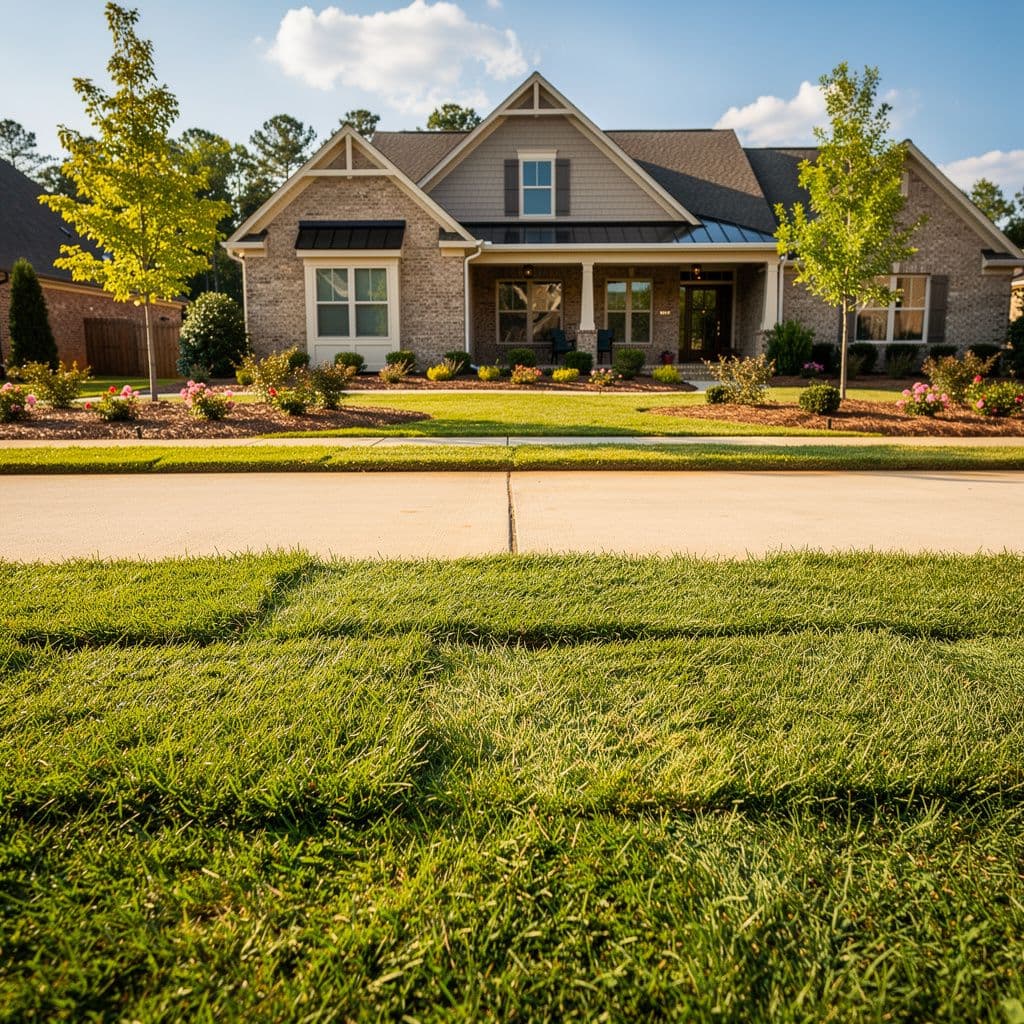
Moving to Henry County? The Complete Lawn Care Guide for New Georgia Residents
Published: June 16, 2026
If you just moved to Henry County — welcome. You picked one of the best corners of metro Atlanta. Between the historic charm of McDonough, the growing communities around Locust Grove, and the established neighborhoods of Stockbridge, this area offers space, affordability, and quality of life that's hard to beat.
But if you moved here from another state — or even from closer to Atlanta — you might have noticed something about your new yard: Georgia lawns don't follow the rules you're used to.
The soil is different. The grass is different. The pests are different. The weather is... well, let's just say Georgia summers are a category of their own. That beautiful green lawn you're imagining doesn't happen by accident. It requires understanding how lawns work in the Southeast, and specifically in Henry County.
Whether you're searching for lawn care near me on your phone, staring at red clay in your backyard, or wondering why your neighbor's lawn looks like a golf course while yours looks like a dust bowl, this guide is for you. We'll cover everything new Henry County residents need to know about lawn care — from soil basics to seasonal schedules to finding the right local service.
Why Georgia Lawns Are Different (And Why It Matters)
If you moved from the Northeast, Midwest, or West Coast, you're probably used to cool-season grasses like Kentucky Bluegrass or Perennial Rye. Those grasses stay green most of the year, go dormant in winter, and need regular watering during dry spells. Pretty straightforward.
Georgia is a different world entirely.
Warm-Season Grasses Rule Here
Henry County lawns are built on warm-season grasses — primarily Bermuda, Zoysia, and Centipede. These grasses evolved for hot, humid climates. They thrive in Georgia's brutal summers and go dormant (turn brown) in winter.
Here's what catches newcomers off guard:
- Your lawn will turn brown in winter. This is normal. It's not dead. It's sleeping. Your brown winter lawn will green up beautifully in spring — usually late March to mid-April in Henry County.
- You can't grow the same grass you had up north. Kentucky Bluegrass simply won't survive a Georgia summer. Don't fight it. Embrace warm-season grasses — they're actually better suited for low maintenance once established.
- Fertilizing schedules are completely different. You feed warm-season grasses during their active growing season (late spring through summer), not in early spring like cool-season grasses up north.
The Red Clay Reality
Georgia's infamous red clay isn't just a stereotype — it's the actual soil in most Henry County yards. Clay soil has some real advantages: it holds nutrients well and retains moisture during droughts. But it also compacts easily, drains poorly, and can suffocate grass roots if not managed properly.
If you're used to the loamy soils of the Midwest or the sandy soils of Florida, clay requires a different approach:
- Aeration is non-negotiable. Clay soil compacts under foot traffic, mowing equipment, and even rainfall. Annual core aeration (usually in late May or June for warm-season grasses) relieves compaction and allows air, water, and nutrients to reach the roots.
- Watering needs to be deep and infrequent. Clay holds water, so frequent shallow watering leads to shallow roots and fungal problems. Water deeply (1 inch per week) in one or two sessions rather than a little every day.
- Soil testing matters more here. Clay soil in Henry County tends to be acidic, which affects nutrient availability. A simple soil test through the UGA Cooperative Extension tells you exactly what your lawn needs. Don't guess — test.
Humidity and Heat: The Double Threat
Georgia summers bring temperatures in the 90s with humidity levels that make it feel like you're living in a sauna. Your lawn feels it too. High humidity creates the perfect environment for fungal diseases like brown patch and dollar spot — problems that are rare in drier climates.
Key adjustments for new residents:
- Water in the early morning (4 AM to 8 AM), never in the evening
- Keep your mower blade sharp to avoid tearing grass (torn blades are more susceptible to disease)
- Don't over-fertilize with nitrogen in summer — it pushes excessive growth that's vulnerable to fungus
- Ensure good airflow by trimming shrubs and trees that block breeze across your lawn
Best Grass Types for Henry County Lawns
If you're starting from scratch — maybe you bought a new construction home or your existing lawn needs a full renovation — choosing the right grass is the most important decision you'll make. For a deeper dive, check our complete guide on the best grass types for Henry County.
Here's the quick version for newcomers:
Bermuda Grass — The Workhorse
The most common lawn grass in Henry County. Bermuda loves full sun, handles foot traffic better than any other warm-season grass, and spreads aggressively to fill bare spots. It's the grass you see on those picture-perfect lawns in McDonough and Locust Grove neighborhoods.
- Mowing height: 1 to 2 inches
- Sun requirement: 6+ hours of direct sun
- Best for: Sunny yards, active families, homes near Toward the Tanger Outlets area with newer construction
Zoysia Grass — The Premium Choice
Zoysia creates a dense, lush, deep-green lawn that looks like carpet. It's more shade-tolerant than Bermuda and has a finer texture. The trade-off: it grows slower, so recovery from damage takes longer.
- Mowing height: 1.5 to 2.5 inches
- Sun requirement: 4+ hours (more shade-tolerant)
- Best for: Established neighborhoods with mature trees, homeowners wanting a premium look
Centipede Grass — The Low-Maintenance Option
Centipede is the "lazy grass" — it grows slowly, needs less fertilizer, and tolerates poor soil better than other warm-season grasses. It has a lighter green color that some people love and others find less attractive.
- Mowing height: 1.5 to 2.5 inches
- Sun requirement: Partial sun to partial shade
- Best for: Large rural lots near Hampton or the southern end of Henry County
The Henry County Lawn Care Calendar: A Quick Overview
New residents always ask: "When do I do what?" Georgia's lawn care calendar doesn't match what you'll find on national gardening websites. Here's a quick summary — for the full breakdown, see our 2026 Lawn Care Calendar for Henry County.
Spring (March–May): Green-Up and Pre-Emergent Season
- March–April: Lawn wakes up from dormancy. Apply pre-emergent herbicide to stop crabgrass before it germinates. Don't fertilize yet — wait until the grass is actively growing.
- Late April–May: First fertilizer application. Core aeration for warm-season grasses. Start mowing at the proper height for your grass type. This is also the ideal time for spring lawn preparation.
Summer (June–August): Peak Growing Season
- June: Peak growth. Mow every 5–7 days. Apply second round of fertilizer. Monitor for lawn diseases and pests.
- July–August: Heat stress management. Water deeply once or twice per week. Watch for brown patch fungus, especially in humid weather. This is when professional lawn care services earn their keep — treatments are timed precisely for summer conditions.
Fall (September–November): Transition and Cleanup
- September–October: Growth slows. Reduce mowing frequency. Apply fall fertilizer (potassium-heavy) to strengthen roots before winter. This is the time for fall cleanup services.
- November: Lawn goes dormant. Last mowing of the season. Leaf removal becomes critical — leaves smother grass and create disease conditions.
Winter (December–February): Dormancy
- Lawn is brown and dormant. Minimal care needed. Avoid foot traffic on frozen grass. Plan next year's treatment schedule. This is the perfect time to research and hire a lawn care company for the coming spring.
Common Mistakes New Henry County Residents Make
After helping hundreds of homeowners across Henry County, we've seen every mistake in the book. Here are the ones that catch newcomers most often:
1. Planting the Wrong Grass
Buying seed or sod at a big box store without checking if it's suited for Georgia is the #1 newcomer mistake. That "all-purpose" grass seed mix won't survive July. Always choose warm-season grasses rated for USDA Zone 8a (Henry County's hardiness zone).
2. Overwatering
More water is not better. In fact, overwatering kills more Henry County lawns than underwatering. It creates shallow roots, encourages fungal disease, and wastes money. Aim for 1 inch of water per week — including rainfall. A simple rain gauge ($10 at any hardware store) takes the guesswork out.
3. Mowing Too Short
"Scalping" the lawn — mowing it down to less than an inch — is a fast way to stress your grass and invite weeds. Every grass type has an ideal mowing height. For most Henry County lawns (Bermuda and Zoysia), that's 1.5 to 2 inches. Never remove more than one-third of the grass blade in a single mowing.
4. Ignoring Soil pH
Georgia clay tends to be acidic. If your pH is below 6.0, your grass can't absorb nutrients efficiently no matter how much fertilizer you apply. A soil test costs about $10 through the UGA Extension office in McDonough. The results will tell you exactly how much lime to apply if needed.
5. Waiting Too Long to Hire Help
Many newcomers try the DIY route their first year, realize they're in over their heads by mid-summer, and then find that the best lawn care companies are already booked. If you want professional help, the best time to call is winter or early spring — not June when your lawn is already struggling.
What About Trees, Shrubs, and Landscaping?
Lawn care is just one piece of the puzzle. If you moved into a property with mature trees, established landscaping, or hardscaping features, there's a whole additional layer of maintenance.
Tree Care
Henry County has beautiful mature trees — oaks, pines, and hardwoods that provide shade and character. But they need maintenance. Dead limbs, overcrowded canopies, and root competition with your lawn are all issues to address. Professional tree trimming services keep trees healthy and your property safe during Georgia's summer thunderstorms.
Mulching and Flower Beds
Georgia's heat breaks down mulch quickly. You'll likely need to refresh mulch annually — usually in spring. Pine straw is a popular alternative in Henry County and tends to last longer than hardwood mulch. For a comparison, see our guide on pine straw vs. mulch.
Hardscaping
If your new property needs a patio, fire pit, or retaining walls, Henry County has excellent options for hardscaping services. The red clay soil actually provides a stable base for hardscaping projects when properly prepared — something newcomers from sandy soil regions are pleasantly surprised to learn.
Drainage
Many Henry County neighborhoods have drainage issues due to clay soil and rolling terrain. If you notice standing water after rain, don't ignore it. Yard drainage solutions protect your home's foundation, prevent mosquito problems, and keep your lawn from developing dead patches.
Local Resources for Henry County Homeowners
One of the best things about Henry County is the network of local resources available to homeowners:
- UGA Cooperative Extension — Henry County Office: Located in McDonough, the extension office offers soil testing, pest identification, and free expert advice tailored to Georgia lawns. Their website has region-specific publications on every lawn topic imaginable.
- Henry County Water Authority: Check their website for current watering restrictions and guidelines. During drought periods, outdoor watering may be limited to specific days and hours.
- Local garden centers: Independent nurseries in McDonough and Locust Grove carry grass seed, sod, and supplies suited specifically for our growing zone. The staff actually know what works here — unlike big box stores that stock the same products nationwide.
- Hedgecoth Property Solutions: That's us. We provide professional lawn care, landscaping, property maintenance, and leaf removal services across Henry County. We know the neighborhoods, the soil, the grass types, and the challenges newcomers face. Call us at 770-490-9519 or visit our contact page to schedule a consultation.
DIY vs. Professional Lawn Care: What Makes Sense for Newcomers?
Many new residents start out wanting to handle lawn care themselves. That's admirable — and for some people, it works great. But most newcomers underestimate the time, equipment, and knowledge required to maintain a Georgia lawn properly.
Consider this: properly caring for a typical half-acre Henry County lawn requires:
- Mowing: 30–45 minutes weekly from May through September (20+ mows per year)
- Fertilizing: 4–6 applications timed precisely to grass growth cycles
- Weed control: Pre-emergent in spring, post-emergent throughout the growing season
- Aeration: Once annually, requiring rental equipment ($80–$120/day)
- Pest and disease monitoring: Weekly inspections during summer months
- Watering management: Adjusting irrigation or hose-end sprinklers based on rainfall
That's easily 60+ hours per year — and that's just the basics. If you have trees, shrubs, flower beds, or drainage issues, add significantly more time.
Professional lawn care services in Henry County typically cost between $40 and $80 per visit for standard mowing and maintenance, with full-service plans (including fertilization, weed control, and aeration) ranging from $150 to $300 per month during the growing season. For a detailed breakdown, see our lawn care pricing guide for Henry County.
For most busy professionals and families, hiring a local service saves time, delivers better results, and costs less than buying and maintaining all the necessary equipment. Our complete property maintenance plans are designed specifically for Henry County homes.
Getting Settled: Your First-Year Lawn Care Checklist
To make things easy, here's a quick checklist for your first year as a Henry County homeowner:
Before You Move In (or ASAP After):
- [ ] Identify your grass type (Bermuda, Zoysia, Centipede, or fescue)
- [ ] Get a soil test from the UGA Extension office
- [ ] Inspect the lawn for bare spots, weeds, and drainage issues
- [ ] Check irrigation system (if you have one) for broken heads and coverage gaps
- [ ] Take photos of the yard from multiple angles — you'll want "before" pictures
Your First Spring (March–May):
- [ ] Apply pre-emergent herbicide in March (or hire a service to do it)
- [ ] Service your mower (or research local mowing services)
- [ ] Schedule core aeration for May
- [ ] Begin regular mowing at the correct height for your grass
- [ ] Apply lime if soil test indicates acidic pH
Your First Summer (June–August):
- [ ] Establish a consistent watering schedule (1 inch/week, early morning)
- [ ] Monitor for brown patch, dollar spot, and other fungal diseases
- [ ] Watch for grub damage (irregular brown patches that pull up easily)
- [ ] Keep mower blades sharp — dull blades shred grass and invite disease
- [ ] Consider switching to a professional service if summer heat overwhelms your DIY efforts
Your First Fall (September–November):
- [ ] Apply fall fertilizer to strengthen roots before winter
- [ ] Schedule leaf removal or buy a good rake and leaf blower
- [ ] Last mowing of the season once growth stops (usually late October)
- [ ] Clean up debris, branches, and anything that could smother grass over winter
Your First Winter (December–February):
- [ ] Review your first year — what worked, what didn't
- [ ] Plan improvements for next year (trouble spots, new landscaping, etc.)
- [ ] Get on a lawn care company's schedule for spring — don't wait until March
- [ ] Enjoy the break — even Georgia lawns need to rest
Why Henry County Homeowners Choose Local
When you're new to an area, it's tempting to go with the first national lawn care franchise that sends you a mailer. But there's a reason so many of your neighbors in Locust Grove, McDonough, and Stockbridge choose a local company like Hedgecoth Property Solutions.
We know the neighborhoods. We know which areas have heavy clay vs. sandy loam. We know which developments were built on fill dirt that needs extra attention. We know the micro-climates — how frost settles differently in the low areas near Cotton Indian Creek vs. the higher ground near Heritage Park.
National companies treat every lawn the same. We treat your lawn like it's the only one we care about — because in Henry County, our reputation is everything. Word of mouth from neighbors in Hampton, recommendations from the hardware store in Jonesboro, referrals from satisfied customers in Morrow — that's how we've built our business.
If you're searching for lawn care services near me and you've just moved to Henry County, give us a call. We'll come out, assess your lawn, explain what you're working with, and give you honest recommendations — even if that means telling you a DIY approach will work fine for your situation.
Frequently Asked Questions
When does grass start growing in Henry County, GA?
Warm-season grasses in Henry County typically begin breaking dormancy in late March to early April, depending on soil temperatures. You'll see the first green shoots when soil temperatures consistently stay above 65°F. Full green-up usually happens by mid-to-late April.
How often should I mow my lawn in Georgia?
During peak growing season (May through September), most Henry County lawns need mowing every 5 to 7 days. Bermuda grass in full sun may need mowing twice a week during its fastest growth period in early summer. Reduce frequency to every 10–14 days in spring and fall as growth slows.
Do I need to water my lawn in winter?
Generally, no. Henry County receives enough winter precipitation to sustain dormant warm-season grasses. The only exception is during extended dry spells (2+ weeks with no rain and warm, windy conditions), when a light watering once per month is beneficial.
What's the biggest difference between Georgia lawns and northern lawns?
The grass type. Northern lawns use cool-season grasses (Kentucky Bluegrass, Fescue) that stay green most of the year and peak in spring/fall. Georgia lawns use warm-season grasses (Bermuda, Zoysia) that thrive in summer heat and go dormant (brown) in winter. This means your fertilizing, mowing, and watering schedules will be completely different from what you're used to.
Can I have a green lawn year-round in Henry County?
It's possible but requires overseeding with a cool-season grass (usually annual ryegrass) in October. The ryegrass stays green through winter while your warm-season grass is dormant, then dies off in spring when the permanent grass wakes up. It adds cost and maintenance but gives you year-round color. Most Henry County homeowners learn to accept the winter dormancy — it's natural and healthy for the grass.
How do I find a reliable lawn care service near me in Henry County?
Look for a local company with Henry County roots, proven reviews from neighbors in your specific area, transparent pricing, and knowledge of warm-season grass management. Ask about their treatment schedule, what products they use, and whether they offer full-service plans. Hedgecoth Property Solutions serves all of Henry County — call 770-490-9519 or contact us for a free consultation.
New to Henry County and need help with your lawn? Hedgecoth Property Solutions provides professional lawn care, landscaping, and property maintenance services throughout Locust Grove, McDonough, Stockbridge, Jonesboro, Morrow, Hampton, and all of Henry County, GA. Call us at 770-490-9519 or contact us online to schedule your new-home lawn consultation today.