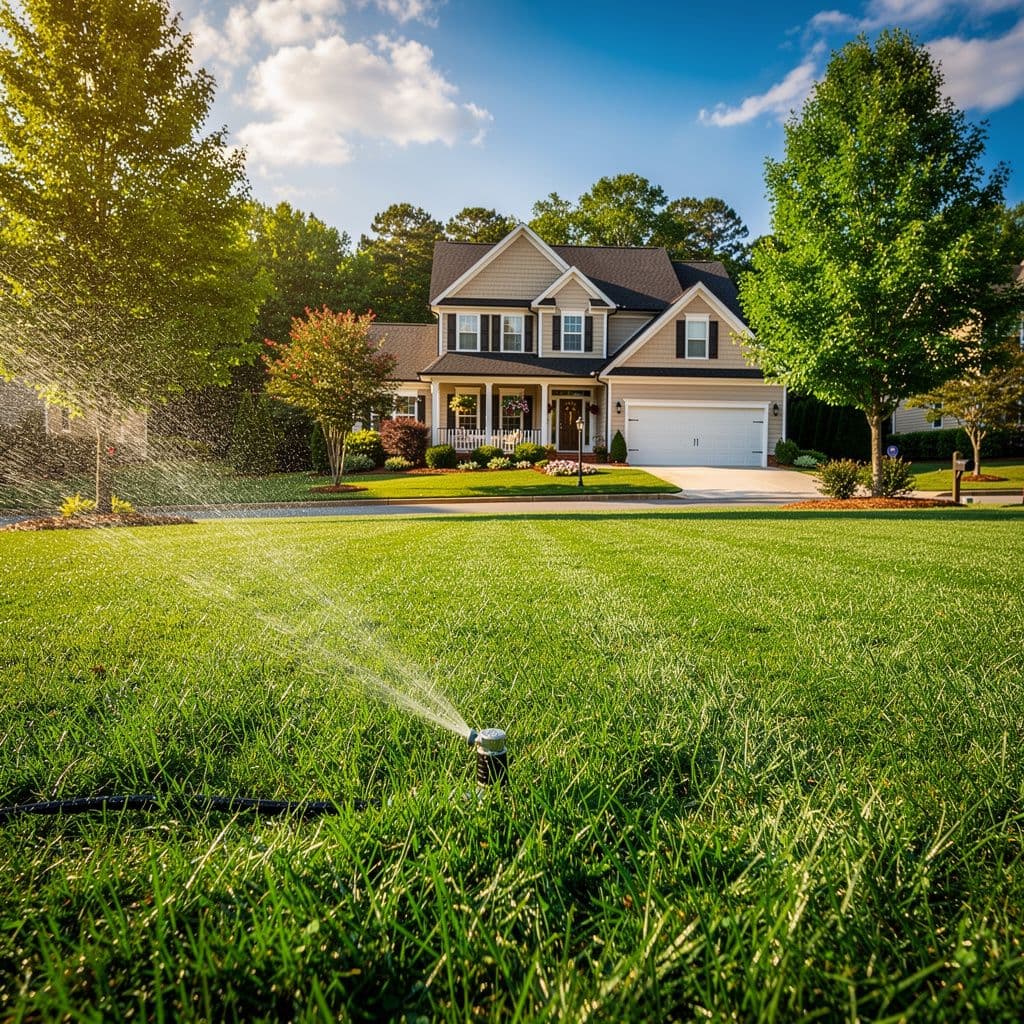
July Lawn Care Checklist: 10 Essential Tasks for Henry County Homeowners This Month
Published: July 1, 2026
July is the make-or-break month for lawns in Henry County. The combination of triple-digit heat indexes, unpredictable afternoon thunderstorms, and peak pest activity pushes Georgia lawns to their absolute limit. What you do — or don't do — in July determines whether your lawn powers through summer strong or limps into fall looking patchy, brown, and exhausted.
If you've been searching for "lawn care near me" or "lawn care service" in Locust Grove, McDonough, Stockbridge, or anywhere across Henry County, this checklist gives you the exact tasks that matter most right now. No theory, no fluff — just the specific actions that keep your grass healthy through the toughest month of the Georgia summer.
Whether you handle your own yard maintenance or work with a professional lawn care service, these ten tasks will protect your investment and keep your lawn looking its best.
Why July Is the Hardest Month for Georgia Lawns
Before diving into the checklist, it helps to understand what your lawn is up against in July:
- Air temperatures regularly exceed 95°F with heat indexes over 105°F
- Soil temperatures in Georgia's heavy clay can reach 90°F or higher at the surface, stressing root systems
- Humidity levels above 70% create perfect conditions for fungal diseases like brown patch and pythium blight
- Afternoon thunderstorms bring heavy, localized downpours that can either drown your lawn or completely miss it
- Insect activity peaks — chinch bugs, sod webworms, and grub beetles are all actively feeding
- Weed pressure is relentless — crabgrass, nutsedge, and spurge are growing at full throttle
Your grass is essentially fighting a war on multiple fronts. The right care routine gives it the resources it needs to win.
Task 1: Adjust Your Mowing Height and Frequency
Mowing is the single most impactful thing you do for your lawn — and July is when most homeowners get it wrong.
The Golden Rule: Raise Your Mower
In July, raise your mowing height by half an inch to one inch above your normal spring setting. Taller grass means deeper roots, which means better drought resistance and heat tolerance.
Recommended July mowing heights for Henry County grass types:
- Bermuda grass: Raise to 2-2.5 inches (normally 1-1.5 inches)
- Zoysia grass: Raise to 2-2.5 inches (normally 1-1.5 inches)
- Tall Fescue: Raise to 4 inches (normally 3-3.5 inches)
- Centipede grass: Raise to 2 inches (normally 1-1.5 inches)
Mow More Often, Not Shorter
During periods of active growth (usually after rainfall), you may need to mow every 4-5 days instead of weekly. Never remove more than one-third of the grass blade height in a single mowing. Cutting too much at once shocks the plant and triggers a stress response that can take weeks to recover from.
Keep Your Blades Sharp
Dull mower blades tear grass instead of cutting it cleanly. Torn grass blades lose moisture faster, look ragged with brown tips, and are more susceptible to disease. Sharpen blades every 20-25 mowing hours during summer — or about once a month for most homeowners.
Professional lawn mowing services maintain sharp equipment and proper mowing heights as part of every visit, eliminating the guesswork.
Task 2: Master Your Watering Schedule
Watering correctly in July is critical. Too little and your lawn goes dormant. Too much and you create a breeding ground for fungus and weeds.
How Much Water Does Your Lawn Need in July?
Most Henry County lawns need 1 to 1.5 inches of water per week during July, either from rainfall or irrigation. The key is how you apply it:
Water deeply and infrequently. One or two deep watering sessions per week are far better than daily light sprinkling. Deep watering encourages grass roots to grow deeper into the soil, making the lawn more drought-resistant. Daily light watering promotes shallow root systems that dry out quickly.
Best Time to Water
Water between 5:00 AM and 9:00 AM. This gives the grass blades time to dry before nightfall, reducing disease risk, while minimizing evaporation loss. Never water in the evening — wet grass overnight is the #1 cause of fungal disease in Georgia lawns.
Signs Your Lawn Needs Water
- Footprints remain visible after walking across the grass (grass doesn't spring back)
- Grass blades take on a bluish-gray tint rather than vibrant green
- Leaf blades fold or roll lengthwise to conserve moisture
- Soil feels dry 4-6 inches below the surface
If you have an irrigation system, now is the time to verify coverage and make adjustments. See our complete irrigation guide for troubleshooting tips and scheduling advice.
Task 3: Spot-Treat Summer Weeds Before They Go to Seed
By July, pre-emergent herbicides applied in spring have lost their effectiveness. Summer weeds are now established and actively growing — and if they go to seed, you'll be fighting ten times more weeds next year.
Target the Big Three
Crabgrass: Look for light green, sprawling grass-like weeds at the edges of your lawn, along sidewalks, and in bare spots. Spot-treat with a post-emergent crabgrass killer. Don't pull established crabgrass by hand — it just scatters seeds.
Yellow Nutsedge: This bright yellow-green, fast-growing weed sticks up above your lawn 2-3 days after mowing. It thrives in overwatered areas. Specific nutsedge herbicides (containing halosulfuron or sulfentrazone) are required — general weed killers won't touch it.
Spotted Spurge: A low-growing, mat-forming weed with small spotted leaves. It grows along sidewalks, driveways, and in thin turf. Treat with a broadleaf herbicide containing 2,4-D or carfentrazone.
When to Apply Herbicides in July
Apply weed controls in the early morning or late evening when temperatures are below 85°F. Applying herbicides in the heat of the day can burn your grass along with the weeds. Never apply herbicides when rain is expected within 24 hours.
Professional weed control services have access to commercial-grade products and the expertise to treat weeds without damaging your grass in summer heat.
Task 4: Hold Off on Fertilizer for Warm-Season Grasses
This one surprises many homeowners. July is NOT the time for a heavy fertilizer application on most Henry County lawns.
For Bermuda, Zoysia, and Centipede Grass
If you applied fertilizer in late spring (May) and again in early summer (June), your lawn has plenty of nutrients. Applying more nitrogen in July risks:
- Forcing excessive top growth that the root system can't support in extreme heat
- Increasing water demands when rainfall is already unpredictable
- Triggering fungal diseases by creating lush, tender growth that fungi love
If your warm-season lawn looks genuinely pale or weak, a light application of slow-release nitrogen (no more than 0.25-0.5 pounds of nitrogen per 1,000 square feet) is acceptable. But for most lawns, skip July fertilization and wait until late August or early September.
For Tall Fescue Lawns
Do NOT fertilize fescue in July. Fescue is a cool-season grass that struggles in summer heat. Fertilizing now only adds stress. Your next fertilization should come in September when temperatures begin dropping.
Already have a fertilization program? Check with your lawn treatment service about summer adjustments. Professional services modify their formulations for July to protect rather than push your lawn.
Task 5: Check for Lawn Pests and Insect Damage
July is peak feeding season for the insects that damage Georgia lawns. Catching problems early prevents extensive damage that can take months to repair.
Chinch Bugs
These tiny insects attack St. Augustine and sometimes zoysia lawns. They feed on grass stems and inject a toxin that kills the plant. Look for:
- Irregular patches of yellowed, then brown, grass in full-sun areas
- Damage that spreads outward from a central point
- Grass that doesn't recover after watering
To check for chinch bugs: Cut both ends off a coffee can, push it 2 inches into the soil at the edge of a damaged area, fill with water, and wait 10 minutes. If chinch bugs are present, they'll float to the surface.
Sod Webworms and Armyworms
These caterpillars chew grass blades down to the soil line. Look for:
- Small brown patches that expand rapidly
- Birds feeding heavily on your lawn (they're eating the caterpillars)
- Green frass (insect droppings) on the soil surface
- Grass blades with ragged, chewed edges
Armyworm outbreaks can destroy a lawn in 2-3 days. If you suspect them, check at dusk when the caterpillars are actively feeding.
White Grubs
Grub beetles lay eggs in July, and the grubs hatch and begin feeding on grass roots by late July to August. Look for:
- Grass that pulls up easily like loose carpet (roots have been eaten)
- Irregular brown patches that don't respond to watering
- Skunks, raccoons, or armadillos digging in your lawn (they're hunting grubs)
Apply a preventive grub control product in mid-to-late July if you've had grub problems in previous years. Our lawn pest and disease guide covers treatment options in detail.
Task 6: Monitor for Lawn Diseases
Georgia's July humidity creates the perfect environment for fungal diseases. Even lawns that are well-maintained can develop problems when nighttime temperatures stay above 70°F with high humidity.
Brown Patch
The most common summer disease in Henry County. Appears as circular patches of brown, thinning grass that can range from a few inches to several feet in diameter. Most active when nighttime temperatures are 68-75°F with high humidity.
Prevention: Water in the morning only. Avoid excessive nitrogen. Improve air circulation by trimming trees and shrubs that block breeze.
Pythium Blight
A fast-moving disease that can destroy turf overnight. Appears as small, sunken, greasy-looking circular patches that are dark green or brown. Often appears first in low-lying areas where water collects. Most active when nighttime temperatures exceed 68°F with high humidity and excessive soil moisture.
Prevention: Improve drainage. Never water in the evening. Core aerate to reduce compaction.
Dollar Spot
Small, silver-dollar-sized spots of bleached white or tan grass. Most common on lawns with low nitrogen. While individual spots are small, they can merge to create large damaged areas.
Prevention: Maintain adequate nitrogen levels (but don't over-fertilize in July). Reduce thatch buildup. Improve airflow.
If you spot disease symptoms, contact a professional immediately. Fungicide applications require precise timing and product selection based on the specific disease — applying the wrong product wastes money and can make problems worse.
Task 7: Inspect and Maintain Your Irrigation System
July puts maximum demand on irrigation systems. A single broken sprinkler head can waste thousands of gallons of water while leaving sections of your lawn bone dry.
Monthly Irrigation Check
Walk your property while the system is running and check:
- Sprinkler heads: Are any broken, clogged, or pointing in the wrong direction?
- Coverage: Are there dry spots between spray patterns? Adjust head spacing or nozzles.
- Leaks: Is water pooling around any heads or along pipe runs?
- Timer settings: Is your controller programmed for July conditions? Many homeowners forget to adjust for seasonal needs.
- Rain sensor: Is it working? A malfunctioning rain sensor wastes water and can drown your lawn.
Our irrigation repair guide covers common problems and when to call a professional.
Task 8: Control Thatch Buildup
Thatch is the layer of dead grass stems, roots, and debris that accumulates between the soil surface and the green grass blades. A thin layer (half-inch or less) is normal and beneficial. But when thatch exceeds half an inch, it causes problems:
- Blocks water and fertilizer from reaching the soil
- Creates a habitat for insects and disease organisms
- Prevents grass roots from growing deep into the soil
- Makes your lawn feel spongy underfoot
How to Check Thatch Level
Cut a small wedge of grass and soil (about 3 inches deep) with a shovel. Look at the cross-section. The thatch layer is the brown, fibrous material between the soil and green grass. If it's thicker than half an inch, plan to dethatch.
When to Dethatch
For warm-season grasses (Bermuda, Zoysia), the best time to dethatch is during active growth — late spring to early summer. July is generally too late for aggressive dethatching because the lawn is already under heat stress.
However, if thatch is severely excessive and causing problems, a light vertical mowing or power rake can be done carefully. Water deeply afterward and avoid fertilizing.
For fescue lawns, wait until fall to dethatch.
Task 9: Clean Up After Summer Storms
July thunderstorms are a fact of life in Henry County. Strong winds bring down branches, leaves, and sometimes entire limbs. Storm debris left on your lawn for even a few days can kill the grass underneath, creating dead patches that take months to recover.
Post-Storm Cleanup Checklist
- Remove branches and limbs within 24 hours to prevent grass suffocation
- Rake leaves and debris — even small branches block sunlight and trap moisture
- Check for tree damage that may need professional tree service
- Inspect hardscaping — patios, walkways, and retaining walls for storm damage
- Clear storm drains and gutters to prevent standing water
If a storm causes significant tree damage, don't attempt cleanup yourself. Fallen limbs can shift unexpectedly, and overhead hazards may not be obvious. Our storm damage cleanup guide covers safe cleanup practices.
Task 10: Plan Your Late-Summer Lawn Care Strategy
The decisions you make in July set up your lawn for the critical fall growing season. Use this time to plan ahead:
Schedule Aeration and Overseeding
Core aeration in late August or September relieves soil compaction and creates channels for water, air, and nutrients to reach the root zone. For fescue lawns, overseeding immediately after aeration is the single best thing you can do for a thicker, healthier lawn next year.
Book aeration services now — reputable property maintenance companies fill their fall schedules by mid-August.
Order Fall Supplies
If you handle your own lawn care, now is the time to purchase:
- Fall pre-emergent herbicide (apply in September)
- Fescue grass seed for overseeding (quality seed sells out by September)
- Fall fertilizer (different formulation than spring/summer)
- Pine straw or mulch for fall refresh
Evaluate Your Lawn's Overall Health
Take photos of your lawn now and compare them to photos from April. Note areas that have thinned, developed bare spots, or changed color. These observations help you and your lawn care provider make informed decisions about fall renovation projects.
Professional Lawn Care vs. DIY: Making the Right Call for July
July is the month where many DIY homeowners realize they're in over their heads. The combination of heat stress, pest pressure, disease risk, and weed competition requires precise timing and product knowledge that most homeowners don't have.
Consider professional service if:
- Your lawn has developed brown patches despite regular watering
- Weeds are spreading faster than you can treat them
- You've diagnosed (or suspect) a fungal disease
- You're spending more than 3 hours per week on lawn care
- Your lawn looks worse now than it did in May
Professional lawn care services bring commercial-grade products, trained technicians, and the ability to diagnose and treat problems before they spread. For most Henry County homeowners, the cost of professional service is comparable to DIY — without the frustration, wasted product, and weekend labor.
Learn more about the costs of professional lawn care and decide what makes sense for your property and budget.
Frequently Asked Questions About July Lawn Care in Henry County
How often should I mow my lawn in July in Georgia?
During July's peak growing season, most Henry County lawns need mowing every 5-7 days for warm-season grasses (Bermuda, Zoysia) and every 7-10 days for fescue. After heavy rainfall, growth accelerates and you may need to mow more frequently. Always follow the one-third rule: never remove more than one-third of the grass blade in a single mowing.
Should I fertilize my lawn in July in Georgia?
For warm-season grasses (Bermuda, Zoysia, Centipede), skip fertilizer in July unless your lawn is showing clear signs of nutrient deficiency. Heavy nitrogen applications during extreme heat stress the root system and increase disease risk. For fescue lawns, do not fertilize in July — wait until September.
How do I know if my lawn has a fungal disease?
Look for circular patches of brown or thinning grass, greasy-looking spots, or bleached areas. Most fungal diseases in Henry County appear during periods of high humidity and nighttime temperatures above 68°F. If you suspect disease, avoid evening watering and contact a professional lawn care service for proper diagnosis and fungicide treatment.
What's the best time of day to water my lawn in July?
Water between 5:00 AM and 9:00 AM. This allows grass blades to dry during the day, reducing disease risk, while minimizing evaporation. Watering in the evening leaves grass wet overnight, which is the primary cause of fungal disease in Georgia lawns. See our watering guide for detailed scheduling.
How do I get rid of nutsedge in my Henry County lawn?
Yellow nutsedge requires specific herbicides containing halosulfuron or sulfentrazone — standard broadleaf weed killers are ineffective. Apply nutsedge-specific products in early summer when the weeds are young and actively growing. Multiple applications 7-10 days apart are usually needed. Improving drainage in low areas prevents nutsedge from returning.
When should I book fall aeration and overseeding?
Schedule fall aeration by mid-August to secure a spot. The ideal window for core aeration and fescue overseeding in Henry County is mid-September through October. Waiting too long means shorter days and cooler nights that slow seed germination. Call 770-490-9519 to schedule your fall lawn care services.
Take Action on Your July Lawn Care Today
July doesn't have to be the month your lawn falls apart. With the right mowing height, smart watering practices, vigilant pest and disease monitoring, and a plan for late summer, your lawn can stay healthy and green through the toughest part of the Georgia summer.
The checklist is straightforward. Execution is the hard part — especially when temperatures are in the 90s and humidity makes outdoor work miserable. That's where professional help makes the difference.
At Hedgecoth Property Solutions, we provide comprehensive lawn care, property maintenance, landscaping, and leaf removal services throughout Henry County — including Locust Grove, McDonough, Stockbridge, Hampton, Jonesboro, and Morrow. Our team knows exactly what Henry County lawns need in July because we've been maintaining them for years.
Call us today at 770-490-9519 or contact us online to schedule your July lawn care consultation. Let us handle the heat so you can enjoy your summer.
Hedgecoth Property Solutions provides professional lawn care, landscaping, property maintenance, hardscaping, and tree services throughout Henry County, Georgia — including Locust Grove, McDonough, Stockbridge, Jonesboro, Morrow, and Hampton. Licensed, insured, and locally owned. Call 770-490-9519 for a free estimate.