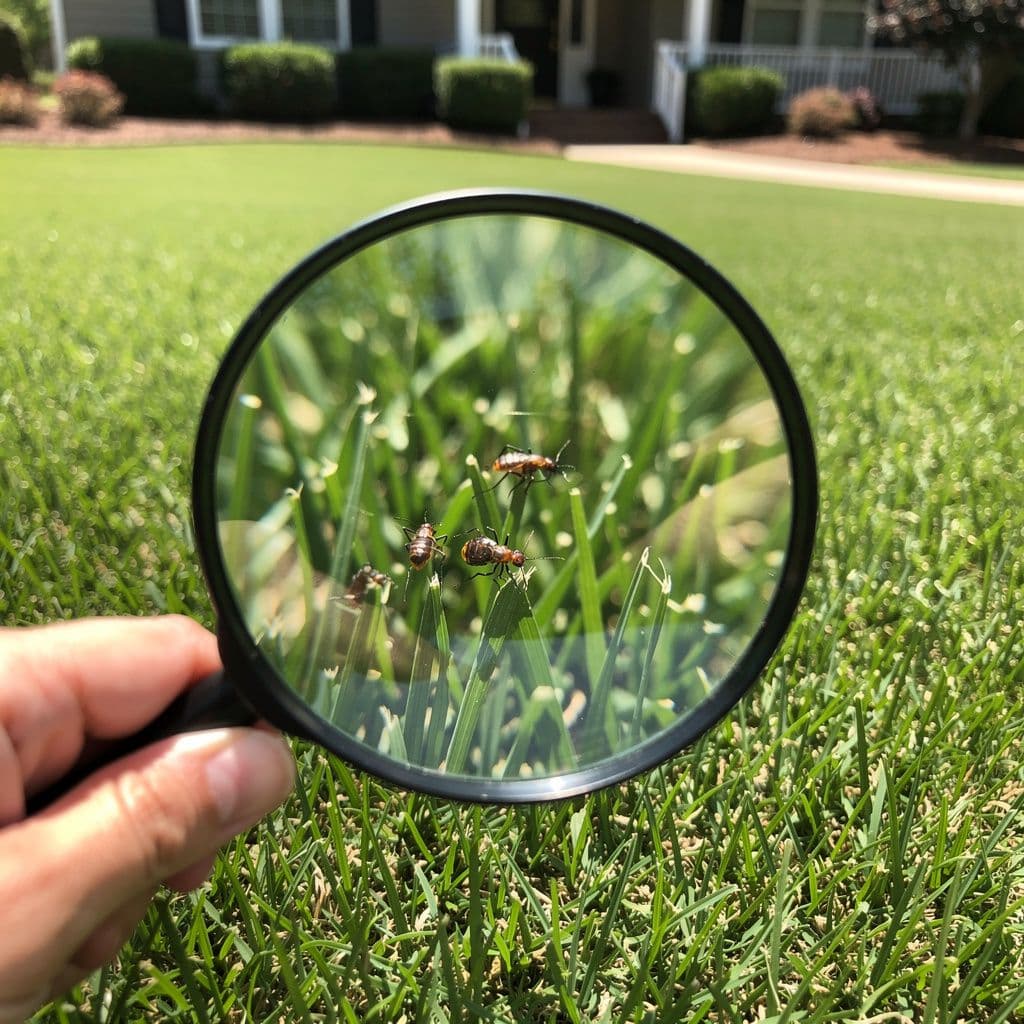
Lawn Pest & Disease Control Guide for Henry County, GA: How to Identify and Treat What's Killing Your Grass
Published: May 12, 2026
You're doing everything right. You mow weekly. You water on schedule. You even had your soil tested last fall. But there's a section of your lawn near the sidewalk in your Locust Grove neighborhood that's turning brown — and spreading. Or maybe your entire front yard in McDonough looks thin and patchy despite your best efforts. The fertilizer isn't helping. The water isn't helping. Something else is going on.
You're probably dealing with lawn pests, lawn disease, or both.
For homeowners across Locust Grove, McDonough, Stockbridge, Jonesboro, and throughout Henry County, lawn pests and diseases are among the most frustrating problems to diagnose and treat. The symptoms often look identical — brown patches, thinning grass, bare spots — but the causes and treatments are completely different. Treat a fungal disease with insecticide and you've wasted money. Treat a pest problem with fungicide and the bugs keep eating.
This guide helps you identify the most common lawn pests and diseases in Georgia, understand why they show up in Henry County lawns, and take the right steps to eliminate them. Whether you're a DIYer looking to handle it yourself or you'd rather have professionals handle the problem, you'll find the answers here.
Why Henry County Lawns Are Vulnerable to Pests and Disease
Our region's climate creates a perfect storm for lawn problems. Understanding why helps you prevent them.
The Georgia Climate Factor
Henry County sits in USDA Hardiness Zone 8a, which means hot, humid summers and mild winters. This climate is ideal for warm-season grasses like Bermuda, Zoysia, and Centipede — but it's also ideal for the pests and fungi that attack them.
Summer conditions that trigger problems:
- Temperatures consistently above 85°F from June through September
- Humidity levels regularly exceeding 70%
- Afternoon thunderstorms that leave grass wet overnight
- Heavy dew that doesn't evaporate until mid-morning
Spring conditions that kick-start issues:
- Warm, wet weather in April and May activates fungal spores
- Soil temperatures reaching 65°F wake up grubs and other soil pests
- Rapid grass growth creates tender new growth that pests love
The Red Clay Soil Problem
Henry County's heavy clay soils contribute to lawn vulnerability in several ways:
- Poor drainage — Water pools on the surface, creating breeding grounds for fungi
- Compaction — Tight soil restricts root growth, making grass weaker and more susceptible
- Nutrient lock-up — Clay can bind nutrients, making them unavailable to grass even when present in the soil
- Shallow root systems — Grass struggles to develop deep roots in compacted clay, reducing its ability to fight off pests and disease
If your lawn in Stockbridge or Jonesboro has compacted clay soil — and most do — you're fighting an uphill battle without proper lawn care practices like aeration and soil amendment.
Stress Creates Opportunity
Pests and diseases rarely attack a perfectly healthy lawn. They're opportunistic. A lawn that's stressed from drought, poor mowing practices, nutrient deficiency, or soil compaction is far more likely to develop problems than one that's properly maintained.
This is why professional property maintenance programs that address the whole lawn — not just react to problems — are so effective at preventing pest and disease issues.
The Most Common Lawn Pests in Henry County, GA
Let's start with the bugs. These are the most common culprits destroying lawns in our area.
White Grubs
What they are: The larval stage of Japanese beetles, June bugs, and chafer beetles. These C-shaped white grubs live in the soil and eat grass roots.
How to identify grub damage:
- Irregular brown patches that feel spongy underfoot
- Grass lifts up easily like a loose carpet (roots have been eaten)
- You may see skunks, raccoons, or birds digging in your lawn (they eat grubs)
- Damage is most visible in late summer and early fall
How to confirm: Cut a 1-foot square section of lawn about 3 inches deep and peel it back. If you find more than 5-10 grubs per square foot, you have a problem worth treating.
Treatment timing: Preventive treatments go down in late spring (May-June). Curative treatments work best in late summer when grubs are small and feeding near the surface.
Fall Armyworms
What they are: Caterpillars that march across lawns in large numbers, literally eating grass blades down to the stems. They're particularly devastating to Bermuda and Fescue lawns.
How to identify armyworm damage:
- Grass appears "mowed" or chewed down in irregular patches
- Damage progresses rapidly — a green lawn can look destroyed in 2-3 days
- You may see the caterpillars themselves (green/brown, about 1-1.5 inches long)
- Birds flocking to your lawn in unusual numbers
Treatment timing: Armyworms typically appear in late summer (August-September) but can show up earlier in warm years. They're most active at night and early morning. Treatment must be applied quickly once detected — they can destroy a lawn in under a week.
Chinch Bugs
What they are: Tiny black and white insects (about 1/5 inch long) that suck the sap from grass blades and inject a toxin that kills the tissue.
How to identify chinch bug damage:
- Irregular yellowing patches that turn brown, often in sunny areas
- Damage typically starts near driveways, sidewalks, or curbs (heat reflects off these surfaces)
- Most common in St. Augustine and Centipede grass
- Grass doesn't respond to watering (it's not drought stress)
How to confirm: Use the coffee can method — cut both ends off a metal coffee can, push one end into the soil at the edge of a damaged area, fill with water, and watch for chinch bugs floating to the surface.
Treatment timing: Chinch bugs are most active from June through September when temperatures are hottest.
Sod Webworms
What they are: Small caterpillars that live in silk-lined tunnels in the thatch layer and emerge at night to feed on grass blades.
How to identify sod webworm damage:
- Small, ragged patches of chewed grass
- Green "frass" (caterpillar droppings) visible in the thatch
- Small tan moths flying low over the lawn at dusk (the adult stage)
- Most visible in late summer
Mole Crickets
What they are: Brown, cricket-like insects with enlarged front legs for digging. They tunnel through soil, uprooting grass and feeding on roots.
How to identify mole cricket damage:
- Raised ridges or tunnels visible in the soil surface
- Grass feels spongy and loose
- Damage is most severe in Bermuda and Bahia lawns
- Most common in sandy or loose soils
The Most Common Lawn Diseases in Georgia
Now let's cover the fungal diseases that plague Henry County lawns. These are especially tricky because they thrive in the same conditions that grass loves — warm and wet.
Brown Patch (Rhizoctonia solani)
The most common lawn disease in Georgia. Brown patch affects virtually all turf grasses grown in our area, especially Fescue and Zoysia.
Symptoms:
- Circular or irregular patches of brown, thinned grass ranging from a few inches to several feet in diameter
- Patches may have a "smoke ring" — a dark gray-purple border of actively spreading fungus
- Grass in the center of older patches may recover, creating a donut shape
- Most active when temperatures are 70-90°F with high humidity
Conditions that trigger it:
- Watering in the evening (grass stays wet overnight)
- Heavy nitrogen fertilization during warm weather
- Poor air circulation
- Excessive thatch buildup
- Poor drainage in clay soils
Treatment: Reduce watering frequency but increase depth. Apply fungicide labeled for brown patch if caught early. Improve drainage and reduce thatch. Avoid nitrogen fertilizer during active outbreaks.
Dollar Spot
What it is: A fungal disease that creates small, silver-dollar-sized spots of bleached, straw-colored grass. Common in Bermuda, Zoysia, and Fescue.
Symptoms:
- Small, circular spots (2-6 inches) of light tan or bleached grass
- Individual grass blades have hourglass-shaped lesions with brown borders
- Spots may merge into larger irregular patches
- Most active in spring and fall when days are warm and nights are cool
Conditions that trigger it:
- Low nitrogen levels in the soil
- Extended leaf wetness (dew, irrigation)
- Temperature between 60-80°F
- Most common in under-fertilized lawns
Treatment: Proper nitrogen fertilization often resolves dollar spot without fungicide. Improve irrigation timing (water early morning, not evening). Fungicide applications for severe cases.
Large Patch (Zoysia Patch)
What it is: A close relative of brown patch that primarily attacks warm-season grasses (Zoysia, Centipede, St. Augustine) during spring green-up and fall transition.
Symptoms:
- Large, irregular patches of yellow or orange grass during spring green-up
- Patches can be 10+ feet in diameter
- Grass at the edges of patches has soft, darkened, rotting stems
- Most visible in March-May when grass is coming out of dormancy
Treatment: Apply preventive fungicide in fall before grass goes dormant. Avoid excessive nitrogen in fall. Improve drainage in low areas.
Fairy Rings
What they are: Circular rings of dark green, fast-growing grass, sometimes with mushrooms, and occasionally with a ring of dead grass inside.
Symptoms:
- Dark green circles or arcs of stimulated grass growth
- Mushrooms may appear after rain
- Inner zone of dead or thinned grass in severe cases
- Rings expand outward each year
Treatment: Fairy rings are caused by fungi breaking down organic matter in the soil, creating nitrogen-rich zones. Aeration, deep watering, and nitrogen fertilization can mask symptoms. Complete elimination is difficult.
Rust
What it is: A fungal disease that creates orange-yellow pustules on grass blades, most common in Fescue and Zoysia during late summer and fall.
Symptoms:
- Orange or rust-colored powder on grass blades and shoes when walking through the lawn
- Grass appears yellowish and thin
- Most common in shaded areas with poor air circulation
Treatment: Improve air circulation, reduce shade if possible, maintain adequate nitrogen levels, and water early in the day.
How to Tell If Your Problem Is Pests or Disease
Many symptoms overlap, which makes diagnosis difficult. Use this quick guide:
Signs it's probably PESTS:
- Damage appears suddenly and spreads rapidly
- You can see insects or larvae in the soil or on grass
- Grass is physically chewed, cut, or missing blades
- Animals are digging in your lawn
- Grass pulls up easily (roots are damaged)
Signs it's probably DISEASE:
- Circular or irregular patches with distinct borders
- Spots, lesions, or discoloration on individual grass blades
- A "smoke ring" or colored border around damaged areas
- Mushrooms or fungal growth visible
- Damage worsens during wet, humid periods
- Grass doesn't pull up easily (roots are intact)
When in doubt: Contact a professional landscaping service to diagnose the problem before you invest in treatments. Misdiagnosing leads to wasted money and continued lawn damage.
Prevention: The Best Treatment Strategy
The most effective approach to lawn pests and diseases is preventing them before they start. Here's how to make your Henry County lawn naturally resistant.
Proper Watering Practices
How and when you water has an enormous impact on disease development.
Water early in the morning (5:00-9:00 AM) so grass blades dry quickly. Never water in the evening — grass that stays wet overnight is a magnet for fungal diseases.
Water deeply but infrequently. Aim for 1-1.5 inches of water per week, applied in 2-3 sessions. This encourages deep root growth, which makes grass more resilient.
Use the right irrigation method. If you have an irrigation system, check out our complete guide to lawn irrigation in Henry County for proper setup and scheduling.
Proper Mowing Practices
Mow at the correct height:
- Bermuda: 1-2 inches
- Zoysia: 1.5-2.5 inches
- Centipede: 1.5-2 inches
- Fescue: 3-4 inches
Never remove more than 1/3 of the grass blade in a single mowing. Scalping stresses the lawn and creates openings for pests and diseases. For professional mowing services, check out our lawn mowing guide for Henry County.
Keep mower blades sharp. Dull blades tear grass instead of cutting it cleanly, creating ragged edges that are entry points for disease.
Soil Health and Aeration
Compacted clay soil is the root cause (literally) of many lawn problems in Henry County. Annual core aeration relieves compaction, improves drainage, and helps roots grow deeper. Our lawn aeration and overseeding guide covers this in detail.
Test your soil every 2-3 years. Henry County Extension offers soil testing for a small fee. The results tell you exactly what nutrients your lawn needs — no guesswork.
Thatch Management
Thatch is a layer of dead grass and organic matter between the soil surface and the green grass blades. A thin layer (less than 1/2 inch) is normal and beneficial. A thick layer harbors pests and diseases.
Dethatch when the layer exceeds 3/4 inch. This is best done in late spring for warm-season grasses, or early fall for Fescue.
Smart Fertilization
Over-fertilizing — especially with nitrogen during warm, wet periods — is one of the fastest ways to trigger brown patch and other diseases. Follow a fertilization schedule appropriate for your grass type and our climate. Our professional lawn fertilization guide covers proper timing and application rates for Henry County.
Professional Treatment Options
Some pest and disease problems are manageable with DIY treatments from your local garden center. Others require professional-grade products, equipment, and expertise. Here's when to call in the pros.
When to Call a Professional
- You've tried DIY treatments with no improvement after 2-3 weeks
- Damage is spreading rapidly and you can't identify the cause
- Multiple problems are occurring simultaneously (pests + disease)
- The affected area is large (more than 25% of your lawn)
- You're not sure what grass type you have (treatment varies by species)
- You want preventive treatments applied on a schedule
What Professional Treatment Includes
When you hire a professional lawn care service like Hedgecoth Property Solutions, you get:
Accurate diagnosis. We identify the specific pest or disease before applying any treatment. This saves you money and gets results faster.
Professional-grade products. Commercial fungicides and insecticides are more effective and longer-lasting than consumer products.
Proper timing. Treatments are applied at the optimal time for maximum effectiveness — something that's hard to nail with DIY approaches.
Integrated approach. We don't just treat the symptom. We address the underlying conditions (drainage, soil health, mowing height) that allowed the problem to develop.
Follow-up. We monitor the results and adjust treatment as needed.
Seasonal Pest & Disease Calendar for Henry County
Here's when to watch for what:
Spring (March-May):
- Large patch on warm-season grasses during green-up
- Dollar spot begins appearing
- Grubs wake up and begin feeding near the surface
- Preventive grub treatments should be applied
Summer (June-August):
- Brown patch peaks during hot, humid weather
- Chinch bugs become active
- Fall armyworms may appear (late summer)
- Sod webworms feed at night
- Heat stress makes lawns more vulnerable to all problems
Fall (September-November):
- Brown patch returns with cooler nights and dew
- Fall armyworms peak
- Grubs are large and causing maximum root damage
- Large patch preventive fungicide should be applied
- Leaf removal is important — wet leaves smother grass and promote disease
Winter (December-February):
- Most problems go dormant along with the grass
- Good time for soil testing and planning next year's treatment program
- Avoid walking on frozen grass (causes cell damage)
Frequently Asked Questions About Lawn Pests and Diseases in Georgia
How do I know if my lawn has grubs or a fungal disease?
The easiest test is the "tug test." Grab a handful of brown grass and pull. If the grass lifts up easily like loose carpet and you see no roots, it's likely grubs — they've eaten the root system. If the grass is firmly rooted and doesn't pull up, the problem is more likely fungal. You can also dig a small square of sod and look for the white C-shaped grubs in the soil underneath.
Can I treat lawn diseases with products from the hardware store?
Consumer fungicides from home improvement stores can work for mild cases of common diseases like brown patch and dollar spot. However, they're generally less concentrated and shorter-lasting than professional products. For best results, apply early in the disease cycle before significant damage occurs. If your lawn has more than 20% damage or hasn't responded to one round of treatment, it's time to call a professional.
Why does my lawn keep getting brown patch every summer?
Recurring brown patch usually means the conditions that cause it haven't been addressed. The most common culprits in Henry County are evening watering (grass stays wet overnight), poor drainage in clay soil, excessive nitrogen during summer, and too much thatch. Fixing these underlying issues is more effective than just applying fungicide each year. A professional property maintenance program addresses all these factors.
Are lawn pest control chemicals safe for my kids and pets?
Most modern lawn care products are safe once they've dried and been watered in — typically within 1-2 hours of application. Professional applicators follow strict guidelines for application rates and timing. If you have specific safety concerns, talk to your lawn care provider about organic or reduced-risk treatment options.
What's the best grass type for Henry County if I want to avoid pest problems?
Zoysia is generally the most pest and disease resistant warm-season grass for our area. It's dense growth habit naturally resists weeds, and it's less susceptible to chinch bugs than St. Augustine or Centipede. Bermuda is tough and drought-tolerant but can be prone to spring dead spot and armyworm damage. Fescue struggles with our heat and humidity but works well in shaded areas. The right choice depends on your specific yard conditions — sun exposure, soil type, and how much maintenance you're willing to do.
How much does professional lawn pest and disease treatment cost?
Treatment costs vary based on the problem, lawn size, and number of applications needed. A single targeted treatment typically ranges from $75-200 for an average residential lawn. Preventive programs that include multiple treatments throughout the year offer better value and better results. Contact us at 770-490-9519 for a free estimate specific to your lawn.
Stop Guessing — Get Answers for Your Lawn
Lawn pests and diseases don't fix themselves. The longer you wait, the more damage they cause and the more expensive the recovery becomes. Whether you've got brown patches spreading across your Locust Grove yard, armyworms marching through your McDonough lawn, or a mysterious thinning problem in Stockbridge that you can't figure out — we can help.
Hedgecoth Property Solutions provides professional lawn care and landscaping services throughout Henry County. We diagnose the problem, treat it with professional-grade products, and help you prevent it from coming back.
Call us at 770-490-9519 or contact us online for a free lawn evaluation. We'll identify what's going on and give you a straightforward plan to get your lawn back to healthy and green — no guesswork required.
Hedgecoth Property Solutions provides professional lawn care, landscaping, and property maintenance services to homeowners and businesses in Locust Grove, McDonough, Stockbridge, Jonesboro, Morrow, Hampton, and throughout Henry County, Georgia. Licensed and insured. Call 770-490-9519.