The Complete Guide to Lawn Treatment Services in Henry County, GA
Published: March 24, 2026
If your lawn in Henry County looks thin, patchy, or overrun with weeds despite regular mowing, you're not alone. Georgia's heavy clay soils, hot summers, and unpredictable rainfall patterns create unique challenges that basic lawn care simply can't solve. That's where professional lawn treatment services come in — targeted applications of fertilizer, weed control, and soil amendments designed to transform your turf from surviving to thriving.
Whether you're searching for a "lawn treatment service near me" from your home in Locust Grove, need consistent lawn care treatment in McDonough, or want to get your Stockbridge or Jonesboro property on a professional fertilization schedule, this guide covers everything you need to know about lawn treatment services in Henry County, Georgia.
What Is a Lawn Treatment Service — And Why Your Henry County Lawn Needs One
A lawn treatment service goes beyond mowing and edging. It's a science-based approach to building healthy soil, strengthening grass root systems, and preventing the weeds, diseases, and pests that damage Georgia lawns year after year.
Think of it this way: mowing is like getting a haircut. Lawn treatment is like going to the doctor for a checkup and getting the vitamins and medicine you need to stay healthy. One maintains appearance — the other builds actual health from the ground up.
Why Standard Lawn Care Isn't Enough
Many homeowners in Locust Grove, McDonough, and across Henry County keep up with regular mowing and watering but still struggle with:
- Thin, weak grass that never seems to fill in
- Persistent weeds like crabgrass, dallisgrass, nutsedge, and broadleaf invaders
- Brown patches that spread during Georgia's summer heat
- Poor drainage caused by compacted clay soil
- Yellowing grass despite adequate rainfall or irrigation
- Pest damage from grubs, chinch bugs, and armyworms
These problems share a common root cause: your soil lacks the nutrients, balance, and biological activity that healthy turfgrass demands. Professional lawn treatment services address all of these issues systematically.
The Georgia Factor: Why Local Expertise Matters
Lawn treatment isn't one-size-fits-all. What works for a lawn in Minnesota won't work in Henry County. Our warm-season grasses — Bermuda, Zoysia, Centipede, and St. Augustine — have completely different nutrient needs, growth cycles, and vulnerability windows than cool-season grasses up north.
A lawn treatment service that understands Henry County conditions knows:
- When to apply pre-emergent herbicides to prevent summer annual weeds (early spring, before soil temperatures reach 55°F)
- Which fertilizer formulations work best in our clay-heavy soils (slow-release nitrogen with appropriate phosphorus and potassium levels)
- How to manage soil pH that naturally trends acidic in Georgia (lime applications based on soil test results)
- When to treat for common Georgia lawn pests like grubs (late summer) and armyworms (late summer through fall)
- How to protect against fungal diseases like brown patch and large patch that thrive in our warm, humid conditions
This local knowledge is the difference between a generic lawn treatment program and one that actually produces results for your Henry County property.
Core Components of a Professional Lawn Treatment Program
A comprehensive lawn treatment service in Henry County typically includes several key components applied throughout the year on a schedule aligned with Georgia's growing seasons.
Fertilization: Feeding Your Lawn What It Actually Needs
Proper fertilization is the foundation of any effective lawn treatment program. But "fertilizer" isn't just one thing — it's a carefully formulated blend of nutrients delivered at the right time, in the right amounts.
Nitrogen (N) drives green growth and blade production — the most visible part of lawn health. Too much nitrogen, however, can burn your grass, promote disease susceptibility, and create excessive thatch buildup.
Phosphorus (P) supports root development, which is critical for grass survival during Georgia's drought periods and winter dormancy. Many Henry County soils actually test high in phosphorus due to years of over-application, so professional lawn treatment services base phosphorus rates on actual soil test results rather than guesswork.
Potassium (K) strengthens cell walls, improves drought tolerance, and enhances disease resistance — essentially the multivitamin of lawn nutrients.
Micronutrients like iron, manganese, and zinc play essential roles in chlorophyll production and enzyme function, especially in our alkaline clay soils where certain micronutrients can become locked up and unavailable to grass roots.
A professional lawn treatment service in Locust Grove or McDonough will typically apply fertilizer four to six times per year, with formulations adjusted for each season:
- Early spring: Starter fertilizer with pre-emergent to wake up dormant grass and prevent weed germination
- Late spring: Balanced slow-release fertilizer to support active growth
- Summer: Low-nitrogen, high-potassium formulation to maintain health during heat stress
- Early fall: High-nitrogen application to support recovery from summer damage
- Late fall: Winterizer application to build root reserves for dormancy
Weed Control: Winning the Battle Against Unwanted Plants
Weed control is often the primary reason Henry County homeowners seek out a lawn treatment service. Georgia's long growing season means weeds have multiple opportunities to establish themselves, and our warm, moist climate creates ideal conditions for aggressive weed species.
Pre-emergent herbicides create a chemical barrier in the top layer of soil that prevents weed seeds from germinating. Applied at the right time — typically February through March in Henry County for summer annuals like crabgrass, and again in September for winter annuals like poa annua — pre-emergents can prevent 80-90% of annual weed problems before they start.
Timing is everything with pre-emergents. Apply too early and the barrier breaks down before peak germination. Apply too late and the weeds have already sprouted. Professional lawn treatment services track soil temperatures and growing degree days to time applications precisely.
Post-emergent herbicides target weeds that have already emerged. These are selective products designed to kill broadleaf weeds (like dandelions, clover, and plantain) or grassy weeds (like nutsedge and dallisgrass) without harming your desirable turfgrass.
Different weeds require different herbicides, and application timing affects effectiveness. A lawn treatment service that serves Stockbridge and Jonesboro properties knows which weeds are problematic in our specific area and selects products accordingly.
Important note: Many homeowners try to save money with store-bought weed and feed products, but these one-size-fits-all applications often deliver too much herbicide during peak stress periods or apply fertilizer at the wrong time of year. Professional lawn treatment services apply the right product at the right time — which actually costs less in the long run by preventing problems rather than reacting to them.
Soil Health Management: The Foundation Everything Else Builds On
The most overlooked component of lawn treatment services is soil health. Your grass is only as healthy as the soil it grows in, and Henry County's characteristic red clay presents specific challenges:
- Compaction — Clay soil compacts easily under foot traffic, rainfall, and mowing equipment, restricting root growth, water penetration, and air exchange
- Poor drainage — Compacted clay sheds water rather than absorbing it, leading to runoff, erosion, and shallow root systems
- Low organic matter — Georgia clay soils typically contain 1-3% organic matter, compared to the 5-8% that healthy turfgrass prefers
- Acidic pH — Natural weathering of clay minerals and Georgia's rainfall patterns push soil pH below the optimal 6.0-6.5 range for most turfgrasses
Professional lawn treatment services address these issues through:
- Core aeration — Mechanically removing small soil plugs to reduce compaction, improve drainage, and create channels for air, water, and nutrients to reach root zones. Aeration is typically performed in spring or fall when grass is actively growing.
- Lime applications — Raising soil pH to optimal levels based on soil test recommendations
- Topdressing with compost — Adding organic matter to improve soil structure, microbial activity, and nutrient availability
- Soil testing — The starting point for any effective lawn treatment program, conducted annually to track pH, nutrient levels, and organic matter content
Pest and Disease Management
Georgia's warm, humid climate creates ideal conditions for both lawn pests and fungal diseases. A comprehensive lawn treatment service includes monitoring and treatment for:
Common Georgia lawn pests:
- White grubs — The larvae of Japanese beetles and June bugs that feed on grass roots, causing large dead patches that peel back like carpet
- Armyworms — Caterpillars that can strip a lawn of its foliage seemingly overnight, typically arriving in late summer and fall
- Chinch bugs — Tiny insects that suck sap from grass blades while injecting toxic saliva, creating spreading brown patches that mimic drought stress
- Mole crickets — Burrowing insects that tunnel through soil, uprooting grass plants and creating raised runways across your lawn
Common Georgia lawn diseases:
- Brown patch (Rhizoctonia) — Circular brown patches that expand during warm, humid weather, especially on overwatered or over-fertilized lawns
- Large patch (Rhizoctonia solani) — Similar to brown patch but active during cooler spring and fall weather, particularly problematic on Zoysia and Centipede grass
- Dollar spot — Small silver-dollar-sized spots caused by nitrogen deficiency combined with prolonged leaf wetness
- Fairy ring — Dark green circles of accelerated growth caused by decomposing organic matter in the soil
Professional lawn treatment services don't just spray preventively — they monitor conditions, identify problems early, and apply targeted treatments that address the specific pest or disease without unnecessary chemical use.
How Often Should You Schedule Lawn Treatment Services in Henry County?
The frequency of lawn treatment applications depends on your grass type, current lawn condition, budget, and goals. Here's a general framework for Henry County homeowners:
Basic Program (4-5 Applications/Year)
Ideal for lawns in decent condition that need maintenance-level treatment:
- Spring pre-emergent + fertilizer
- Late spring weed control + fertilizer
- Summer stress management (low-nitrogen feeding + insect control if needed)
- Fall fertilizer + weed control
- Winterizer application
Premium Program (6-8 Applications/Year)
Best for lawns with existing problems or homeowners who want the best possible results:
- All basic program applications, plus
- Additional post-emergent weed control visits
- Grub prevention application in early summer
- Fungal disease prevention during high-risk periods
- Mid-summer fertilizer application
- Fall aeration and overseeding
Seasonal Considerations for Henry County Lawns
Spring (March-May): This is when your warm-season grass breaks dormancy and begins active growth. Spring lawn treatment focuses on weed prevention, initial fertilization, and addressing any winter damage. This is also the ideal time for soil testing and core aeration.
Summer (June-August): Georgia summers stress even healthy lawns. Summer lawn treatment shifts to stress management — light fertilization with low nitrogen, consistent pest monitoring, and proper watering guidance. Heavy fertilizer applications during summer heat can actually damage your lawn.
Fall (September-November): Many turf professionals consider fall the most important season for lawn treatment. Cooling temperatures and increased rainfall create ideal conditions for recovery from summer damage, root development, and weed control. Fall fertilization builds the carbohydrate reserves your grass needs to survive winter dormancy and green up quickly in spring.
Winter (December-February): Your warm-season grass is dormant, but winter treatment isn't optional — it's when pre-emergent herbicides prevent winter annual weeds from taking over, and when lime applications (if needed) have months to react with the soil before spring growth begins.
What to Look for in a Lawn Treatment Service in Locust Grove, McDonough, Stockbridge, Jonesboro, or Morrow
Not all lawn treatment companies serve Henry County with the same level of expertise or commitment. Here's what separates the professionals from the pretenders:
Licensed and Certified Technicians
Georgia requires specific licensing for commercial pesticide application. A legitimate lawn treatment service employs state-licensed applicators who understand product labels, application rates, safety protocols, and environmental regulations. Ask about licensing and certifications before hiring anyone to treat your property.
Customized Programs, Not Cookie-Cutter Packages
Your lawn in Locust Grove is different from your neighbor's lawn in McDonough. Different grass types, soil conditions, sun exposure, shade patterns, and drainage characteristics all affect what treatments your lawn needs. A quality lawn treatment service develops customized programs based on your property's specific conditions, not a generic program applied identically to every customer.
Soil Testing as Standard Practice
Any lawn treatment service worth hiring starts with a soil test. Period. Companies that skip this step and apply fertilizer based on assumptions are guessing — and guessing with your money and your lawn's health. University of Georgia Cooperative Extension soil tests cost about $8-15 and provide invaluable data about your soil's pH, nutrient levels, and organic matter content.
Communication and Documentation
Professional lawn treatment services provide written documentation of every application — what was applied, when, at what rate, and why. They flag problem areas, note weed species present, and track your lawn's progress over time. If your current provider shows up, sprays, and leaves without explanation, you're not getting professional service.
Local Knowledge and Availability
A lawn treatment service based in or near Henry County understands our local conditions, knows the common weed species in our area, and can respond quickly when problems arise. Companies based hours away may have longer response times and less familiarity with the specific challenges Georgia lawns face.
Realistic Expectations and Honest Communication
Lawn transformation takes time. Any company promising instant results is overselling. A professional lawn treatment service sets realistic timelines — typically 3-6 months to see significant improvement — and communicates honestly about what to expect at each stage of the process.
How Much Do Lawn Treatment Services Cost in Henry County, GA?
Lawn treatment costs vary based on property size, current lawn condition, program type, and the specific services included. Here's a general pricing guide for Henry County homeowners:
Per-application pricing:
- Small lawns (under 5,000 sq ft): $40-$65 per application
- Medium lawns (5,000-10,000 sq ft): $65-$100 per application
- Large lawns (10,000-20,000 sq ft): $100-$175 per application
- Commercial properties (20,000+ sq ft): Custom pricing
Annual program pricing:
- Basic program (4-5 apps): $300-$600/year
- Premium program (6-8 apps): $500-$1,000/year
Additional services:
- Core aeration: $75-$200 depending on lawn size
- Soil testing: $15-$50 (including analysis and recommendations)
- Grub prevention: $50-$100 per application
- Disease treatment: $50-$100 per application
- Lime application: $40-$80 per application
While these costs represent an investment, consider what you save: the cost of DIY products that don't work, the time spent applying them, the damage from incorrect applications, and the long-term value of a healthy lawn that increases your property's curb appeal and market value.
Frequently Asked Questions About Lawn Treatment Services in Henry County
When should I start lawn treatment in Henry County?
The ideal time to start is early spring (February-March) so your lawn receives pre-emergent weed control before summer annual weeds germinate. However, lawn treatment programs can be started at any time of year — a professional service will adjust the program based on when you begin and prioritize the most urgent needs first.
How long does it take to see results from lawn treatment?
Most homeowners notice visible improvement within 4-6 weeks of starting a professional lawn treatment program, with significant transformation taking 3-6 months. Weed control typically shows results faster than turf density improvement. Be patient — building a healthy lawn is a process, not an event.
Is lawn treatment safe for my pets and children?
Professional lawn treatment services use EPA-approved products applied at labeled rates that are safe for residential properties. Most products require keeping children and pets off treated areas for a short period (typically 1-24 hours, depending on the product) until the application has dried or been watered in. Your lawn treatment provider will communicate specific re-entry instructions for each application.
Can I do lawn treatment myself?
You can, but most homeowners who try DIY lawn treatment end up spending more on products than a professional program costs, applying the wrong products at the wrong times, and achieving inferior results. Professional lawn treatment services have access to commercial-grade products, calibrated equipment, and the expertise to match treatments to your lawn's specific needs.
What's the difference between lawn treatment and lawn care?
Lawn care typically refers to physical maintenance tasks like mowing, edging, trimming, and leaf removal. Lawn treatment refers to the chemical and biological applications — fertilization, weed control, pest management, and soil health improvement — that build turf health. For the best results, most Henry County homeowners benefit from both: regular lawn care maintenance plus a professional lawn treatment program.
How do I know if my lawn actually needs treatment?
Signs your lawn needs professional treatment include persistent weeds despite mowing, thin or bare spots that don't fill in, grass that looks yellow or pale instead of deep green, mushroom growth or fairy rings, and dead patches that expand over time. A free consultation and soil test from a professional lawn treatment service can confirm exactly what your lawn needs.
Ready to Transform Your Henry County Lawn?
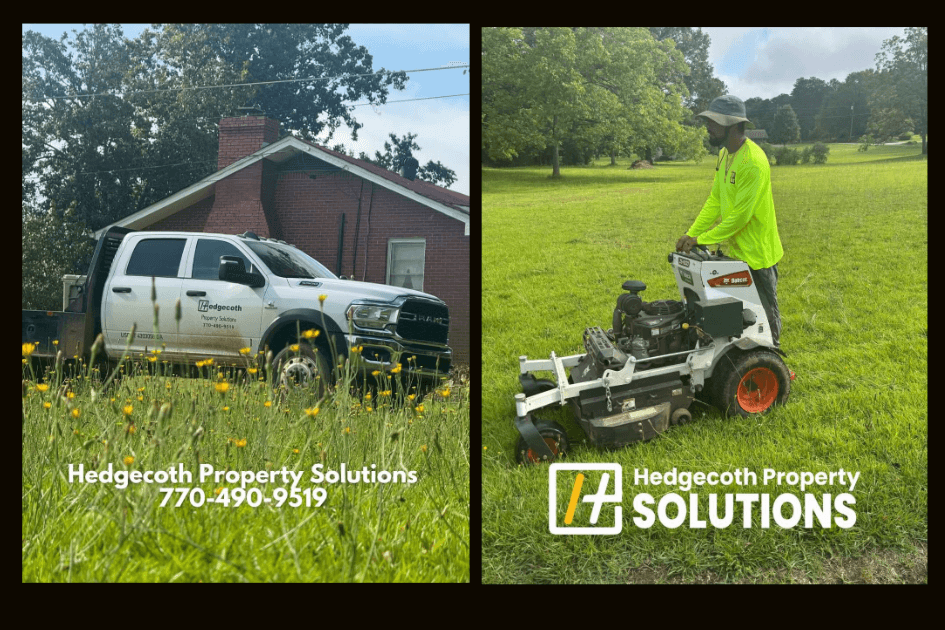
If you're tired of watching your lawn struggle while your neighbors' properties thrive, it's time to invest in professional lawn treatment services. Whether you're in Locust Grove, McDonough, Stockbridge, Jonesboro, Morrow, or anywhere else in Henry County, Hedgecoth Property Solutions has the local expertise, professional licensing, and commitment to results that your lawn deserves.
We don't believe in one-size-fits-all programs. Every lawn we treat gets a customized plan based on soil test results, grass type, current conditions, and your specific goals. Our licensed technicians use professional-grade products applied at precisely calibrated rates, and we document every application so you always know exactly what's been done and why.
Call 770-490-9519 today to schedule your free lawn analysis and estimate. We'll evaluate your property's current condition, identify problem areas, test your soil, and recommend a treatment program designed to give you the healthiest, greenest lawn on your block.
Your lawn is the first thing people see when they visit your home. Make it count with professional lawn treatment services from Hedgecoth Property Solutions — Henry County's trusted name in property maintenance and lawn care.
Hedgecoth Property Solutions — Professional lawn treatment, fertilization, and weed control services for Locust Grove, McDonough, Stockbridge, Jonesboro, Morrow, and all of Henry County, GA. Call 770-490-9519 for your free estimate.