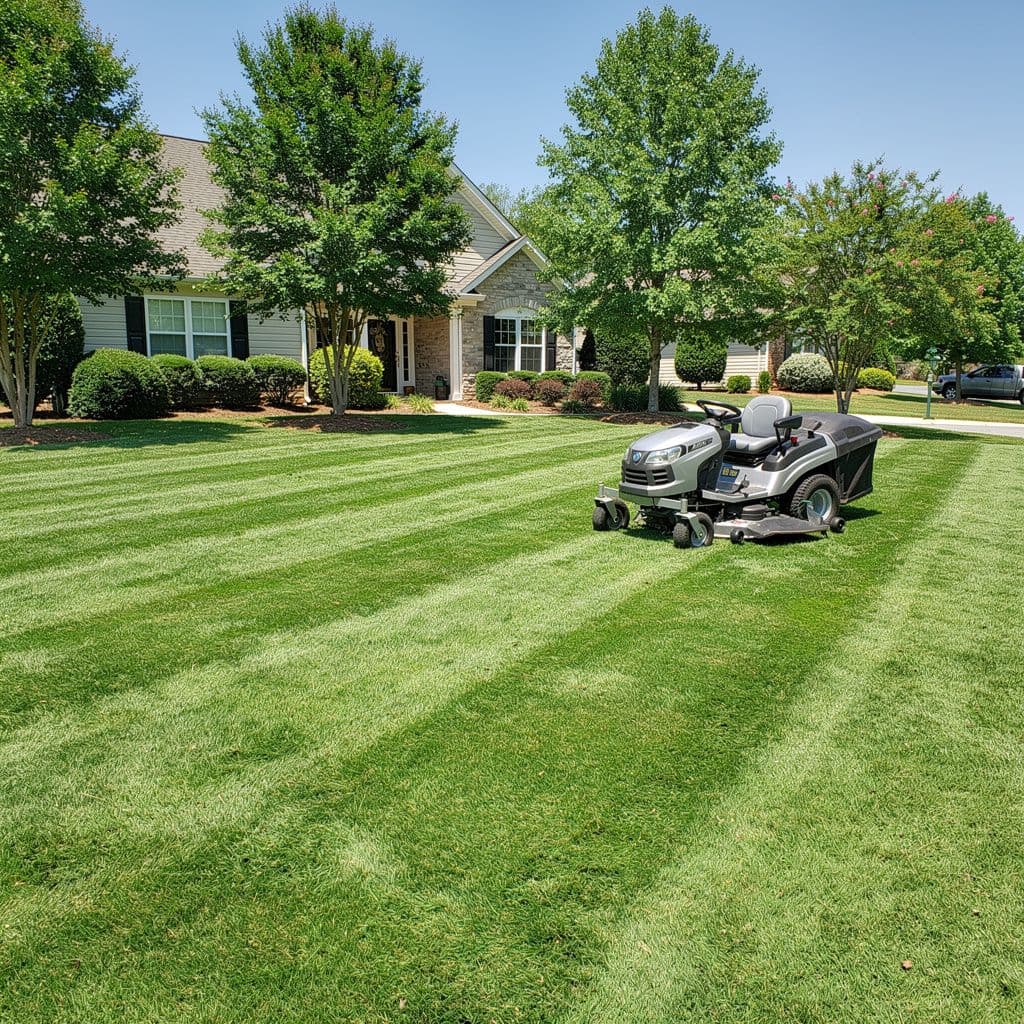
How Often Should You Mow Your Lawn in Henry County, GA?
Published: June 30, 2026
If you've ever stood in your driveway, looked at your yard, and thought, "It's been how many days since I mowed?" — you're asking the right question. Mowing frequency is one of the most misunderstood aspects of lawn care, and getting it wrong can undo months of hard work. Mow too often, and you stress the grass. Mow too little, and you're scalping it every time you cut.
Here in Henry County, the answer to "how often should I mow?" changes with the seasons, your grass type, and what Mother Nature throws at us. Georgia's long growing season, heavy clay soil, and unpredictable summer thunderstorms make mowing decisions more complicated than just "every Saturday morning."
Whether you live in Locust Grove, McDonough, Stockbridge, Jonesboro, or Hampton, this guide breaks down exactly how often you should mow your lawn — by season, by grass type, and by what's happening with the weather right now.
The Golden Rule: Mow by Growth, Not by Calendar
Before we get into specific schedules, let's cover the one principle that matters more than any other: the one-third rule.
Never remove more than one-third of the grass blade height in a single mowing. If your grass is four inches tall and you want it at two inches, you don't cut it all at once. You wait until it reaches three inches, cut it to two, and then maintain from there.
This rule is the foundation of proper lawn mowing because it directly determines how often you need to cut. When grass is growing fast, you mow more often. When growth slows down, you back off. The calendar is a guideline — actual grass growth is what tells you when to mow.
Why the One-Third Rule Matters So Much in Georgia
Henry County's warm-season grasses — Bermuda, Zoysia, Centipede, and St. Augustine — grow aggressively during peak summer. During June, July, and August, these grasses can grow an inch or more per week. That means a lawn cut to two inches on Monday might need cutting again by Friday.
When you violate the one-third rule and scalp warm-season grass during summer, you:
- Remove the leaf surface the grass needs for photosynthesis
- Expose the soil to direct sun, increasing water loss
- Trigger stress responses that divert energy from root growth to shoot recovery
- Open the door for weeds like crabgrass and spurge to colonize bare patches
- Create conditions favorable for fungal diseases like brown patch
Georgia's humidity makes this worse. Scalped lawns in Henry County don't just look bad — they become magnets for disease, pests, and invasive weeds that thrive in stressed turf.
Mowing Frequency by Grass Type in Henry County
Different grass types grow at different rates, and knowing your variety is the first step to building the right mowing schedule.
Bermuda Grass — Every 4–5 Days in Peak Summer
Bermuda is the most common lawn grass in Henry County, and for good reason. It's aggressive, durable, and handles the heat that would kill fescue. But that aggressive growth means Bermuda needs frequent mowing during summer.
- Peak growing season (May–August): Every 4–5 days
- Transition periods (March–April, September–October): Every 7–10 days
- Dormant season (November–February): No mowing needed
Bermuda should be maintained at 1–2 inches. At that height, it grows fast enough that waiting a full week between cuts often means removing too much blade tissue. If you're mowing weekly during summer and your Bermuda lawn looks stressed afterward, you're probably violating the one-third rule.
Zoysia Grass — Every 5–7 Days in Peak Summer
Zoysia grows more slowly than Bermuda, which makes it a popular choice for homeowners who want a great-looking lawn without constant mowing. You'll see beautiful Zoysia lawns in the established neighborhoods around McDonough Square and the Heritage Park area.
- Peak growing season (May–August): Every 5–7 days
- Transition periods (April, September–October): Every 10–14 days
- Dormant season (November–March): No mowing needed
Zoysia should be maintained at 1.5–2.5 inches depending on the cultivar. Its dense growth habit means it can go slightly longer between cuts than Bermuda, but don't push it — letting Zoysia get too tall leads to thatch buildup and a spongy surface.
Tall Fescue — Every 5–7 Days in Spring and Fall
Tall fescue is a cool-season grass, which means it grows actively during spring and fall and goes semi-dormant during Henry County's brutal summers. Fescue lawns are common in shaded yards and newer developments where homeowners planted for quick establishment.
- Peak growing season (March–May, September–November): Every 5–7 days
- Summer stress period (June–August): Every 10–14 days (only if needed)
- Dormant period (December–February): Minimal mowing
Fescue should be maintained at 3–4 inches — taller than warm-season grasses. During summer, raise the mowing height to 4 inches to help the grass cope with heat stress. Never cut fescue short during July and August unless you want to lose half your lawn.
Centipede Grass — Every 7–10 Days in Peak Summer
Centipede is the slow grower of the warm-season grasses. It's sometimes called "lazy man's grass" because it requires less mowing and fewer inputs than Bermuda or Zoysia.
- Peak growing season (May–August): Every 7–10 days
- Transition periods (April, September–October): Every 14 days
- Dormant season (November–March): No mowing needed
Maintain Centipede at 1.5–2 inches. Don't over-fertilize it — Centipede actually prefers nutrient-poor soil, and pushing growth with fertilizer just means more mowing for no benefit.
Mowing Frequency by Season: Your Year-Round Henry County Schedule
Spring (March–May): Ramp-Up Season
Spring in Henry County is when everything wakes up. As soil temperatures climb above 65 degrees, warm-season grasses break dormancy and start growing rapidly. Your mowing frequency should ramp up alongside that growth.
March: Your lawn is just waking up. You may not need to mow at all in early March. By late March, give the lawn its first cut of the season, removing no more than the top third of dead winter growth.
April: Growth is accelerating. Start mowing every 10–14 days, lowering your deck height gradually to the target height for your grass type. This is also a great time to schedule spring lawn preparation if you haven't already.
May: Peak growth is here. You should be mowing every 5–7 days for most warm-season grasses. This is when the one-third rule really starts to matter — the grass is growing fast enough that skipping a week means a harsh cut next time.
Summer (June–August): Peak Mowing Season
Summer is when mowing frequency matters most. The combination of heat, humidity, and aggressive growth means your lawn needs consistent attention.
June through August: Mow every 4–7 days depending on grass type and rainfall. During wet periods, growth explodes — you may need to mow twice a week. During dry spells, growth slows and you can stretch to once a week.
Key summer mowing tips:
- Mow early morning or late evening — never during the hottest part of the day
- Sharpen your blade — dull blades tear grass, creating entry points for disease
- Raise your mowing height by half an inch during extreme heat waves
- Leave clippings on the lawn unless they're clumping — they return nitrogen to the soil
If you're spending your weekends behind a mower instead of enjoying Warren Holder Park or a Saturday at Tanger Outlets, it might be time to consider professional lawn care services that handle the schedule for you.
Fall (September–November): Slow-Down Season
As temperatures cool, warm-season grass growth gradually slows. Your mowing frequency should taper off accordingly.
September: Still mowing weekly for most lawns, but growth is noticeably slower. This is an ideal time to aerate and overseed if you have warm-season grass that needs thickening.
October: Every 10–14 days. The grass is preparing for dormancy. Keep mowing until growth stops completely.
November: Final cut of the season. Give the lawn a clean, even cut before winter. This prevents matting and disease during the dormant months.
Winter (December–February): Dormant Season
Warm-season grasses in Henry County go dormant from roughly late November through March. During this period:
- No routine mowing needed — the grass isn't growing
- Clean up debris — leaves, sticks, and litter that could smother the lawn
- Avoid traffic on frozen grass — foot traffic can break dormant crowns
- Schedule equipment maintenance — sharpen blades, service your mower
If you have tall fescue, you may need occasional mowing during warm winter spells, but it should be minimal.
How Rainfall Affects Mowing Frequency in Henry County
Henry County receives an average of 48–50 inches of rain annually, with summer thunderstorms being a major contributor. Rainfall directly impacts how often you need to mow.
After Heavy Rain: Mow Sooner, Not Later
When we get a week of afternoon thunderstorms — which is typical in July — grass growth surges. If your lawn is already at the upper end of its height range and a week of rain is forecast, try to mow before the storms arrive. If you can't, plan to mow as soon as the lawn dries enough to cut without rutting.
Pro tip: Walking on a saturated lawn causes soil compaction, especially in Henry County's clay-heavy soil. If your yard is squishy underfoot, wait a day. Compaction damage lasts far longer than a few extra days of tall grass.
Check out our guide on lawn care after heavy rain for a deeper dive on this topic.
During Drought: Back Off
When rainfall drops off and temperatures soar, grass enters a self-preservation mode. Growth slows dramatically, and the last thing your lawn needs is the stress of a mower.
During dry periods:
- Skip a mowing cycle if the grass isn't growing
- If you must mow (for appearance), raise your deck height to the maximum recommended for your grass type
- Never mow drought-stressed grass short — it can kill it
Georgia's clay soil conditions make drought stress particularly damaging because compacted clay prevents deep root growth, leaving grass more vulnerable during dry spells.
Signs You're Mowing Too Often
Yes, there is such a thing as too much mowing. Over-mowing stresses your lawn and wastes your time. Look for these signs:
- Your lawn looks pale or yellowish after mowing — you're cutting into the stem tissue, not just the blade
- The soil feels compacted — frequent mowing with heavy equipment compacts clay soil
- Weeds are increasing despite regular mowing — stressed grass can't outcompete weeds
- You see tire ruts in the lawn — especially after rain, this indicates too much traffic
- The grass feels thin to walk on — frequent cutting can deplete root energy reserves
If you notice these signs, stretch your mowing interval by 2–3 days and see if the lawn improves.
Signs You're Not Mowing Often Enough
The more common problem in Henry County: waiting too long between cuts. Here's what to watch for:
- You're removing more than an inch of grass per cut — you're violating the one-third rule
- Clippings are clumping on the lawn — the grass was too tall, and clumps can smother the turf beneath
- The lawn looks uneven after mowing — tall grass lays over instead of standing up to the blade
- You see seed heads on your Bermuda or Zoysia — the grass is stressed and trying to reproduce
- Weeds are flowering and going to seed — you're not cutting often enough to prevent weed spread
Professional Mowing vs. DIY: The Frequency Factor
Many Henry County homeowners start out mowing their own lawns and quickly realize that proper mowing frequency is the hardest part to maintain. Life gets busy. The weekend fills up. It rains on Saturday, you have plans Sunday, and suddenly it's been two weeks.
Here's what professional lawn service solves when it comes to mowing frequency:
Consistency
A professional crew shows up on schedule regardless of weather interruptions, family commitments, or fatigue. During peak summer, that means mowing every 4–5 days for Bermuda lawns — a schedule most homeowners can't sustain.
Proper Equipment
Professional mowers use commercial-grade equipment with sharp blades adjusted to the correct height for your grass type. Dull mower blades — the most common DIY problem — tear grass instead of cutting it cleanly, creating brown tips and disease entry points.
Pattern Variation
Professionals alternate mowing patterns to prevent soil compaction and wheel ruts. If you mow in the same direction every week — as most homeowners do — you create permanent tracks in your lawn, especially in clay soil.
Clipping Management
Professional services bag, mulch, or side-discharge clippings based on conditions. When grass is wet and tall, clumping can smother the lawn. When conditions are right, leaving clippings returns valuable nitrogen to the soil.
Henry County Mowing Frequency Quick Reference
| Grass Type | Peak Summer | Spring/Fall | Winter | Ideal Height |
|------------|-------------|-------------|--------|--------------|
| Bermuda | Every 4–5 days | Every 7–10 days | None | 1–2 inches |
| Zoysia | Every 5–7 days | Every 10–14 days | None | 1.5–2.5 inches |
| Tall Fescue | Every 10–14 days | Every 5–7 days | Minimal | 3–4 inches |
| Centipede | Every 7–10 days | Every 14 days | None | 1.5–2 inches |
| St. Augustine | Every 5–7 days | Every 10–14 days | None | 2.5–4 inches |
Building Your Personal Mowing Schedule
No two lawns in Henry County are exactly alike. Your mowing frequency depends on:
- Grass type — the biggest single factor
- Sun exposure — full-sun lawns grow faster than shaded ones
- Irrigation — supplemental watering increases growth during dry periods
- Fertilization — fertilized lawns grow faster and need more frequent mowing
- Soil health — well-amended soil supports steady, healthy growth
- Age of lawn — established lawns grow more predictably than new sod or seed
Start with the baseline schedule for your grass type, then adjust based on what you see. If the grass isn't tall enough to cut on schedule, wait. If it's too tall, you waited too long. Within a few weeks, you'll develop a rhythm that matches your lawn's unique growth pattern.
Frequently Asked Questions
How often should I mow my lawn in the summer in Georgia?
During peak summer (June–August) in Henry County, most warm-season lawns need mowing every 5–7 days. Bermuda grass may need cutting every 4–5 days during periods of active growth and adequate rainfall. Cool-season fescue lawns should be mowed every 10–14 days during summer, only as needed to maintain a 4-inch height.
Is it okay to cut grass every two weeks?
For most lawns in Henry County, a two-week mowing interval during summer means you're removing too much grass at once — violating the one-third rule. This stresses the grass, encourages weed growth, and leaves your lawn looking scalped. Two-week intervals work fine during spring and fall transition periods when growth is slower, but not during peak growing season.
Should I mow before or after it rains?
Mowing before rain is ideal — you'll cut dry grass cleanly, and the rainfall will help the lawn recover. If rain is in the forecast and your grass is getting tall, mow before it arrives. After heavy rain, wait until the lawn dries enough that walking on it doesn't leave footprints or ruts. Mowing wet grass tears the blades, clogs your mower, and compacts the soil.
What happens if I stop mowing my lawn for a month?
In Henry County's growing season, a month without mowing would leave most lawns 8–12 inches tall. When you finally cut it, removing that much growth would shock the grass, potentially killing sections. Tall grass also provides habitat for pests like ticks and mosquitoes, goes to seed (which stresses the plant), and creates a thatch layer that smothers new growth. If you'll be away for an extended period, arrange for professional lawn care to maintain your mowing schedule.
Does mowing frequency affect weed control?
Absolutely. Frequent, proper mowing is one of the most effective weed control methods available. Regular mowing prevents weeds from flowering and setting seed, while maintaining a thick, healthy lawn canopy blocks sunlight from reaching weed seeds in the soil. Conversely, infrequent mowing that scalfs the grass opens up the canopy and gives weeds the sunlight they need to germinate. For comprehensive weed management, combine proper mowing with professional weed control services.
How much does professional lawn mowing cost in Henry County?
Professional lawn mowing in Henry County typically ranges from $35–$65 per visit for an average quarter-acre lot, with weekly service during the growing season. Pricing depends on lot size, terrain, obstacles, and service level. For a detailed breakdown, check our lawn care pricing guide or call us at 770-490-9519 for a free estimate.
Stop Guessing. Start Growing.
Getting mowing frequency right is the single most impactful thing you can do for your lawn — but it's also the most demanding part of lawn care to maintain all season long. If you're tired of spending your weekends behind a mower, guessing at the right height and schedule, let the professionals handle it.
At Hedgecoth Property Solutions, we've been maintaining beautiful lawns across Locust Grove, McDonough, Stockbridge, Jonesboro, Hampton, and throughout Henry County for years. We know exactly how often your specific grass type needs cutting, what height to maintain during each season, and how to adjust for weather conditions.
Our professional lawn care and property maintenance services keep your lawn healthy, thick, and looking its best — without you lifting a finger.
Call 770-490-9519 or contact us online for a free estimate. We'll evaluate your lawn, recommend the right mowing schedule for your grass type, and give you one less thing to worry about this summer.