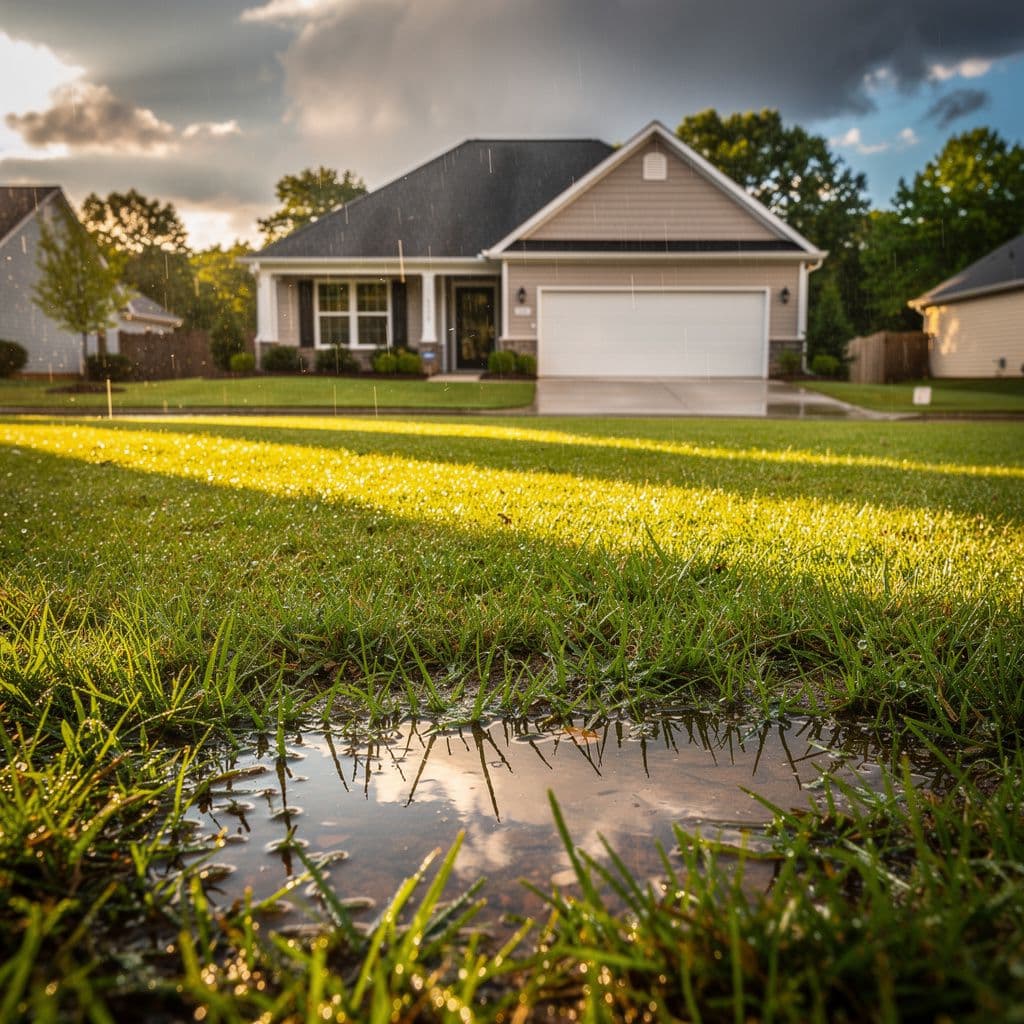
Lawn Care After Heavy Rain: How to Protect and Restore Your Henry County Yard
Published: June 5, 2026
If you live in Locust Grove, McDonough, or anywhere across Henry County, you know the pattern: a steamy June morning gives way to violent afternoon thunderstorms that dump two or three inches of rain in under an hour. Your yard turns into a pond, your grass flattens, and by the next morning you're staring at muddy ruts, washed-out mulch, and brown patches you swear weren't there yesterday.
Georgia's summer storm season is brutal on lawns. Between May and September, Henry County regularly sees intense downpours, flash flooding, and the kind of saturated soil that turns a healthy yard into a stressed, struggling mess overnight. And if you don't respond correctly in the hours and days after a heavy rain event, that damage compounds — leading to fungal disease, root rot, weed explosions, and dead spots that take months to fix.
This guide walks you through exactly what to do before, during, and after heavy rain to keep your lawn healthy. Whether you maintain your own yard or rely on professional lawn care services, understanding post-storm recovery is essential for any Henry County homeowner.
Why Heavy Rain Damages Georgia Lawns So Quickly
Before we get into solutions, it helps to understand why our lawns are so vulnerable to heavy rain in the first place.
Henry County's Red Clay Soil Problem
The dense clay soil common throughout Locust Grove, Stockbridge, and McDonough drains slowly — sometimes painfully slowly. When several inches of rain fall in a short window, the soil simply cannot absorb it fast enough. Water pools on the surface, saturates the root zone, and essentially suffocates your grass by cutting off oxygen to the roots.
Clay soil also expands when wet and contracts when dry. This constant swelling and shrinking stresses grass roots, creates uneven surfaces, and forms the low spots where water collects after every storm.
Warm-Season Grass Vulnerability
Most Henry County lawns are planted with warm-season grasses like Bermuda, Zoysia, or Centipede. These grasses thrive in heat but are surprisingly sensitive to prolonged saturation. When roots sit in waterlogged soil for more than 24 to 48 hours, they begin to suffocate and rot — a condition that's almost impossible to reverse once it sets in.
Compounding Summer Stress
Heavy rain doesn't come alone. It's usually followed by blazing Georgia heat and humidity. This combination — saturated soil plus high temperatures — creates the perfect breeding ground for fungal diseases like brown patch, pythium blight, and take-all root rot. A lawn that survives the flooding can still die from the disease that follows.
Step-by-Step: What to Do Immediately After Heavy Rain
1. Stay Off the Lawn (24-48 Hours)
The single most important thing you can do after a heavy rain is nothing. Stay off the grass. Walking, mowing, or driving equipment across saturated soil causes compaction that can take months to fix. Those muddy footprints you leave? Each one is a compacted spot where grass will struggle to grow back.
Exception: If water is actively pooling near your home's foundation or threatening structures, address drainage first — even if it means walking on wet grass.
2. Clear Debris and Check Drainage
Once the lawn has dried enough to walk on without sinking:
- Remove fallen branches, leaves, and storm debris that can smother grass
- Check gutters and downspouts for clogs that may be dumping water onto your lawn
- Look for areas where water is still pooling after 24 hours — these are drainage problems that need a permanent solution
- Clear any blocked drainage swales or ditches on your property
3. Assess the Damage
Walk your property and look for:
| Damage Type | What to Look For | Urgency |
|-----------|----------------|---------|
| Standing water | Pools that haven't drained after 24 hours | High — address drainage |
| Erosion | Washed-out soil, exposed roots, gullies | Medium — regrade and refill |
| Flattened grass | Grass laying flat in one direction | Low — usually recovers on its own |
| Silt deposits | Fine mud coating grass blades | Medium — rinse off gently |
| Mushrooms/fungus | Rapid fungal growth in wet areas | Medium — monitor for disease |
| Compaction | Hard, crusty soil surface as it dries | High — may need aeration |
Fixing the Most Common Post-Rain Lawn Problems
Standing Water and Poor Drainage
If you consistently have standing water after storms, you have a drainage problem that no amount of lawn care will fix permanently. Solutions range from simple to significant:
Quick fixes:
- Re-grade low spots by adding a thin layer of topsoil and compost mix
- Extend downspouts to direct water away from problem areas
- Create a simple drainage swale — a shallow channel that guides water off your lawn
Long-term solutions:
- Install a French drain system to move subsurface water
- Add a dry creek bed that doubles as a landscape feature
- Consider professional landscaping to regrade and redesign problem areas
For serious drainage issues, Hedgecoth Property Solutions can assess your property and recommend the right approach for your yard's specific conditions.
Erosion and Washed-Out Areas
Heavy rain on sloped properties — common around Locust Grove and the rolling terrain near the Towaliga Creek watershed — can wash away topsoil and leave ugly gullies.
Repair steps:
- Let the area dry completely
- Rake loosened soil back into place
- Add topsoil and compost to fill eroded areas
- Reseed or lay sod over bare spots
- Apply a light layer of straw mulch to protect new seed from the next rain
- Consider planting ground cover or installing terracing on steep slopes
Silt and Mud on Grass Blades
When floodwaters recede, they often leave a fine layer of silt coating your grass. This blocks sunlight and can smother the lawn if left in place.
Gently rinse silt off grass blades with a hose on a low-pressure setting. Don't use a pressure washer — you'll damage the grass. If the silt layer is thick, lightly rake it once the lawn dries to break up the crust.
Fungal Disease After Rain
Georgia's post-rain humidity is a fungal playground. Watch for these signs in the days following a storm:
- Brown patch: Circular brown spots that expand outward, often with a dark ring around the edge
- Pythium blight: Greasy, dark patches that appear overnight in low, wet areas
- Dollar spot: Small, silver-dollar-sized tan spots that merge into larger patches
- Slime mold: Colorful (often gray or yellow) patches on grass blades — usually harmless but alarming
If you spot fungal disease, reduce watering immediately and avoid evening irrigation. For severe outbreaks, professional lawn treatment with the right fungicide may be necessary.
When to Mow After Heavy Rain
One of the most common questions we get: "Can I mow my lawn after it rains?" The short answer is wait.
Wait at least 24-48 hours after heavy rain before mowing. Mowing wet grass causes multiple problems:
- Clumping: Wet clippings clump together and smother the grass underneath
- Tearing: Wet grass doesn't cut cleanly, even with sharp blades
- Disease spread: Fungal spores spread easily on wet mower decks
- Soil compaction: Mower wheels compress saturated soil
- Rutting: You'll leave visible ruts that become permanent low spots
When you do mow, raise the deck one notch higher than usual. Grass that's recovering from stress needs longer blades to produce energy and rebuild root strength. Never remove more than one-third of the blade height in a single mowing.
Fertilizer and Treatment Timing After Storms
Heavy rain doesn't just damage grass directly — it washes away the fertilizer and pre-emergent treatments you've already paid for.
Did Your Fertilizer Wash Away?
If you applied granular fertilizer within 48 hours before a heavy rain, there's a good chance much of it washed off your lawn and into the storm drain. Signs your fertilizer was lost:
- Rapid green-up followed by sudden fading
- Algae blooms in nearby puddles or streams (indicates nitrogen runoff)
- Weeds suddenly appearing in treated areas
Wait one to two weeks after the rain event, then reapply fertilizer at half the normal rate. Don't double-dose — excess nitrogen on already-stressed grass causes more harm than good.
When to Reapply Weed Control
Pre-emergent herbicides create a chemical barrier in the soil that prevents weed seeds from germinating. Heavy rain can break through this barrier, especially on slopes and in areas with poor drainage. If you had a significant rain event (more than two inches) within six weeks of your last pre-emergent application, you may need a booster treatment.
Preventing Rain Damage Before the Next Storm
The best post-rain strategy starts before the clouds roll in.
Improve Soil Structure
Healthy soil drains faster and recovers quicker. Annual lawn aeration relieves compaction and creates channels for water to move through the soil profile. Topdressing with compost improves soil structure over time and increases its ability to absorb heavy rainfall without pooling.
Maintain Proper Grading
Your property should slope away from your home's foundation at a rate of about one inch per foot for the first six feet. If water runs toward your home or collects in yard depressions, regrading can prevent both foundation damage and lawn destruction.
Install Smart Drainage Features
For properties with chronic drainage issues, landscape-based drainage solutions are more effective and more attractive than functional-only fixes:
- Dry creek beds — Natural-looking rock channels that direct water flow
- Rain gardens — Planted depressions that collect and absorb runoff
- Permeable hardscaping — Patios and walkways that let water through rather than shedding it
- French drains — Underground pipes that redirect subsurface water
These features can be integrated into a broader property maintenance plan to protect your lawn and your home.
Keep Your Lawn Healthy Year-Round
A thick, healthy lawn absorbs more water and recovers faster from storm damage than a thin, stressed one. That means consistent lawn care — proper mowing height, regular fertilization, weed control, and seasonal treatments — isn't just about looks. It's your lawn's immune system against extreme weather.
Heavy Rain and Your Trees
Storm damage isn't limited to your lawn. Heavy rain combined with wind can weaken or damage trees on your property — especially mature pines and oaks common throughout Henry County.
After a storm, check trees for:
- Hanging or broken branches that could fall
- Leaning that wasn't present before the storm
- Exposed roots from soil erosion
- Split trunk or major limbs
- Water pooling around the base (can cause root rot)
Damaged trees are a safety hazard. If you notice any of these signs, professional tree service can assess the risk and safely remove hazardous limbs or trees before they cause property damage.
The Professional Advantage: Why Henry County Homeowners Choose Expert Care
Recovering from storm damage — and preventing it in the first place — requires more than just waiting for the lawn to dry out. It takes an understanding of local soil conditions, grass types, drainage patterns, and the right timing for every treatment.
Hedgecoth Property Solutions has been helping homeowners in Locust Grove, McDonough, Stockbridge, Jonesboro, Morrow, and throughout Henry County protect and restore their properties after severe weather. Our crews understand the unique challenges of Georgia clay soil, summer thunderstorms, and the specific grass varieties that thrive in our area.
Whether you need emergency cleanup after a storm, a drainage solution for a chronic low spot, or year-round lawn care that keeps your yard resilient enough to weather whatever Georgia throws at it, we're here to help.
Frequently Asked Questions
How long should I wait to mow my lawn after heavy rain?
Wait at least 24 to 48 hours after heavy rain before mowing. Mowing wet grass causes clumping, tears the grass blades, spreads fungal disease, and compacts saturated soil. If you walk on the lawn and leave footprints that fill with water, it's too wet to mow.
Why is my lawn turning brown after it rains?
Brown grass after rain is usually caused by one of three things: fungal disease triggered by warm, wet conditions; root suffocation from waterlogged clay soil; or fertilizer washout that leaves the grass nutrient-starved. If brown patches appear in circular patterns with dark borders, it's likely brown patch fungus and should be treated promptly.
How do I fix standing water in my yard after a storm?
For temporary relief, clear any blocked drainage paths and use a shovel to create a channel directing water away from the low spot. For a permanent fix, you may need to regrade the area, install a French drain, or add a dry creek bed. If standing water persists for more than 48 hours, professional landscaping and drainage services can provide a long-term solution.
Should I fertilize my lawn right after heavy rain?
No. Wait at least one to two weeks after a heavy rain event before fertilizing. Soil that's still saturated won't absorb nutrients effectively, and the fertilizer is likely to wash away. When you do fertilize, use half the normal rate for the first application after a storm to avoid stressing already-recovering grass.
Can heavy rain kill my grass permanently?
Yes, prolonged flooding can kill grass by suffocating the roots. Most warm-season grasses grown in Henry County can survive 24 to 48 hours of saturation, but if water sits for three or more days, the roots begin to die. Fast drainage and quick action after storms are the best ways to prevent permanent damage.
What's the best way to prevent storm damage to my lawn?
The three most effective prevention strategies are: annual core aeration to improve soil drainage, maintaining proper yard grading to direct water away from low spots, and keeping your lawn thick and healthy with regular property maintenance so it can absorb and recover from heavy rainfall.
Protect Your Lawn From the Next Storm
Don't wait until after the next thunderstorm to think about your lawn's health. Hedgecoth Property Solutions provides comprehensive lawn care, drainage solutions, and property maintenance services designed for Henry County's unique climate and soil conditions.
📞 Call: 770-490-9519
🌐 Web: hedgecoth.pro/contact
📍 Serving: Locust Grove, McDonough, Stockbridge, Jonesboro, Morrow & Henry County
Hedgecoth Property Solutions — Professional Lawn Care & Property Maintenance for Henry County