Lawn Care for Georgia Clay Soil: The Complete Guide to Growing a Healthy Lawn in Henry County
Published: May 14, 2026
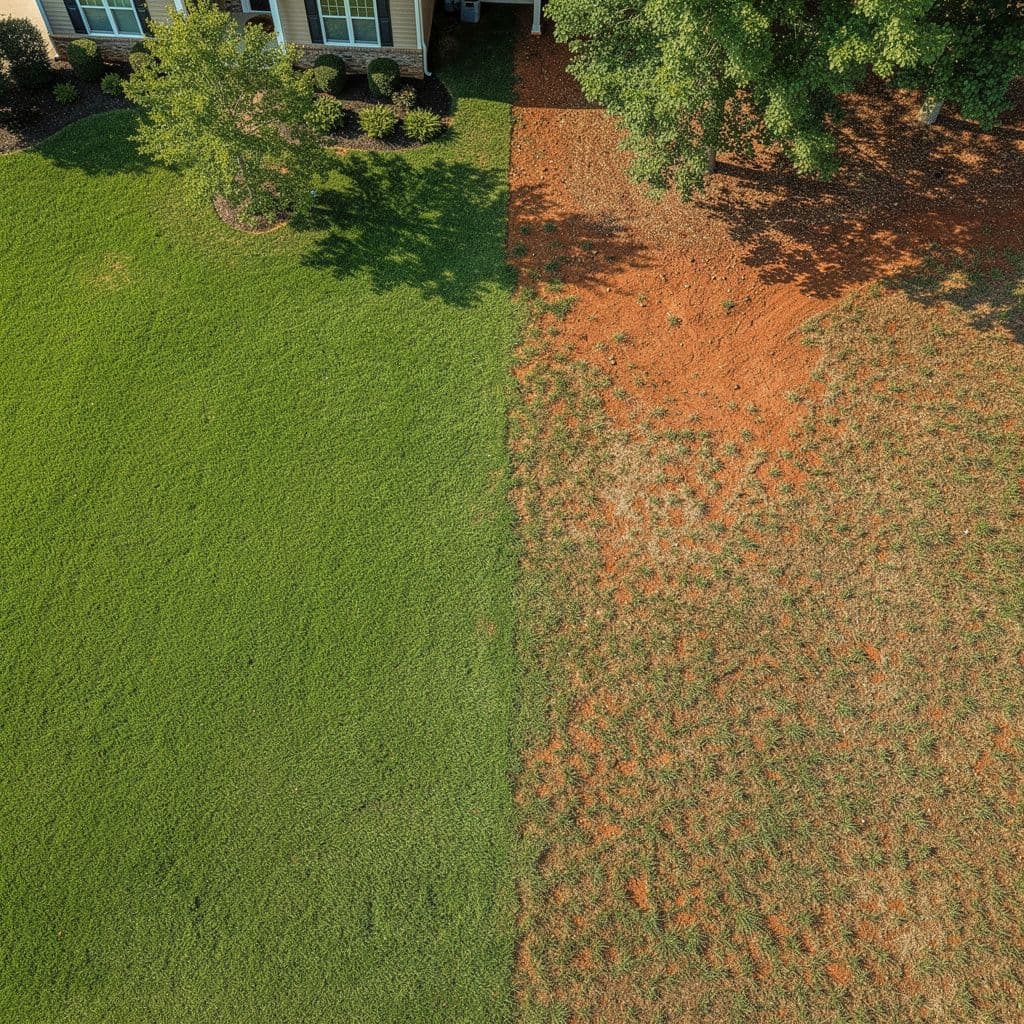
If you own a home in Henry County, you already know the struggle. You water, you fertilize, you mow on schedule — and still, parts of your lawn look thin, patchy, or just won't grow the way your neighbor's does. The culprit isn't your effort. It's what's underneath.
Georgia's infamous red clay soil is the single biggest challenge facing homeowners in Locust Grove, McDonough, Stockbridge, and throughout Henry County. Clay soil compacts easily, drains poorly, and can choke grass roots before they ever get established. But here's the good news: once you understand how to work with clay instead of against it, you can grow a lawn that rivals any neighborhood in the state.
At Hedgecoth Property Solutions, we've spent years helping Henry County homeowners transform stubborn clay yards into thick, green lawns. This guide shares everything we've learned — from soil testing and amendment to grass selection and ongoing lawn care strategies specific to our area.
Understanding Georgia Clay Soil: Why Your Lawn Struggles
What Makes Clay Soil Different
Clay soil particles are microscopic — roughly 1,000 times smaller than sand particles. When these tiny particles pack together, they create a dense, heavy soil structure that presents three major problems for lawns:
1. Poor Drainage
Water sits on top of clay soil instead of filtering through. After heavy rains common in Henry County spring and summer, lawns can remain waterlogged for days. This suffocates grass roots and creates perfect conditions for fungal diseases.
2. Compaction
Clay soil compresses under foot traffic, lawnmowers, and even rainfall. Compacted soil has no air pockets, which means grass roots can't breathe, absorb nutrients, or grow deep enough to survive Georgia's brutal summer droughts.
3. Nutrient Lock
Clay is actually rich in minerals, but its chemistry makes many nutrients unavailable to plants. You might be fertilizing regularly and still seeing yellow, thin grass because the nutrients are trapped in the soil instead of reaching the roots.
Henry County's Specific Soil Challenges
Not all clay is the same. The soil across Henry County varies depending on where you live:
Locust Grove and South Henry County:
- Heavy red clay with poor natural drainage
- Properties near the Tussahaw Creek area often have saturated soils
- Mature pine forests have created acidic soil conditions
McDonough and North Henry County:
- Mix of red clay and sandy loam in some developments
- Newer subdivisions near J.P. Moseley Park often have compacted construction fill
- Higher elevation areas drain better but dry out faster
Stockbridge and West Henry County:
- Some areas have a clay-loam mix that's more forgiving
- Properties near Panola Mountain State Park benefit from natural topsoil
- Established neighborhoods have had decades of organic matter accumulation
Jonesboro and Morrow:
- Dense clay with less natural organic matter
- Flatter terrain means water pools more frequently
- Mature neighborhoods may have improved soil from decades of lawn care
Step One: Test Your Soil Before Doing Anything Else
Why Soil Testing Matters in Henry County
Before you spend a single dollar on fertilizer, grass seed, or lawn treatment services, you need to know exactly what you're working with. Georgia clay soil can vary dramatically even within the same neighborhood — the lot next door might have a completely different pH and nutrient profile than yours.
A proper soil test tells you:
- pH level (most Henry County clay is acidic, between 5.0-6.0)
- Nutrient levels (nitrogen, phosphorus, potassium)
- Organic matter content (usually low in Georgia clay)
- Specific deficiencies that need targeted correction
How to Get Your Soil Tested
DIY Soil Test:
- Purchase a soil test kit from any Henry County garden center
- Collect samples from 4-6 areas of your yard at 4-6 inches deep
- Mix samples together and test
- Cost: $10-20 (less accurate but gives a baseline)
University of Georgia Extension Soil Test:
- Request a soil test kit from the Henry County UGA Extension office
- Mail samples to the UGA Agricultural and Environmental Services Lab
- Results arrive in 7-10 business days with specific amendment recommendations
- Cost: approximately $10-15 per sample
- This is the gold standard for Georgia lawns
Understanding Your Results
Most Henry County homeowners will see results indicating:
- Low pH (5.0-5.5): Needs lime to raise pH for optimal grass growth
- Low phosphorus: Common in clay; needs targeted amendment
- Low organic matter: Needs compost or other organic material
- Compaction indicators: High bulk density readings suggest aeration is needed
Fixing Clay Soil: The Amendment Strategy
Core Aeration: Your Most Important Tool
If you do nothing else for your clay soil lawn, aerate it. Core aeration pulls small plugs of soil from the ground, creating channels for water, air, and nutrients to reach grass roots.
For Henry County clay soil:
- Aerate at least once per year (twice is better)
- Spring aeration (March-April): Helps recover from winter compaction
- Fall aeration (September-October): Relieves summer compaction and prepares for overseeding
- Use a core aerator that pulls plugs 2-3 inches deep — spike aerators actually make compaction worse in clay
Topdressing with Compost
After aeration, topdressing with quality compost is the single most effective way to improve clay soil over time. The compost fills the aeration holes and gradually works into the soil structure, improving drainage, adding organic matter, and feeding beneficial microorganisms.
Application rates for Henry County lawns:
- Spread 1/4 to 1/2 inch of compost across the entire lawn
- Use a spreader for even distribution
- Water thoroughly after application
- Repeat annually for continuous soil improvement
- Quality compost is available from local Henry County suppliers
Soil Amendments for Specific Problems
For acidic clay (pH below 6.0):
- Apply pelletized lime at the rate recommended by your soil test
- Typical application: 40-50 pounds per 1,000 square feet
- Fall application is ideal for Henry County
- Retest pH annually — clay soil tends to revert to acidic over time
For compacted clay:
- Gypsum (calcium sulfate) can help break up clay particles
- Apply 40-50 pounds per 1,000 square feet
- Works best when applied after aeration
- Available at any local hardware store
For poor nutrient availability:
- Use slow-release fertilizers designed for clay soil
- Avoid fast-release products that can burn grass in heavy soil
- Consider liquid aeration products as a supplement between core aeration
Choosing the Right Grass for Georgia Clay
Warm-Season Grasses That Thrive in Henry County
If you're starting from scratch or considering a lawn renovation, choosing the right grass variety is critical. Not all grasses can handle Georgia clay soil and our climate extremes.
Bermudagrass (Best Overall for Henry County)
- Excellent heat and drought tolerance
- Spreads aggressively to fill bare spots
- Tolerates clay soil when properly established
- Needs full sun (6+ hours daily)
- Best for: McDonough, Stockbridge, and Locust Grove properties with open yards
- Mowing height: 1-2 inches
Zoysiagrass (Best for Low Maintenance)
- Dense growth chokes out weeds naturally
- More shade-tolerant than bermudagrass
- Handles clay soil well once established
- Slower growing — less mowing required
- Best for: Busy homeowners who want a nice lawn with less upkeep
- Mowing height: 1-2 inches
Centipedegrass (Best for Acidic Soil)
- Thrives in acidic conditions common in Henry County
- Lowest fertility requirements of any warm-season grass
- Good for properties near wooded areas with pine canopy
- Less traffic-tolerant than bermuda or zoysia
- Best for: Low-traffic areas, Locust Grove properties with mature trees
- Mowing height: 1.5-2 inches
Tall Fescue (Best for Shady Areas)
- Only cool-season grass option for Henry County
- Better shade tolerance than warm-season varieties
- Struggles in clay without significant soil improvement
- Requires more water during Georgia summers
- Best for: Heavily shaded yards, Jonesboro and Morrow properties with mature trees
- Mowing height: 2.5-3.5 inches
Grass Selection by Neighborhood Conditions
Full sun, flat yard: Bermudagrass — hands down the toughest option for Georgia clay
Part shade, moderate traffic: Zoysiagrass — excellent all-around performer
Acidic soil, pines nearby: Centipedegrass — naturally adapted to these conditions
Heavy shade, willing to water: Tall fescue — requires more maintenance but fills a niche
Ongoing Lawn Care for Clay Soil in Henry County
Watering Strategy for Clay Lawns
Clay soil holds moisture longer than sandy soil but absorbs it more slowly. This means your watering approach needs to be different from what you might read in generic lawn care guides.
The Clay Soil Watering Rules:
- Water less frequently but more deeply — clay retains moisture
- Water early morning (5-8 AM) to allow surface drying before nightfall
- Never water in the evening — clay's poor drainage plus overnight moisture equals fungal disease
- Apply 1 inch of water per week including rainfall — use a rain gauge
- Split applications if water runs off — water 20 minutes, wait 30 minutes, water again
- Reduce watering in shaded areas where clay stays wet longer
Henry County rainfall considerations:
- Spring thunderstorms can dump 2+ inches in a single event
- Monitor your lawn — if standing water remains after 24 hours, you have drainage issues
- Summer drought periods (July-August) may require supplemental irrigation
- Consider a smart irrigation system that adjusts for rainfall
Mowing Practices for Clay Soil Lawns
Proper mowing is even more critical on clay soil because grass growing in heavy soil is already under stress.
Mowing height matters more on clay:
- Never remove more than 1/3 of the grass blade height in a single mowing
- Taller grass shades the soil surface, reducing evaporation and keeping clay from baking hard
- Raise mowing height during summer drought periods
- Keep mower blades sharp — dull blades shred grass, creating entry points for disease
Professional lawn mowing services understand clay soil:
- Proper equipment weight to minimize compaction
- Correct mowing patterns that prevent rutting
- Timing around Henry County's frequent afternoon thunderstorms
- Leaving clippings to return organic matter to the soil
Fertilization Timing for Georgia Clay
Clay soil changes how fertilizers work. Nutrients move slowly through clay, which means:
- Slow-release fertilizers are essential — fast-release products can burn grass
- Apply at the right time for warm-season grasses:
- Late April: First application after grass fully greens up
- June: Summer feeding with slow-release nitrogen
- August: Light application to maintain color
- October: Winterizer application for root development
- Avoid fertilizing before heavy rain — nutrients will run off clay before absorbing
- Consider liquid applications for faster uptake during peak growing season
Common Clay Soil Lawn Problems in Henry County
Standing Water and Drainage Issues
If water pools on your lawn after rain, you're dealing with clay's poor permeability. Solutions range from simple to involved:
Simple fixes:
- Core aeration (see above) — improves infiltration significantly
- Topdressing with compost annually
- Clearing debris from natural drainage paths
Moderate solutions:
- French drains along property edges where water collects
- Grading corrections to direct water away from low spots
- Property maintenance services that address drainage as part of overall care
Major interventions:
- Installing a proper drainage system
- Regrading portions of the property
- Creating rain gardens in consistently wet areas
Lawn Diseases Common in Clay Soil
Clay's poor drainage creates a perfect storm for fungal diseases during Henry County's humid springs and summers:
Brown Patch:
- Circular patches of brown, thinning grass
- Thrives when clay soil stays wet and temperatures hit 70-85°F
- Prevent with proper watering and good air circulation
- Common in McDonough and Stockbridge lawns from May through September
Dollar Spot:
- Small, silver-dollar-sized patches
- Worse on underfertilized clay lawns
- Address with proper nitrogen applications
Take-All Root Rot:
- Most damaging to St. Augustine and centipedegrass
- Yellowing grass that pulls up easily
- Worse in alkaline clay — another reason to monitor pH
Thatch Buildup
Clay soil lawns tend to develop thatch faster because decomposition slows in heavy, poorly aerated soil. A thatch layer thicker than 1/2 inch prevents water and nutrients from reaching the soil.
Management:
- Dethatch in late spring when grass is actively growing
- Follow with aeration for maximum benefit
- Maintain proper soil pH to encourage decomposing microorganisms
- Avoid over-fertilizing with nitrogen, which accelerates thatch production
The Professional Advantage for Clay Soil Lawns
Why Clay Soil Lawns Benefit Most from Professional Care
Managing a lawn on Georgia clay isn't just about mowing and watering. It requires a strategic approach that addresses the underlying soil conditions. Professional lawn care providers who understand Henry County's specific soil challenges can:
Develop a Soil-Specific Treatment Plan
- Based on actual soil test results, not generic recommendations
- Adjusts for your property's unique drainage, pH, and compaction issues
- Evolves as your soil improves over time
Provide Professional-Grade Aeration and Amendment
- Commercial aeration equipment reaches deeper than rental units
- Access to professional compost and soil amendment products
- Proper timing based on local weather patterns and grass growth cycles
Implement Integrated Pest and Disease Management
- Early detection of clay-soil-specific diseases
- Preventive treatments timed for Henry County's disease pressure windows
- Minimal chemical use through cultural practices that support soil health
Deliver Consistent, Proper Maintenance
- Correct mowing height and frequency for clay soil conditions
- Proper watering schedule adjustments throughout the season
- Monitoring for compaction, drainage changes, and emerging problems
What to Look for in a Henry County Lawn Care Provider
Not every lawn care company understands clay soil. When choosing a provider for your Henry County property, ask about:
- Local experience: How long have they worked with Georgia clay soil specifically?
- Soil testing: Do they include soil testing in their service, or just apply generic treatments?
- Aeration practices: Do they recommend and perform regular core aeration?
- Customization: Will they adjust their program based on your property's specific conditions?
- Comprehensive service: Can they handle everything from mowing to soil amendment to drainage?
Building Better Soil: A Long-Term Investment
The Three-Year Clay Soil Improvement Plan
Transforming clay soil doesn't happen overnight. Here's a realistic timeline for Henry County homeowners committed to improving their lawn from the ground up:
Year One — Establish the Foundation
- Comprehensive soil testing and analysis
- Spring and fall core aeration
- Compost topdressing after each aeration
- Lime application if pH is below 6.0
- Begin consistent fertilization program
- Professional lawn maintenance on regular schedule
Expected Results: Reduced standing water, slightly improved drainage, grass fills in thin areas
Year Two — Build on Progress
- Continue biannual aeration and compost topdressing
- Overseed thin areas with appropriate grass variety
- Address remaining drainage issues
- Adjust fertilization based on follow-up soil test
- Begin to see measurable organic matter increase
Expected Results: Noticeably healthier grass, fewer bare spots, improved water infiltration, fewer disease problems
Year Three — Maintain and Enjoy
- Annual aeration and compost topdressing (one per year now sufficient)
- Fine-tune fertilization and watering programs
- Enjoy a thicker, greener lawn that's more resilient to drought and disease
- Lower maintenance requirements as soil health improves
Expected Results: A lawn that looks consistently good with less intervention, holds up to traffic, and recovers quickly from stress
FAQ about Georgia Clay Soil Lawn Care
What grass grows best in Georgia red clay soil?
Bermudagrass is the top choice for full-sun Henry County lawns with clay soil. It handles heat, drought, and clay conditions better than any other variety. Zoysiagrass is an excellent second choice, especially for yards with partial shade. For heavily shaded areas, tall fescue can work but requires more soil preparation and ongoing watering.
How do I fix compacted clay soil in my yard?
Core aeration is the most effective solution for compacted clay soil in Henry County. A professional core aerator removes small plugs of soil, creating channels for water, air, and roots. Follow aeration with compost topdressing to fill the holes with organic matter. For severely compacted lawns, aerate twice per year — once in spring and once in fall. Avoid spike aerators, which actually worsen compaction in clay.
Why does water pool on my lawn after rain?
Clay soil particles are extremely small and pack tightly together, which prevents water from draining through. In Henry County, this is especially common in flat areas and at the bottom of slopes. Solutions include core aeration to improve infiltration, compost topdressing to improve soil structure, and in some cases, installing French drains or correcting the grade to redirect water flow.
Can I grow a good lawn on Georgia clay without removing the soil?
Absolutely. You don't need to replace your clay soil to grow a healthy lawn in Henry County. The key is regular core aeration, compost topdressing, and choosing the right grass variety for your conditions. Most homeowners see dramatic improvement within 2-3 years of consistent soil improvement practices. Professional lawn care services can accelerate this timeline significantly.
How often should I aerate my clay soil lawn?
Henry County homeowners with clay soil should aerate at least once per year, and ideally twice. Spring aeration (March-April) helps recover from winter and prepares the lawn for the growing season. Fall aeration (September-October) relieves summer compaction and is the best time to overseed. Properties with heavy clay or significant foot traffic benefit most from twice-yearly aeration.
Does lime help Georgia clay soil for lawns?
Lime is often beneficial for Henry County clay soil because our clay tends to be acidic (pH 5.0-6.0). Most warm-season grasses prefer a pH between 6.0-6.5. A soil test will tell you exactly how much lime to apply. Without correcting pH, fertilizer applications are less effective because acidic clay locks up nutrients. Apply lime in fall for best results, and retest annually.
Let Hedgecoth Property Solutions Transform Your Clay Soil Lawn
You don't have to fight Georgia clay soil alone. At Hedgecoth Property Solutions, we've helped hundreds of homeowners throughout Locust Grove, McDonough, Stockbridge, Jonesboro, and across Henry County turn struggling clay yards into lawns they're proud of.
Our clay soil lawn care approach includes:
- Professional soil testing to understand exactly what your lawn needs
- Core aeration and compost topdressing to improve soil structure
- Customized fertilization programs designed for Georgia clay conditions
- Ongoing maintenance that keeps your lawn improving year after year
- Expert drainage solutions for chronically wet areas
Ready to stop fighting your clay soil and start growing the lawn you want?
📞 Call 770-490-9519 for a free lawn evaluation and custom treatment plan
📍 Serving: Locust Grove, McDonough, Jonesboro, Stockbridge, Hampton, Morrow, and all of Henry County
🌐 Request a quote online: hedgecoth.pro/contact
Your clay soil isn't the problem — it's the foundation. Let us help you build something great on it.
Hedgecoth Property Solutions has been serving Henry County, GA since 2018. We understand Georgia clay soil because we work with it every day. For a free estimate and lawn evaluation, call 770-490-9519.