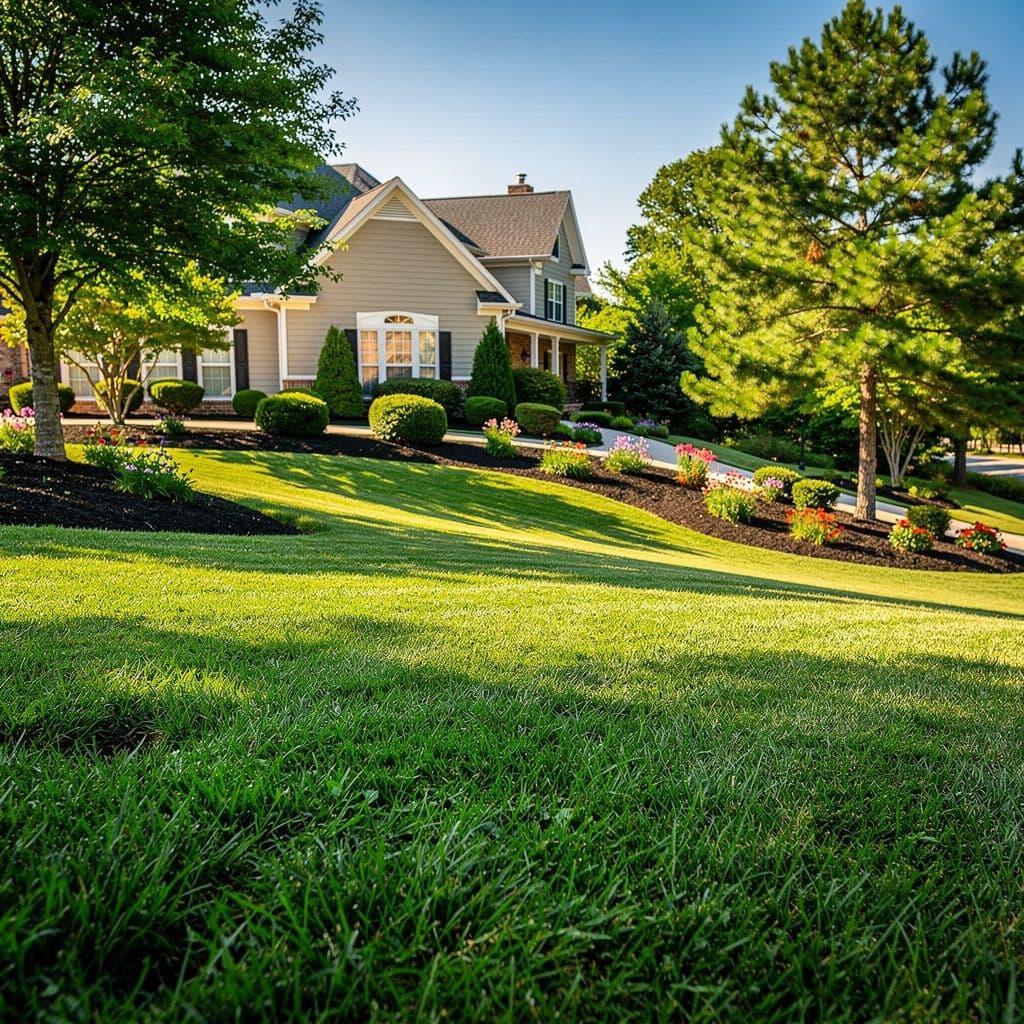
Summer Lawn Treatment & Weed Control in Henry County GA: What Your Yard Needs Right Now
Published: June 12, 2026
Summer in Henry County doesn't ask permission before it punishes your lawn. By mid-June, temperatures are regularly hitting the low 90s, afternoon thunderstorms roll through without warning, and the humidity makes it feel like you're living inside a greenhouse. For your grass, this is the most stressful time of the entire year.
And the weeds? They love every minute of it.
Crabgrass explodes in bare spots. Dallisgrass spreads through weak areas. Nutsedge pops up in low-lying sections where water pools after storms. Clover creeps into thin turf. Within a matter of weeks, a lawn that looked great in April can look tired, patchy, and half-weed by the Fourth of July.
If you're searching for a "lawn treatment service near me" or "weed control service near me" in Locust Grove, McDonough, Stockbridge, or anywhere in Henry County, this guide explains exactly what your lawn needs during summer — and why timing matters more than most homeowners realize.
Why Summer Lawn Treatment Is Different in Henry County
Spring lawn care gets all the attention. Everyone knows about spring green-up, pre-emergent applications, and getting your lawn off to a strong start. But summer maintenance in Georgia is where lawns are won or lost.
Henry County's combination of heavy clay soil, high humidity, and intense summer heat creates a unique set of challenges that generic lawn advice doesn't address:
- Clay soil compacts easily, preventing water and nutrients from reaching grass roots
- Humidity fuels fungal diseases like brown patch, dollar spot, and pythium blight
- Afternoon thunderstorms create standing water that weakens grass and encourages weeds
- Night temperatures above 70°F prevent grass from recovering from daytime heat stress
A proper summer lawn treatment plan accounts for all of these factors. It's not just about throwing fertilizer on the ground and hoping for the best.
The Summer Weed Problem: Why June Through August Is Weed Season
Summer weeds in Henry County aren't just an eyesore — they're aggressive competitors that steal water, nutrients, and sunlight from your grass. Understanding which weeds you're dealing with determines the right treatment approach.
Common Summer Weeds in Henry County Lawns
Crabgrass
The most common summer annual weed in Georgia. Germinates when soil temperatures reach 55°F (usually April in Henry County) and explodes in thin, bare, or compacted areas. A single crabgrass plant can produce up to 150,000 seeds. If you didn't apply pre-emergent in early spring, you likely have it right now.
Dallisgrass
A perennial grassy weed that thrives in overwatered or poorly drained areas — which describes half the lawns in Henry County after a week of summer thunderstorms. Dallisgrass grows faster than your regular grass, creating unsightly clumps that stick up above the mowing height.
Yellow Nutsedge
Often mistaken for grass, nutsedge grows faster and taller than your lawn and has a distinctive yellow-green color. It thrives in wet, poorly drained areas and is notoriously difficult to eliminate because it produces underground tubers (nutlets) that can survive for years in the soil.
Spotted Spurge
A low-growing summer annual that forms dense mats in thin turf, along sidewalks, and in landscape beds. It produces seeds within weeks of germinating, so populations explode quickly if not treated early.
Clover and Lespedeza
These broadleaf weeds move into lawns with low nitrogen levels. Clover is relatively easy to control, but lespedeza — a woody-stemmed summer annual — can be stubborn and requires specific herbicide timing.
Why Summer Weeds Are Harder to Control
During spring, pre-emergent herbicides prevent weed seeds from germinating in the first place. But by summer, those weeds have already established. You're now in reactive mode — treating existing weeds rather than preventing them.
Post-emergent weed control in summer requires more precision:
- Heat stress makes grass more vulnerable to herbicide damage if products aren't applied correctly
- Some herbicides can't be applied above 85°F without risking lawn damage
- Weeds are actively growing and harder to kill once mature
- Rain can wash away treatments before they've been absorbed
This is why professional weed control services are particularly valuable during summer. The margin for error is smaller, and the wrong product at the wrong time can damage your lawn instead of helping it.
Summer Lawn Treatment Schedule: Month-by-Month
Here's what a proper summer lawn treatment program looks like for Henry County homeowners:
June: Stabilize and Protect
By June, your lawn should be fully green and growing actively. The focus shifts to maintaining health and getting ahead of summer stress.
Fertilization: A light, balanced fertilizer application in early June supports continued growth without pushing excessive top growth that increases mowing demands. Avoid high-nitrogen products — they create tender growth that burns in July heat.
Weed Control: Post-emergent herbicide application to knock back any weeds that survived or emerged after spring treatments. For broadleaf weeds like clover and spurge, selective herbicides work well. For grassy weeds like crabgrass and dallisgrass, specific products are needed that won't harm your lawn grass.
Insect Monitoring: June is when chinch bugs, sod webworms, and grubs become active. If you notice irregular brown patches that don't respond to watering, insect damage may be the culprit.
Disease Prevention: Brown patch fungus becomes active when nighttime temperatures stay above 70°F with high humidity. Preventive fungicide applications in late June can stop outbreaks before they start.
July: Stress Management
July is the hardest month on Henry County lawns. Temperatures regularly exceed 90°F, and rainfall becomes unpredictable.
Fertilization: Generally, avoid fertilizing in July unless you're using a specially formulated summer blend with low nitrogen and added potassium for stress tolerance. Potassium strengthens cell walls and helps grass survive heat and drought.
Weed Control: Spot treat surviving weeds. By July, most pre-emergent barriers from spring have broken down, so new weed seeds can germinate in bare or thin areas. Maintain turf density through proper mowing and watering to minimize opportunities.
Watering: Deep, infrequent watering becomes critical. Apply 1-1.5 inches of water per session, 2-3 times per week. Water between 5:00 and 9:00 AM. Never water in the evening — wet grass overnight is an open invitation for fungal disease.
Mowing: Raise your mowing height by 0.5 inches above your normal setting. Taller grass shades the soil, keeps roots cooler, and reduces water evaporation. Keep mower blades sharp — dull blades tear grass, creating entry points for disease.
August: Recovery Preparation
August is about keeping your lawn alive and positioning it for a strong recovery when temperatures begin to drop in September.
Final Light Fertilization: An early August application of a balanced, low-nitrogen fertilizer can help sustain the lawn through the final stretch of summer heat.
Weed Control Assessment: Evaluate what weeds are still present. Perennial weeds like dallisgrass and nutsedge that survived summer treatments may require a different approach in early fall when they're storing energy in their root systems.
Insect Check: Fall armyworms can appear in August and devastate a lawn in a matter of days. If you see birds feeding heavily on your lawn or notice rapid browning, have it inspected immediately.
Aeration Planning: Schedule fall aeration now. Henry County's clay soil benefits enormously from annual aeration, and late August through October is the ideal window.
Professional Lawn Treatment vs. DIY: What Makes Sense in Summer
Many homeowners in McDonough and Stockbridge handle their own lawn care during spring and fall when the margin for error is wider. But summer is when professional treatment often pays for itself.
What Professional Lawn Treatment Includes
A legitimate lawn treatment service does more than spray weed killer. A professional summer program for Henry County lawns typically includes:
- Soil pH testing to ensure nutrients are actually available to grass roots
- Calibrated herbicide applications using products and rates appropriate for current temperatures
- Disease identification — distinguishing between heat stress, drought, fungus, and insect damage (they look similar but require different treatments)
- Fertilizer selection based on grass type, soil conditions, and season — not a one-size-fits-all approach
- Scheduled follow-up visits to monitor treatment effectiveness and adjust as conditions change
When DIY Summer Treatment Goes Wrong
The most common DIY mistakes we see in Henry County:
Applying the wrong herbicide. Not all weed killers work on all weeds. Using a product designed for broadleaf weeds on grassy weeds like dallisgrass won't work and may stress your lawn for no reason.
Over-applying fertilizer. More is not better. Excess nitrogen in summer promotes fungal disease and burns grass. We've seen homeowners in Jonesboro accidentally kill large sections of their lawn by doubling the recommended rate of a granular fertilizer during a July heat wave.
Ignoring the temperature limit. Many herbicide labels specify not to apply above 85°F. Applying above that temperature can cause phytotoxicity — essentially, the product cooks your grass along with the weeds.
Treating the wrong problem. Brown patches in summer can be drought stress, chinch bug damage, brown patch fungus, or even dog urine. Each requires a completely different response. Treating fungus with insecticide, or insect damage with fungicide, wastes money and doesn't fix anything.
How to Choose a Lawn Treatment Service in Henry County
If you're searching "lawn fertilizer service near me" or "lawn treatment service near me," here's what to look for:
1. Local Knowledge
A lawn care company that knows Henry County understands our clay soil, our weather patterns, and the specific weeds and diseases common in Locust Grove, McDonough, Stockbridge, and surrounding areas. National companies use standardized programs that don't account for local conditions.
2. Customized Treatment Plans
Your lawn isn't identical to your neighbor's. Different grass types, sun exposure, soil conditions, and existing weed problems require different approaches. A quality service starts with an assessment, not a one-size-fits-all spray schedule.
3. Licensed and Insured
In Georgia, commercial pesticide applications require a state license. Ask any lawn treatment provider about their certifications. It's not just a legal requirement — it ensures they've been trained in proper product handling, application rates, and environmental safety.
4. Transparent Pricing and Communication
You should know what's being applied to your lawn, when, and why. Avoid companies that show up unannounced, spray without explanation, and leave a bill. You deserve to understand your treatment program.
5. Service Guarantee
Reputable lawn care companies stand behind their work. If a treatment doesn't produce results, they should come back and address it at no additional cost.
Summer Watering: The Foundation Everything Else Builds On
No weed control product or fertilizer will work well if your lawn isn't properly watered. In Henry County, summer watering is the single most important thing you can do for your grass.
Best practices for Henry County lawns:
- Water between 5:00 AM and 9:00 AM — early morning allows absorption before evaporation and gives grass time to dry before nightfall
- Apply 1-1.5 inches per session — use a rain gauge or tuna can to measure
- Water 2-3 times per week — not daily
- Adjust for rainfall — if an afternoon thunderstorm delivers an inch of rain, skip your next scheduled watering
- Water deeply — clay soil absorbs water slowly; run sprinklers long enough for moisture to penetrate 4-6 inches deep
If you have an irrigation system, now is the time to make sure it's functioning properly. Check for broken heads, clogged nozzles, and proper coverage. A poorly adjusted irrigation system creates wet spots where nutsedge thrives and dry spots where crabgrass moves in.
Our irrigation troubleshooting guide covers common issues and fixes for Henry County systems.
Signs Your Lawn Needs Professional Treatment Right Now
Not sure if your lawn needs help? Here are signs it's time to call a professional:
- Weeds are spreading faster than you can pull them — especially crabgrass, dallisgrass, or nutsedge
- Brown patches appeared suddenly — this often indicates fungal disease or insect damage
- Grass feels spongy when you walk on it — possible grub damage underneath
- Lawn looks pale yellow or light green — nutrient deficiency or soil pH imbalance
- Bare spots are getting larger — turf is thinning and weeds are filling the gaps
- You're not sure what's wrong — and you've been watering and mowing correctly
The longer you wait, the more expensive the fix becomes. A small weed problem in June can become a major lawn renovation by September.
Frequently Asked Questions About Summer Lawn Treatment in Henry County
When should I apply weed control in the summer in Henry County?
Post-emergent weed control should be applied in early June to target weeds that have already emerged. Spot treatments can continue through July and August as needed. Always apply herbicides when temperatures are below 85°F and rain isn't expected for at least 24 hours.
Can I fertilize my lawn during summer in Georgia?
Yes, but with caution. Use a low-nitrogen, high-potassium fertilizer designed for summer stress tolerance. Avoid heavy nitrogen applications during July and August when heat stress is highest. In Henry County's clay soil, slow-release formulations are generally safer than quick-release products.
What's the best weed killer for summer weeds in Henry County?
It depends on the weed type. Selective broadleaf herbicides work for clover, spurge, and lespedeza. Grassy weeds like crabgrass and dallisgrass require specific post-emergent products. Nutsedge requires a dedicated sedge killer. A professional lawn service can identify which weeds you have and apply the correct product at the right rate.
How often should my lawn be treated during summer?
Most professional lawn treatment programs in Henry County include visits every 6-8 weeks. This timing allows treatments to take effect and be evaluated before the next application. Lawns with severe weed problems may benefit from more frequent visits initially.
Is it too late to start a lawn treatment program in June or July?
No. While starting in spring is ideal, beginning a summer treatment program still provides significant benefits. Post-emergent weed control can eliminate existing weeds, proper fertilization supports grass health through stress periods, and disease monitoring catches problems early. The best time to start was March — the second best time is now.
How much does professional lawn treatment cost in Henry County?
Pricing varies based on lawn size, existing conditions, and the specific treatments needed. Most Henry County homeowners pay between $40-80 per treatment visit for an average-sized residential lot. Contact Hedgecoth Property Solutions at 770-490-9519 for a free estimate tailored to your property.
Get Your Summer Lawn Under Control
Don't spend your summer watching weeds take over while your grass struggles. Hedgecoth Property Solutions provides professional lawn care, weed control, and property maintenance throughout Locust Grove, McDonough, Stockbridge, Jonesboro, Morrow, Hampton, and all of Henry County.
Our team knows Henry County lawns — the clay soil, the summer heat, the aggressive weeds, and exactly what your yard needs to look its best through the toughest season of the year.
Call 770-490-9519 or visit our contact page to schedule a free lawn assessment. We'll identify what's going on with your lawn, recommend the right treatments, and get you on a program that works.
Your lawn doesn't have to suffer through summer. Let's fix it together.