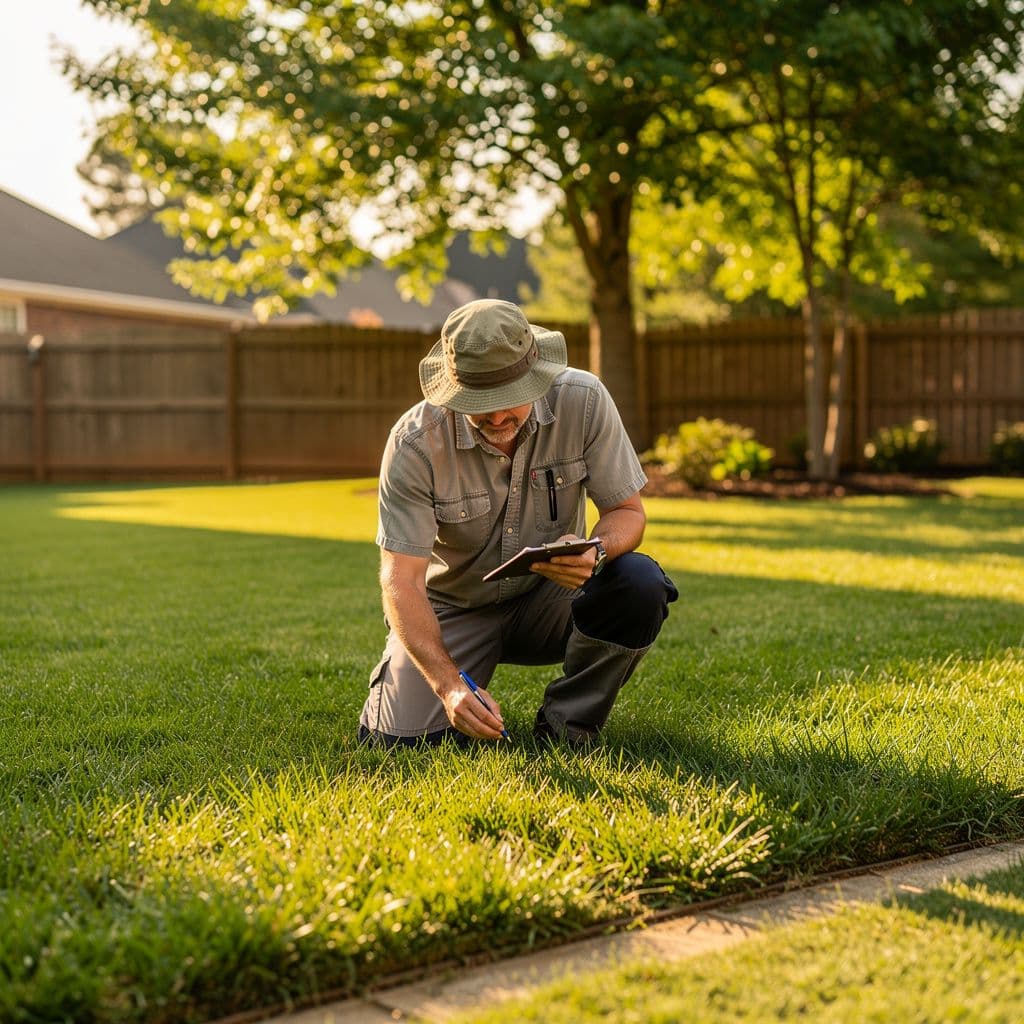
Late Summer Lawn Health Check: Is Your Henry County Yard Ready for Fall?
Published: July 27, 2026
By late July, your Henry County lawn has been through a lot. The intense Georgia heat of June and July, the humidity, the afternoon thunderstorms, the insect pressure — it all takes a toll on even the healthiest lawns. And right now, you have a critical window: the next six weeks determine whether your lawn enters fall in recovery mode or whether it limps into dormancy already damaged.
Most homeowners wait until something goes obviously wrong — large brown patches, weeds flowering, or bare dirt appearing — before they take action. By that point, the solutions are more expensive and the results take longer. A proactive late summer lawn care assessment catches problems while they're still small and inexpensive to fix.
Whether you live in Locust Grove, McDonough, Hampton, Stockbridge, or anywhere else in Henry County, this step-by-step health check will help you evaluate your lawn's condition and decide exactly what it needs before the seasonal transition begins.
Why Late Summer Is the Perfect Time for a Lawn Assessment
Late July through mid-August is what turf professionals call the "transition evaluation window." Your warm-season grass — whether Bermuda, Zoysia, or Centipede — is at peak growth. Any thinning, discoloration, weed intrusion, or pest damage is fully visible right now. By September, grass growth begins to slow, making problems harder to diagnose and treat before dormancy.
Here's what a late summer assessment tells you:
- Whether your current lawn care program is working — If you hired a lawn care service in spring, now is when you can honestly evaluate the results
- What treatments your lawn needs before fall — Fertilization, weed pre-emergent, pest control, and soil amendments all need precise timing
- Whether you need professional intervention — Some problems are DIY-fixable; others require professional-grade products and equipment
- How much fall overseeding or repair your lawn needs — Damaged areas identified now can be scheduled for early fall renovation
Think of this as a mid-year physical for your lawn. You're checking vitals, identifying issues, and creating a treatment plan before small problems become expensive ones.
The 10-Minute Walk-Through: Your First Assessment
Before diving into specifics, start with a slow walk around your entire property. You're looking for the obvious visual signals that something is off.
What Healthy Late Summer Grass Looks Like
In late July, healthy warm-season grass in Henry County should be:
- Densely green — no large thin or bare areas, consistent color across the yard
- Growing actively — requiring weekly mowing, producing clippings each visit
- Free of flowering weeds — no yellow, white, or purple flowers poking above the grass canopy
- Firm underfoot — you shouldn't sink into soft or spongy areas
- Even in texture — no patches of different grass types or textures mixed in
If your lawn passes all five of these checks, you're in good shape. But most Henry County lawns — especially those in neighborhoods with heavy clay soil like the subdivisions around Hampton, Locust Grove, and McDonough — will show at least one issue. Let's break down exactly what to look for.
Step 1: Check Grass Density and Coverage
Density is the single most important indicator of lawn health. A dense lawn naturally resists weeds, retains moisture, and recovers from stress faster than a thin one.
The Hand Test
Spread your fingers and press your hand flat against the grass. When you lift it, you should see clear finger impressions in the turf where the grass was compressed. If you can easily see soil between grass blades, your lawn is thinning.
What Thinning Tells You
Patchy thinning (scattered bare spots throughout the yard):
- Usually indicates soil compaction or nutrient deficiency
- Common in Henry County's heavy clay soil, especially in McDonough neighborhoods built on compacted fill dirt
- Solution: Core aeration and targeted fertilization in early fall
Large circular or irregular brown patches:
- Could be fungal disease (especially in humid July conditions)
- Could be brown patch or large patch — common in Zoysia and Bermuda lawns
- Check for circular patterns, smoke rings on edges, or grayish lesions on grass blades
- Solution: Professional fungicide application and adjusted watering schedule
Thinning under trees:
- Competition for sunlight, water, and nutrients
- Very common in established Locust Grove neighborhoods with mature oaks and pines
- Solution: Prune lower branches for more light, consider shade-tolerant grass varieties
Uniform thinning across the entire lawn:
- Usually indicates a fertility or soil pH problem
- May also indicate improper mowing height (scalping weakens grass over time)
- Solution: Soil test to identify specific deficiencies, adjust mowing height
Step 2: Perform a Weed Audit
Walk your property and identify every type of weed you see. Late summer is when warm-season weeds are at their most aggressive, and what's growing now tells you exactly what's been happening underground.
Common Late Summer Weeds in Henry County
Crabgrass: Low-growing, spreading weed with wide blades. If you see crabgrass now, your spring pre-emergent was applied too late or at the wrong rate. Each crabgrass plant produces up to 150,000 seeds, so ignoring it guarantees a worse problem next year.
Dallisgrass: Clumping grass weed with coarse blades and distinctive seed heads. Dallisgrass is a perennial — it comes back from the same root system each year. It requires professional post-emergent treatment; hand-pulling rarely removes the deep rhizome system.
Nutsedge (Nutgrass): Bright yellow-green, grows faster than surrounding grass, stands upright. Nutsedge thrives in wet, compacted soil — two conditions common in Henry County. If you see nutsedge, you likely have drainage issues that need property maintenance attention.
Spotted Spurge: Low, mat-forming weed with small oval leaves and a red spot in the center. Grows in thin or bare areas. Indicates your lawn density is too low.
Clover: Indicates low nitrogen levels in soil. While some homeowners don't mind clover, it competes with grass for resources and attracts bees (which can be a problem for barefoot children and pets).
Dollarweed (Pennywort): Round, coin-shaped leaves. Loves excess moisture. If dollarweed is thriving, your irrigation system may be overwatering or you have drainage problems.
What Your Weed Profile Reveals
The types of weeds in your lawn tell a story about underlying conditions:
| Weed Type | What It Indicates |
|-----------|------------------|
| Crabgrass | Spring pre-emergent gap |
| Nutsedge | Compacted, wet soil |
| Clover | Low nitrogen |
| Dallisgrass | Thin turf, poor fertility |
| Dollarweed | Excess moisture, poor drainage |
| Spurge | Low density, bare spots |
If more than three weed types are present, your lawn needs a comprehensive weed control program — not just spot spraying.
Step 3: Test Soil Compaction
Henry County's red clay soil is notorious for compaction, and late summer is when the damage becomes most visible. Compacted soil prevents roots from growing deep, blocks water and nutrient absorption, and creates the perfect environment for weeds.
The Screwdriver Test
Take a standard flat-blade screwdriver and push it into your soil (after a rain or watering, not when bone-dry). It should penetrate 4-6 inches easily with moderate pressure. If you have to lean hard on it or it stops at 2 inches, your soil is severely compacted.
Signs of Compaction You Can See
- Water puddles on the surface after rain instead of soaking in
- Grass roots are shallow (less than 3 inches deep) when you pull a small plug
- The ground feels rock-hard when you walk on it, even after watering
- Earthworms are absent when you dig a small hole
Compacted soil requires core aeration — and late summer/early fall is the ideal time for Henry County lawns. Core aeration removes small plugs of soil, allowing air, water, and nutrients to reach the root zone. Combined with overseeding, it can transform a struggling lawn in a single season.
Step 4: Scan for Pest and Disease Damage
Late July is peak season for some of the most destructive lawn pests in Georgia. A few minutes of careful inspection can save you thousands of dollars in lawn renovation costs.
Fall Armyworms
The most devastating pest for Henry County lawns. Armyworms can destroy a healthy lawn in 48-72 hours. Look for:
- Brown patches that appear overnight and spread rapidly
- Birds congregating on your lawn in large numbers (they feed on the caterpillars)
- Grass blades that look chewed or ragged along the edges
- Green or brown caterpillars with stripes, 1-1.5 inches long, active in early morning or evening
If you suspect armyworms, call a professional immediately. Speed is critical — every hour counts. Our lawn pest control team can be at your property within 24 hours. Call 770-490-9519.
White Grubs
Grubs feed on grass roots underground. By late summer, this year's grub population is actively feeding. Signs include:
- Grass that pulls up like loose carpet (roots have been eaten)
- Irregular brown patches that don't respond to watering
- Skunks, raccoons, or moles digging in your yard (they eat grubs)
Check for grubs by cutting a 1-square-foot section of sod about 3 inches deep and peeling it back. If you find more than 5-8 grubs per square foot, treatment is needed.
Fungal Diseases
Henry County's July humidity creates perfect conditions for fungal pathogens. Common signs include:
- Circular patches of brown or yellow grass (brown patch)
- Pink or gray cottony growth on grass blades in early morning (pink snow mold or dollar spot)
- Individual blades with lesions or darkened bases
- Rings of dark green grass (fairy rings)
Fungal diseases require professional fungicide applications. Over-the-counter products are often ineffective and can burn stressed lawns in summer heat.
Step 5: Evaluate Your Irrigation Effectiveness
By late July, you can tell whether your watering strategy is working — or wasting money.
Signs of Underwatering
- Grass blades fold or roll lengthwise (trying to conserve moisture)
- Footprints remain visible in the grass after walking (loss of elasticity)
- Soil is dry and cracked in areas
- Grass has a bluish-gray tint instead of vibrant green
Signs of Overwatering
- Spongy feel when walking
- Standing water or persistent mud
- Excessive thatch buildup
- Fungal disease present
- Dollarweed or nutsedge thriving
The Goldilocks Zone
Henry County lawns typically need 1-1.5 inches of water per week in July and August, ideally applied in 2-3 deep watering sessions rather than daily shallow sprinkling. Deep, infrequent watering encourages deep root growth — the key to drought resistance.
If you have an irrigation system, late summer is the time to audit its performance. Check out our irrigation troubleshooting guide for common issues, or schedule a professional irrigation assessment.
Step 6: Inspect Trees and Shrubs
Your lawn assessment shouldn't stop at the grass. Late summer is also the right time to evaluate the health of trees and shrubs on your property.
Look for:
- Dead or dying branches — especially in large oaks and pines common to Locust Grove and McDonough areas
- Fungal growth on trunks — indicates internal decay
- Leaning trees — soil heaving around the base means the root system is failing
- Excessive leaf drop — can indicate stress, disease, or pest infestation
- Shrubs with dead interior branches — need professional pruning to restore airflow and shape
Trees that are structurally compromised become hazards during late summer thunderstorms. If you spot concerning signs, schedule a professional tree assessment before storm season peaks.
Scoring Your Lawn: The Health Check Rating
After completing all six steps, give your lawn an honest grade:
Green Zone (Score 8-10)
Your lawn is healthy and needs only routine maintenance to stay that way. Continue your current mowing, fertilization, and watering program. Schedule fall pre-emergent weed control and winterization fertilizer. You're in great shape for the seasonal transition.
Yellow Zone (Score 5-7)
Your lawn has moderate issues that need attention before fall. You likely need core aeration, targeted weed treatment, and adjusted fertilization. Some areas may need overseeding. A professional evaluation can create a specific action plan. This is the most common condition for Henry County lawns in late summer.
Red Zone (Score 1-4)
Your lawn has significant problems — extensive weeds, pest damage, disease, or severe compaction. Professional intervention is needed. Attempting DIY fixes at this level usually wastes money without solving the underlying issues. A comprehensive lawn renovation program can restore your yard, but it needs to start soon to take advantage of fall growing conditions.
When to Call a Professional
Some assessment findings warrant immediate professional attention:
- Armyworm activity — call within hours, not days
- Large areas of dead grass — needs diagnosis (disease, chemical burn, or pest)
- Trees showing structural failure signs — safety hazard
- More than 50% weed coverage — beyond DIY control
- Persistent drainage problems — water pooling near your foundation
At Hedgecoth Property Solutions, we offer free property assessments for Henry County homeowners. Our team will walk your property, identify every issue, and provide a written recommendation with transparent pricing — no pressure, no obligation.
Preparing Your Lawn for the Next Step
Once you've completed your health check, you'll know exactly what your lawn needs heading into fall. The most common action items for Henry County lawns in late July are:
- Schedule core aeration for early September — this is the single most impactful treatment for clay soil lawns
- Apply fall pre-emergent in early September to prevent winter weeds (annual bluegrass, chickweed, henbit)
- Treat active pest problems immediately — armyworms and grubs don't wait
- Plan overseeding for thin areas — early fall is the optimal window
- Adjust your mowing height — raise it 0.5 inches to reduce summer stress
For a detailed fall treatment timeline, check our fall lawn preparation guide.
FAQ: Late Summer Lawn Health in Henry County
How do I know if my lawn is healthy or just looks good?
A lawn can look green from a distance but still be struggling. True health means dense turf (you can't see soil between blades), deep roots (4+ inches), minimal weeds (fewer than 3 varieties), and active growth throughout the growing season. If your lawn looks good but has shallow roots, hidden thatch buildup, or compacted soil, problems will surface within a season or two. A professional soil test reveals what visual inspection can't.
What's the most common late summer lawn problem in Henry County?
Soil compaction from our heavy red clay is the root cause of most lawn decline we see in Locust Grove, McDonough, and Hampton. Compacted soil prevents deep root growth, which makes grass vulnerable to heat stress, drought, weeds, and disease. Core aeration in early fall is the most effective solution, combined with soil amendments identified through professional soil testing.
Should I fertilize my lawn in late July or August?
It depends on your grass type and current condition. Bermuda and Zoysia grasses benefit from a late summer fertilization application to fuel active growth and energy storage before dormancy. However, fertilizing a lawn that's already stressed from heat, drought, or disease can make problems worse. Cool-season fertilization should be timed carefully — too much nitrogen in peak heat can burn your lawn. We recommend a professional evaluation to determine the right fertilizer type and timing for your specific property.
Can I do my own lawn health assessment, or should I hire a professional?
The walk-through assessment in this guide is designed for homeowners and catches most visible problems. However, some issues require professional diagnosis: fungal diseases need lab identification for proper treatment, soil pH and nutrient levels require testing equipment, and pest identification at the species level determines which treatment products will be effective. Hedgecoth Property Solutions offers free professional assessments that include soil testing — call 770-490-9519 to schedule yours.
How much does professional lawn assessment cost?
Our basic property assessment is free for homeowners in our Henry County service area — Locust Grove, McDonough, Hampton, Stockbridge, Jonesboro, and Morrow. The assessment includes a full property walk-through, soil inspection, weed and pest identification, and a written treatment recommendation. If you decide to proceed with services, pricing is provided upfront with no hidden fees. Comprehensive soil lab testing is available for a nominal fee.
What if my lawn is mostly weeds — should I start over or try to save it?
If more than 50% of your lawn is weeds or bare dirt, a full renovation is usually more cost-effective than attempting to rescue the remaining grass. Lawn renovation involves killing existing vegetation, core aerating, amending soil, installing new sod or seed, and applying starter fertilization. In Henry County, the optimal renovation window is late August through September, when soil temperatures are still warm enough for root establishment but air temperatures are cooling. Schedule a consultation now to plan your renovation before the window closes.
About Hedgecoth Property Solutions:
Serving Henry County homeowners with comprehensive lawn care, property maintenance, landscaping, and tree services. Our team of licensed professionals combines deep local expertise with industry-leading techniques to deliver results you can see — season after season.
Contact:
- Phone: 770-490-9519
- Contact Page
- Service Area: Locust Grove, McDonough, Jonesboro, Stockbridge, Morrow, Hampton & Henry County, GA