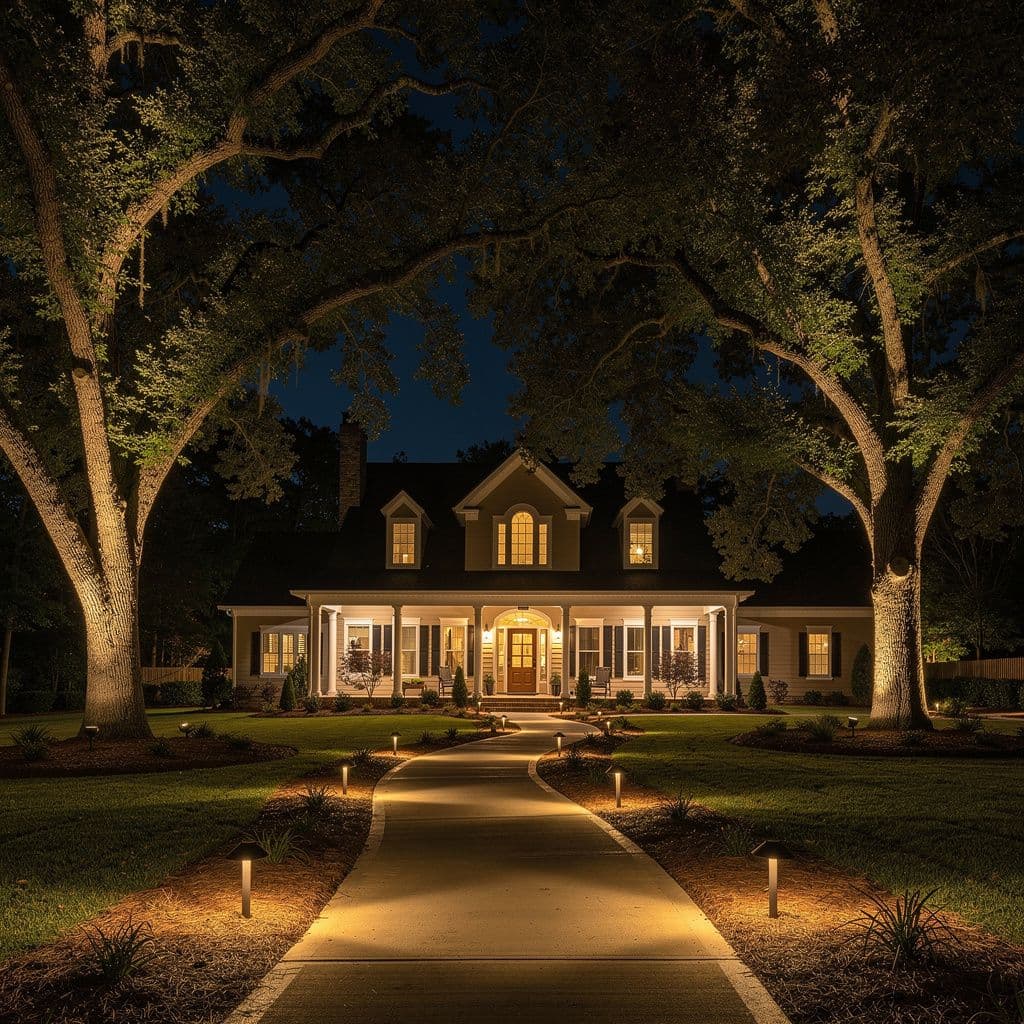
Landscape Lighting Design in Henry County: Professional Outdoor Lighting Guide
Published: July 24, 2026
When the sun sets over Henry County, most homes disappear into the darkness. A well-designed landscape lighting system changes that completely — transforming your property into a warm, inviting showcase that's visible long after the daytime curb appeal fades into night.
Yet outdoor lighting is one of the most overlooked elements of residential landscaping in our area. Homeowners invest thousands in lawns, planting beds, patios, and hardscaping — then leave it all invisible for half the hours of each day. Whether you live in Locust Grove, McDonough, Stockbridge, or Hampton, professional landscape lighting extends your home's beauty, safety, and usability around the clock.
If you've been searching for "landscaping near me" or "landscapers near me" in Henry County, this guide explains everything you need to know about adding professional outdoor lighting to your property — the types, the design process, what it costs, and why it matters for your home's value and security.
Why Landscape Lighting Matters for Henry County Homes
Outdoor lighting is one of the highest-return investments you can make in your property's exterior. Here's what professional landscape lighting delivers:
- Extended curb appeal after dark — your home looks intentional and polished even from the street at night
- Improved safety — illuminated walkways, steps, and grade changes prevent trips and falls
- Enhanced security — well-lit properties are statistically less attractive to intruders
- Increased property value — the National Association of Home Builders estimates quality outdoor lighting returns 50-60% of its cost in added home value
- Extended outdoor living hours — enjoy your patio, fire pit, or garden well past sunset during Georgia's long summer evenings
- Highlighting landscape investment — show off mature trees, stonework, and architectural features that disappear in darkness
In Henry County's competitive real estate market, where homes in Locust Grove and Stockbridge compete for buyer attention, professional landscape lighting sets your property apart. It's the difference between a house that looks good and a home that looks exceptional.
Types of Landscape Lighting for Georgia Properties
Path and Walkway Lighting
The foundation of any outdoor lighting system. Path lights guide visitors safely from the street or driveway to your front door while creating a welcoming atmosphere.
Best fixtures for Henry County homes:
- Stake-mounted path lights — classic hooded fixtures that cast pools of light along walkways. Available in brass, copper, and powder-coated aluminum. Brass and copper develop a beautiful patina over time that complements Georgia's natural landscape.
- Recessed step lights — built into retaining walls, steps, or risers for a clean, architectural look. Perfect for homes with elevated entries or terraced landscaping common in McDonough and Stockbridge neighborhoods.
- Bollard lights — taller, pillar-style fixtures that make a design statement while illuminating wider paths. Works well for driveway entrances and wider walkways.
Path lighting should cast a warm, even glow — not harsh beams. Space fixtures 6-8 feet apart for consistent coverage without creating a "runway" effect.
Uplighting and Accent Lighting
Uplighting is the most dramatic landscape lighting technique. By placing fixtures at the base of trees, architectural features, or large shrubs and aiming light upward, you create striking shadows, texture, and depth that flat daytime views can't match.
Best targets for uplighting in Henry County landscapes:
- Mature hardwood trees — oaks, hickories, and pecan trees common throughout Henry County create incredible shadow patterns when uplit from below
- Southern Magnolias — the glossy evergreen leaves catch and reflect light beautifully year-round
- Crape Myrtles — their sculptural multi-trunk structure creates gorgeous silhouettes when lit from below
- Stone or brick columns — architectural features at entryways, retaining walls, or hardscaping elements
- Texture-rich walls — stone veneer, brick, or stucco walls come alive when grazed with directional light
A typical uplight fixture uses a directional spotlight with a 35-60 degree beam spread, mounted on a ground stake and aimed at a 30-45 degree angle. Warm white (2700K-3000K) LED bulbs create the most natural, inviting effect.
Downlighting and Moonlighting
The reverse of uplighting — fixtures placed high in trees or on structures, aimed downward to simulate natural moonlight filtering through branches. This creates the most natural-looking landscape illumination available.
Moonlighting benefits:
- Soft, dappled light patterns that mimic nature
- Covers large areas with minimal fixtures
- Eliminates harsh glare since light source is elevated above eye line
- Perfect for patios, decks, and outdoor seating areas where you want ambient light without visible fixtures
Moonlighting requires mature trees with adequate canopy height (15+ feet) and proper fixture mounting. A professional landscaping installer has the equipment and expertise to mount fixtures safely at height without damaging trees.
Patio and Outdoor Living Lighting
Henry County homeowners have embraced outdoor living spaces — patios, fire pits, kitchens, and seating areas. Lighting these spaces properly extends their usefulness well into the evening.
Outdoor living lighting elements:
- Under-cap lighting on retaining walls and seat walls — LED strips tucked under the top cap of walls create a soft glow that defines the space
- Post-mounted lanterns on pergolas, gazebos, or deck railings
- Recessed deck lighting — small fixtures built into decking boards for subtle floor-level illumination
- String lighting — commercial-grade Edison-style strings strung between posts or trees for a warm, festive atmosphere
- Grill and kitchen task lighting — focused illumination for cooking and food prep areas
If you have a patio or outdoor living space, integrating lighting during installation is ideal. But retrofit lighting can be added to existing spaces with minimal disruption.
Security and Motion-Activated Lighting
While decorative landscape lighting creates beauty, security lighting provides peace of mind. The best systems combine both seamlessly.
Security lighting best practices:
- Dusk-to-dawn fixtures at side yards, rear entries, and dark corners
- Motion-activated floods at driveways and back doors — set to trigger only for large objects to avoid false alarms from wildlife
- Smart lighting integration — schedule lights to turn on/off automatically, or control from your phone
- Layered approach — combine low-level ambient lighting (always on) with brighter motion-activated zones for comprehensive coverage
Modern LED security fixtures use fraction of the electricity of older halogen models and last 25,000-50,000 hours — essentially maintenance-free for years.
Landscape Lighting Design Principles
Great landscape lighting doesn't happen by accident. It follows design principles that create balance, depth, and atmosphere.
Layer Your Lighting
Just like interior lighting, outdoor spaces need three layers:
- Ambient lighting — overall low-level illumination that establishes baseline visibility (path lights, moonlighting)
- Task lighting — focused light for specific functions (grill lighting, step lights, security floods)
- Accent lighting — dramatic highlights that create visual interest (uplighting on trees, grazing on walls)
A common mistake homeowners make is using only one type — usually too-bright security floods that make the yard look like a prison yard. Layering creates depth and atmosphere that single-source lighting can't achieve.
Choose the Right Color Temperature
LED bulbs come in different color temperatures, measured in Kelvin (K). For landscape lighting:
- 2700K-3000K (Warm White) — the gold standard for residential landscape lighting. Mimics the warm glow of incandescent bulbs. Creates inviting, natural-looking illumination.
- 3500K-4000K (Neutral White) — slightly cooler, good for task lighting and security applications. Looks more clinical than warm.
- 5000K+ (Daylight) — harsh and blue. Avoid for decorative landscape lighting. Acceptable for pure security applications.
Stick with warm white throughout your system for cohesion. Mixing color temperatures looks disjointed and amateurish.
Less Is More
The most common DIY lighting mistake is too many fixtures, too bright, too close together. Professional landscape lighting uses fewer, strategically placed fixtures with lower wattage bulbs. The goal is to create pools of light and shadow — not to illuminate everything evenly like a football stadium.
Professional design rules of thumb:
- Space path lights 6-8 feet apart, not every 3-4 feet
- Use 2-4 watt LED bulbs (equivalent to 20-35 watt halogen) for most accent fixtures
- Aim for contrast — dark areas between lit areas create drama and depth
- Hide the light source — you should see the effect, not the fixture or bulb
Consider Your View From Inside
Most landscape lighting is experienced from inside the house — looking out through windows. Before finalizing fixture placement, walk through your home at night and note which windows face the yard. Ensure your lighting design creates attractive views from the rooms where you spend the most time: living room, kitchen, primary bedroom.
The Landscape Lighting Installation Process
Professional installation makes the difference between a system that lasts 15+ years and one that fails after one Georgia summer.
Step 1: Design Consultation and Night Demo
A professional lighting designer visits your property at dusk to assess:
- Existing landscape features worth highlighting
- Walkways, steps, and grade changes that need safety lighting
- Views from inside the home
- Dark areas that need security coverage
- Power source locations and access
Many companies — including Hedgecoth Property Solutions — offer temporary demo lighting, setting up sample fixtures so you can see exactly how the finished system will look before committing.
Step 2: System Design and Fixture Selection
Based on the consultation, the designer creates a scaled lighting plan showing:
- Fixture types and locations
- Wire routing and transformer placement
- Beam spreads and bulb specifications
- Zones and control options (timers, photocells, smart controls)
Fixture selection balances aesthetics, durability, and budget. Premium solid brass and copper fixtures cost more upfront but develop beautiful patina and last decades. Powder-coated aluminum offers good durability at a lower price point.
Step 3: Installation
Professional installation typically takes 1-3 days depending on system size and includes:
- Trenching — shallow trenches (6-8 inches) for low-voltage direct-burial cable
- Transformer installation — mounted on exterior wall or post, sized to handle total system wattage with 20% headroom
- Fixture placement and aiming — precise positioning and angle adjustment for optimal effect
- Wire connections — waterproof splice connectors buried underground or hidden in valve boxes
- Programming — timer or smart control setup for automated operation
- Cleanup and landscape restoration — trenches backfilled, mulch replaced, turf repaired
DIY installation is possible for simple systems, but proper wire sizing, voltage drop calculations, and waterproof connections require technical knowledge. Poor installation causes voltage drops (dim fixtures), premature bulb failure, and fire hazards.
Step 4: Maintenance and Adjustments
Landscape lighting needs periodic maintenance to stay looking its best:
- Re-aiming fixtures — plants grow, shifting light patterns. Annual adjustment keeps the system looking intentional.
- Cleaning lenses — dirt, pollen, and debris accumulate on fixture lenses, reducing light output
- Replacing bulbs — LED bulbs last 25,000-50,000 hours but eventually need replacement
- Burying exposed wire — ground settles and erosion can expose cable over time
A professional property maintenance plan includes annual lighting checks to keep your system performing optimally.
What Does Landscape Lighting Cost in Henry County?
Landscape lighting projects vary widely based on scope, fixture quality, and system complexity. Here's what Henry County homeowners can expect:
Basic System ($1,500-$3,500)
- 8-12 fixtures
- Path lights, a few uplights on key trees
- Single transformer, timer control
- Powder-coated aluminum fixtures
- Professional installation included
Mid-Range System ($3,500-$8,500)
- 15-25 fixtures
- Path lighting, uplighting, moonlighting, patio accent lights
- Multiple zones, photocell control
- Mix of brass and aluminum fixtures
- Professional design and installation
Premium System ($8,500-$25,000+)
- 30-60+ fixtures
- Comprehensive design covering entire property
- Moonlighting, wall grazing, under-cap lighting, smart home integration
- Solid brass and copper fixtures throughout
- Multi-zone system with dimming and scene control
- App-based control with scheduling and automation
Ongoing Costs
- Electricity — a typical 15-fixture LED system costs $3-$8 per month in electricity
- Bulb replacement — LED bulbs last 5-10+ years; budget $100-$300 every 5-7 years
- Annual maintenance — $150-$400 for professional re-aiming, cleaning, and inspection
Compared to other home improvements, landscape lighting offers exceptional value. A $5,000 system transforms your home's nighttime appearance, improves safety and security, and adds measurable resale value — all for less than the cost of a modest interior renovation.
Choosing a Landscape Lighting Professional in Henry County
Not all landscapers offer lighting design and installation. It requires specific expertise in low-voltage electrical systems, fixture selection, and artistic design. When evaluating "landscapers near me" in Henry County for a lighting project, look for:
Experience and Portfolio
Ask to see photos of completed lighting projects. A company that specializes in lighting will have a portfolio showing various fixture types, techniques, and property styles. Look for photos taken at night — this is the only way to evaluate lighting work.
Quality Fixtures and Warranties
Professional-grade fixtures from reputable manufacturers (FX Luminaire, Kichler, Hinkley, VOLT) carry 5-15 year warranties. Big-box store fixtures typically last 1-2 seasons before corroding, fogging, or failing. Ensure your installer uses contractor-grade materials with written warranties.
Design Expertise
The best lighting installation starts with a thoughtful design — not just placing fixtures randomly. Ask potential installers about their design process, how they determine beam spreads and fixture placement, and whether they offer a nighttime demonstration.
Proper Licensing and Insurance
In Georgia, low-voltage lighting installation requires proper licensing. Ensure your contractor carries general liability insurance and workers' compensation coverage. Any work near your home's electrical system demands a qualified professional.
Local Knowledge
Henry County's clay soil, heavy summer rainfall, and humidity affect fixture performance and wire longevity. A local installer understands these conditions and specifies products and installation techniques that hold up in Georgia's challenging climate.
At Hedgecoth Property Solutions, we've served Henry County homeowners for years. We understand our local conditions — from the dense red clay that makes trenching challenging to the summer thunderstorms that test waterproof connections. Our landscape lighting installations use commercial-grade fixtures and proven techniques built to last in Georgia's climate.
Common Landscape Lighting Mistakes to Avoid
1. Over-Lighting
Using too many fixtures or bulbs that are too bright creates a flat, sterile look. The best lighting design creates contrast — pools of warm light separated by gentle shadows. If your yard looks like a parking lot at night, you've overdone it.
2. Inconsistent Color Temperature
Mixing warm white path lights with cool blue uplights creates visual discord. Choose one color temperature (2700K-3000K for residential) and use it throughout the system.
3. Visible Fixtures and Glare
You should see the effect of the light, not the source. Properly shielded fixtures direct light where it's needed without creating glare. If you can see bare bulbs from the street or walking path, fixtures need shrouds or repositioning.
4. Undersized Transformer
Low-voltage systems lose voltage over long wire runs. An undersized transformer or improperly zoned system results in dim fixtures far from the power source. Professional installers calculate voltage drop and zone circuits properly.
5. Ignoring Maintenance Access
Fixtures buried in groundcover plants or hidden behind fast-growing shrubs become impossible to service. Plan for growth — place fixtures where they can be accessed for bulb changes and re-aiming without major landscape disruption.
6. No Cohesive Plan
Adding fixtures piecemeal over years — a solar path light here, a security flood there, some string lights on the patio — creates a disjointed look. A unified system designed as a whole creates far more impact than scattered individual lights.
Landscape Lighting and Smart Home Integration
Modern landscape lighting systems can integrate with smart home platforms for enhanced control and convenience:
- Astronomical timers — automatically adjust on/off times based on sunset and sunrise, eliminating seasonal reprogramming
- Smartphone control — turn zones on/off, dim, and set schedules from your phone
- Voice control — "Alexa, turn on the landscape lights" — works with Amazon Alexa, Google Home, and Apple HomeKit
- Scene programming — preset combinations for different occasions: "Entertaining" (all zones on, full brightness), "Evening ambiance" (accent zones only, dimmed), "Security" (all zones on after motion detection)
- Color-changing options — RGBW fixtures can shift from warm white to color for holidays and special events
Smart integration adds $500-$2,000 to a system depending on platform and complexity. For tech-savvy Henry County homeowners, it's a popular upgrade that adds both convenience and resale appeal.
Seasonal Considerations for Henry County Landscape Lighting
Summer (June-August)
Georgia's long summer evenings mean your lighting system gets less daily use (sunset after 8:30 PM in June). However, summer is ideal for:
- Adding fixtures to highlight lush summer foliage
- Testing and adjusting angles as plants reach full size
- Enjoying outdoor living spaces late into the evening
Fall (September-November)
- Earlier sunsets mean your lighting system becomes more visible and valuable
- Fall foliage on uplit trees creates stunning seasonal color effects
- Good time for system maintenance before the holiday season
Winter (December-February)
- Sunset before 6 PM means your lighting system is on for 12+ hours daily
- Leafless deciduous trees reveal structural branching patterns — adjust uplights for different shadow effects
- Holiday lighting can integrate with your permanent landscape lighting system
- Most important season for curb appeal — your home looks dark and uninviting without lighting during short winter days
Spring (March-May)
- Re-aim fixtures as new growth begins
- Add or adjust fixtures for new plantings
- Inspect system for winter damage to wires and fixtures
Frequently Asked Questions About Landscape Lighting in Henry County
How much does professional landscape lighting cost in Henry County, GA?
A basic professionally installed system starts around $1,500-$3,500 for 8-12 fixtures. Mid-range systems with 15-25 fixtures and multiple lighting techniques typically cost $3,500-$8,500. Premium whole-property systems with 30+ fixtures, smart controls, and high-end brass fixtures range from $8,500-$25,000+. We offer free consultations and custom quotes for every property.
Can I install landscape lighting myself?
Simple solar or plug-in kits are DIY-friendly, but professional low-voltage systems require proper wire sizing, voltage drop calculations, waterproof connections, and transformer installation. Poor DIY installation typically fails within 1-2 years due to corrosion, voltage drops, or connection failures. Professional installation ensures your system lasts 10-15+ years with minimal maintenance.
How long do LED landscape light bulbs last?
Quality LED bulbs in professional-grade fixtures last 25,000-50,000 hours — that's 5-10+ years of typical nighttime use. Compare that to halogen bulbs (2,000-4,000 hours, replaced annually) and the maintenance savings alone justify the upgrade to LED.
Will landscape lighting increase my home's value in Henry County?
Yes. The National Association of Home Builders estimates that quality outdoor lighting returns 50-60% of its cost in added property value. In Henry County's competitive market, homes with professional lighting stand out to buyers — especially during winter showings when properties are viewed at dusk. It's one of the few improvements that boosts both curb appeal and security simultaneously.
Do I need a permit for landscape lighting in Henry County?
Low-voltage landscape lighting (12V or 24V systems) typically does not require an electrical permit in Henry County. However, any work connecting to your home's main electrical panel — including installing a new outlet for the transformer — may require permitting. Always use a licensed and insured contractor who handles permitting when needed.
How do I find a qualified landscape lighting installer near me?
Look for companies with lighting-specific portfolios, not just general landscapers. Ask about fixture brands, warranties, and whether they offer nighttime demonstrations. Check reviews from other Henry County homeowners. Hedgecoth Property Solutions offers free lighting consultations throughout Locust Grove, McDonough, Stockbridge, Hampton, Jonesboro, and Morrow. Call 770-490-9519 to schedule yours.
Transform Your Property After Dark
Your home's landscape represents a significant investment — in lawn care, planting beds, hardscaping, trees, and overall property maintenance. Landscape lighting ensures that investment is visible and impactful 24 hours a day, not just during daylight.
Whether you want a few path lights for safety, a dramatic uplighting display for your specimen trees, or a comprehensive smart-controlled system that transforms your entire property, professional design and installation make all the difference.
At Hedgecoth Property Solutions, we help homeowners throughout Henry County create outdoor spaces that look exceptional — day and night. From landscape lighting design and installation to ongoing lawn care, leaf removal, and complete property maintenance, we're your single-source local partner.
Call us today at 770-490-9519 or contact us online to schedule your free landscape lighting consultation. Let's make your home the best-looking property on the street — after the sun goes down.
Hedgecoth Property Solutions provides professional landscaping, lawn care, property maintenance, hardscaping, and leaf removal services throughout Henry County, Georgia — including Locust Grove, McDonough, Stockbridge, Jonesboro, Morrow, and Hampton. Licensed, insured, and locally owned.