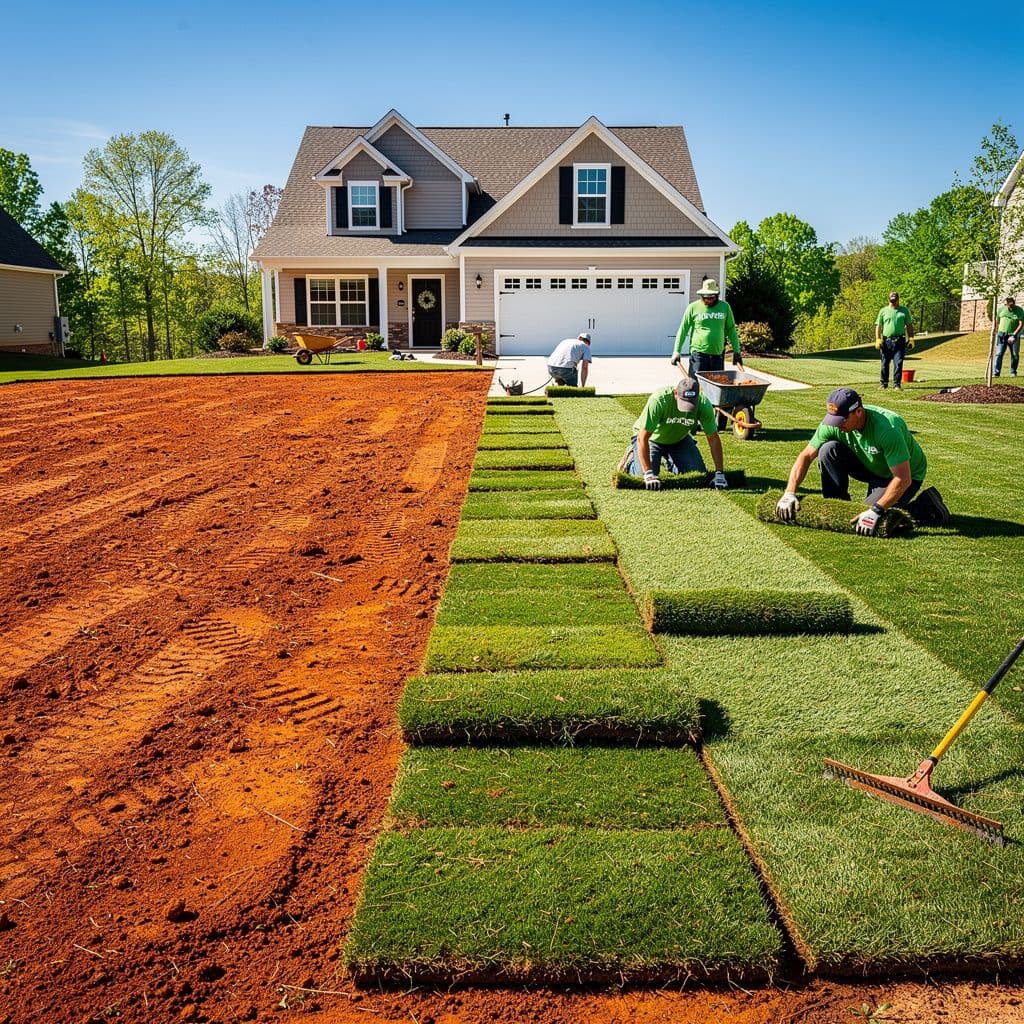
Lawn Renovation & Repair Guide for Henry County, GA: How to Restore Your Damaged Lawn
Published: May 12, 2026
You've tried everything. You water, you fertilize, you mow on schedule — but that section of your yard near the oak tree just stays bare. Or maybe last summer's heat wiped out half your front lawn and it never came back. Perhaps you just moved into a home near Locust Grove and inherited a yard that looks more like a dirt lot than a lawn.
Whatever brought you here, you're dealing with a lawn that needs more than routine maintenance. It needs renovation.
For homeowners across McDonough, Locust Grove, Stockbridge, and Henry County, lawn renovation is one of the most impactful investments you can make in your property. A healthy, full lawn doesn't just look good — it increases your home's value, prevents erosion in our famous Georgia red clay, and makes outdoor spaces actually usable for your family.
This guide walks you through exactly how to assess lawn damage, decide whether to repair or start fresh, and execute a renovation plan that works specifically for our climate and soil conditions in Henry County.
When Your Lawn Needs Renovation vs. Routine Care
Not every struggling lawn needs a full renovation. Understanding the difference saves you time, money, and frustration.
Signs Your Lawn Needs Renovation
More Than 30% Dead or Bare:
If a third or more of your lawn is bare dirt, dead grass, or overtaken by weeds, spot treatments won't cut it. You need a comprehensive approach to bring the lawn back.
Persistent Bare Spots That Won't Fill In:
Those areas that have been bare for a season or more — usually under trees, along driveways, or in high-traffic paths — have underlying soil issues that require more than seed and water.
Grass Variety No Longer Thrives:
Maybe your lawn was planted with a grass type that doesn't suit the current conditions. Shade trees have matured, drainage patterns have changed, or the original grass was never ideal for Henry County's climate.
Severe Soil Compaction:
If water pools on your lawn after rain instead of absorbing, or the soil feels hard as concrete beneath the surface, compaction has reached a point where simple aeration won't solve the problem.
Heavy Weed Infestation:
When weeds make up 50% or more of your lawn's vegetation, the underlying grass is too weak to compete. Starting over with proper soil preparation gives new grass the advantage.
When Spot Repairs Are Sufficient
Small patches of dead grass (under 6 inches), minor thinning after winter dormancy, or isolated weed problems can usually be addressed with targeted treatments. If 70% or more of your lawn is healthy, focus on lawn care maintenance rather than full renovation.
Step 1: Assess Your Lawn's Current Condition
Before starting any renovation work, take time to properly evaluate what you're working with. This assessment determines your entire approach.
Test Your Soil
Henry County's red clay soil is notoriously challenging. Before you invest in seed or sod, understand what your soil needs:
- pH testing: Most Georgia lawns need a pH between 6.0 and 6.5. Our clay soils tend to run acidic, which prevents grass from absorbing nutrients even when they're present.
- Nutrient analysis: A soil test reveals deficiencies in nitrogen, phosphorus, potassium, and micronutrients like iron.
- Compaction check: Push a screwdriver into moist soil. If it won't penetrate 4-6 inches easily, you have compaction issues.
- Drainage assessment: After a heavy rain, note where water pools and how long it takes to absorb.
The University of Georgia Cooperative Extension offers affordable soil testing that provides specific recommendations for our region. This $15-20 test can save you hundreds in wasted materials.
Identify the Cause of Damage
Pest Damage:
White grubs, armyworms, and mole crickets are common culprits in Henry County. If sections of grass pull up like loose carpet, grubs likely destroyed the root system.
Disease Damage:
Fungal diseases like brown patch, large patch, and dollar spot thrive in our humid summers. Look for circular patterns, discolored patches, or slimy areas.
Environmental Stress:
Drought, excessive shade, poor drainage, or soil compaction create conditions where grass simply can't survive. These are the most common causes in our area.
Chemical Damage:
Improper fertilizer application, spilled gasoline, or herbicide drift can kill grass in irregular patterns. If damage appeared suddenly after a treatment, this may be the cause.
Map Your Lawn's Sun and Shade Patterns
Spend a day tracking which parts of your yard get full sun (6+ hours), partial shade (3-6 hours), or full shade (less than 3 hours). This determines which grass varieties will succeed in each zone — a critical factor that many homeowners overlook.
Properties near Indian Springs State Park and other wooded areas of southern Henry County often have significant shade challenges from mature pine and hardwood canopies. Homes in newer developments around McDonough may have less tree cover but deal with construction-compacted soil.
Step 2: Choose Your Renovation Method
Based on your assessment, you'll choose between three renovation approaches ranging from minimal intervention to complete overhaul.
Overseeding (Light to Moderate Renovation)
Best for: Lawns with thin grass but intact root systems, minor bare spots, lawns that just need thickening.
When to do it: Late spring (May-June) for warm-season grasses like Bermuda and Zoysia. Early fall (September-October) for cool-season fescue.
Process:
- Mow existing grass as short as possible without scalping
- Core aerate the entire lawn to create seed-to-soil contact
- Apply premium grass seed at the recommended rate for your variety
- Topdress with a thin layer of compost (¼ inch)
- Apply starter fertilizer high in phosphorus
- Water lightly 2-3 times daily for 2-3 weeks until germination
Overseeding works well for lawns near Heritage Park in McDonough where established neighborhoods have mature but thinning turf. The existing grass provides erosion control while new seed fills in gaps.
Partial Renovation (Moderate to Significant Damage)
Best for: Lawns with 30-60% damage, areas with severe compaction, sections overtaken by weeds or invasive grass.
Process:
- Kill existing vegetation in damaged areas with a non-selective herbicide
- Wait 7-10 days for complete kill
- Remove dead vegetation with a power rake or sod cutter
- Core aerate and amend soil based on test results
- Apply new seed or sod
- Follow establishment watering schedule
Many homes near Warren Holder Park in Locust Grove have lawns damaged by a combination of shade and clay soil compaction. Partial renovation lets you address specific problem zones while preserving healthy turf.
Complete Lawn Renovation (Severe Damage)
Best for: Lawns with 60%+ damage, wrong grass variety, severe soil problems, complete renovation needed.
Process:
- Kill all existing vegetation (herbicide or mechanical removal)
- Grade and level the area, addressing drainage issues
- Amend soil with compost, topsoil, and nutrients based on soil test
- Core aerate or till amendments into existing soil
- Install new sod or seed the entire area
- Apply starter fertilizer and water on establishment schedule
Complete renovation is often the right choice for properties near the Tanger Outlets area where newer construction left compacted subsoil with minimal topsoil. Starting fresh with proper soil preparation creates a foundation for long-term success.
Step 3: Choose the Right Grass for Henry County
Selecting the correct grass variety is arguably the most important decision in your renovation. Henry County's hot, humid summers and clay soils demand warm-season grasses that can handle the stress.
Bermuda Grass
Best for: Full sun areas (6+ hours direct sun), high-traffic lawns, athletic, durable turf.
Pros: Extremely heat and drought tolerant, spreads to fill bare spots, handles foot traffic well, fast establishment from seed or sod.
Cons: Requires full sun — performs poorly in shade, needs regular mowing during peak season, goes dormant (brown) in winter.
Best varieties for Henry County: TifTuf (drought tolerant), Tifway 419 (dense, durable), Common Bermuda (budget-friendly from seed).
Zoysia Grass
Best for: Full sun to partial shade, homeowners wanting a dense, luxurious lawn with less mowing.
Pros: Dense growth chokes out weeds, tolerates light shade better than Bermuda, requires less frequent mowing, soft texture.
Cons: Slower to establish, more expensive than Bermuda, can develop thatch buildup, slower recovery from damage.
Best varieties for Henry County: Zenith (good from seed), Zeon (premium, shade tolerant), Palisades (large patch disease resistant).
Centipede Grass
Best for: Low-maintenance lawns, slightly acidic soils, partial shade conditions.
Pros: Low fertilizer requirements, tolerates poor soil conditions, naturally fights weeds once established, needs less mowing.
Cons: Slow growing, doesn't tolerate heavy traffic, sensitive to excessive fertilization, slow recovery from damage.
Best for properties near Jonesboro and the southern edges of Henry County where homeowners prefer a "plant it and mostly leave it" approach.
Tall Fescue
Best for: Shaded areas, lawns that need green color year-round, cooler microclimates.
Pros: Stays green through winter (when warm-season grasses go dormant), tolerates shade better than warm-season options, good for overseeding.
Cons: Struggles in extreme summer heat, needs more water during hot months, requires reseeding in thin areas annually, susceptible to brown patch disease.
Best used in: Heavily shaded yards in established Locust Grove and Stockbridge neighborhoods, or for homeowners who prioritize year-round green color.
Step 4: Soil Preparation — The Step Most People Skip
In Henry County, soil preparation makes or breaks a lawn renovation. Our heavy clay soil is the number one reason lawns fail, and no amount of quality seed or sod can overcome poor soil conditions.
Amending Georgia Clay Soil
Add Organic Matter:
Spread 1-2 inches of compost or aged manure over the renovation area and till it into the top 4-6 inches of soil. This improves drainage, reduces compaction, and provides slow-release nutrients.
Adjust pH:
Most Henry County lawns need lime to raise pH from our naturally acidic conditions. Apply pelletized lime based on soil test recommendations — typically 40-50 pounds per 1,000 square feet for acidic clay.
Address Drainage:
If water pools in areas of your yard, regrade before planting. French drains, swales, or slight slope adjustments prevent future water damage that would undermine your renovation.
Add Topsoil Where Needed:
In areas where construction scraped away topsoil (common in newer McDonough subdivisions), bring in 2-4 inches of quality topsoil before planting. Don't skip this — grass won't thrive in pure clay subsoil.
Step 5: Planting and Establishment
Whether you're seeding or installing sod, the establishment period determines whether your renovation succeeds or fails.
Seeding vs. Sod: Which to Choose
Seeding:
- Cost: $0.05-0.15 per square foot
- Time to full lawn: 2-3 months
- Best timing: Late spring (May-June) for warm-season grasses
- Risk level: Higher — vulnerable to washout, birds, and uneven germination
- Best for: Large areas where budget is a concern, overseeding existing turf
Sod:
- Cost: $0.30-0.80 per square foot
- Time to full lawn: 2-3 weeks (established appearance immediately)
- Best timing: Late spring through early fall (May-September)
- Risk level: Lower — instant coverage, immediate erosion control
- Best for: Small areas, high-visibility front yards, quick results
For a typical quarter-acre lot in Henry County, seeding might cost $300-600 in materials while sod could run $1,500-4,000. The investment in sod pays off in immediate results and higher success rates.
Watering New Grass in Henry County
Weeks 1-2: Water 2-3 times daily for 10-15 minutes per zone. Keep the top inch of soil consistently moist but not soggy.
Weeks 3-4: Reduce to once daily, watering for 20-30 minutes. Begin encouraging deeper root growth.
Weeks 5-8: Water every other day, then transition to 2-3 times per week. Apply 1 inch of water per session.
Month 3 and beyond: Follow standard Henry County watering guidelines — 1-1.5 inches per week, applied in early morning (6-8 AM).
During our hot Georgia summers, new grass is extremely vulnerable. If temperatures exceed 95°F, increase watering frequency to prevent heat stress during the establishment period.
First Mowing and Ongoing Care
First mowing: Wait until new grass reaches 3-4 inches tall (seeded) or roots are established (sod — usually 2-3 weeks). Set mower to the highest setting for the first cut.
Fertilization: Apply starter fertilizer at planting. Wait 6-8 weeks before applying a maintenance fertilizer. Avoid weed control products until the new grass has been mowed at least 3-4 times.
Weed management: New grass is sensitive to herbicides. Hand-pull weeds during establishment. Apply pre-emergent herbicide only after the lawn is fully established (typically 3-4 months after seeding).
Common Lawn Renovation Mistakes in Henry County
After helping hundreds of homeowners across Locust Grove, McDonough, Stockbridge, and Henry County restore their lawns, we see the same mistakes repeated. Avoid these:
Skipping the Soil Test
Putting seed or sod on untested soil is like building a house without checking the foundation. A $20 soil test prevents $2,000 in wasted renovation materials.
Planting at the Wrong Time
Spring seeding of cool-season fescue or fall seeding of warm-season Bermuda grasses sets you up for failure before you start. Match your grass type to the correct planting window.
Ignoring Drainage Problems
If your yard has standing water issues, new grass won't survive regardless of how well you prepare the soil. Fix drainage first, plant second.
Over-Fertilizing New Grass
It's tempting to push new growth with heavy fertilizer, but young grass roots can't handle high nutrient loads. Stick to starter fertilizer and wait for establishment.
Mowing Too Soon
Walking on and mowing new grass before roots are established tears up the very growth you're trying to encourage. Patience during the first month pays dividends all year.
When to Hire a Professional for Lawn Renovation
Lawn renovation is one area where professional help often pays for itself. Here's when it makes sense to call Hedgecoth Property Solutions rather than going the DIY route:
Your Lawn Has Multiple Problems
If you're dealing with compaction, drainage issues, pest damage, and weed infestation simultaneously, a professional can diagnose the interrelated causes and create a comprehensive treatment plan. Piecemeal DIY fixes often address symptoms while underlying problems persist.
You Need Grading or Drainage Work
Moving soil, installing drainage systems, and regrading requires equipment and expertise most homeowners don't have. Poor grading leads to water problems that undermine everything else.
Large-Scale Renovation
If you're renovating more than 5,000 square feet, the equipment, materials, and labor involved make professional installation cost-effective. Plus, professionals get wholesale pricing on sod and materials.
You've Tried DIY and It Didn't Work
There's no shame in calling for help after a failed attempt. Professionals can assess what went wrong and ensure the second attempt succeeds. Many of our Henry County clients come to us after one or two unsuccessful DIY renovations.
You Want It Done Right the First Time
Professional landscaping and property maintenance services bring the right equipment, quality materials, local knowledge, and experience to get your lawn renovation right on the first try. For busy McDonough and Locust Grove families, the time savings alone often justifies the investment.
Cost Expectations for Lawn Renovation in Henry County
Understanding realistic costs helps you budget appropriately and evaluate whether DIY or professional installation makes sense for your situation.
DIY Renovation Costs
| Item | Cost Range |
|------|-----------|
| Soil test | $15-25 |
| Herbicide (kill existing) | $20-50 |
| Compost/soil amendments | $100-300 |
| Grass seed (per 1,000 sq ft) | $25-75 |
| Sod (per 1,000 sq ft) | $300-800 |
| Starter fertilizer | $20-40 |
| Equipment rental (aerator, tiller) | $75-150/day |
Professional Renovation Costs
Professional lawn renovation in Henry County typically runs $1,500-5,000 for an average residential lot, depending on the scope of work, grass type chosen, and whether grading or drainage work is needed. This includes all materials, labor, equipment, and often a guarantee on the result.
For many homeowners, the guarantee alone — knowing the job will be done correctly — makes professional installation the better value.
FAQ about Lawn Renovation and Repair
Q: How do I fix bare spots in my lawn in Henry County?
A: Start by identifying the cause — shade, compaction, pests, or poor drainage. Loosen the soil in the bare area with a garden fork, add compost, apply grass seed matched to your lawn type, cover with a thin layer of straw, and water lightly 2-3 times daily. For warm-season grasses like Bermuda and Zoysia, late spring (May-June) is the best time for repairs.
Q: Why won't my grass grow in certain areas of my yard in Georgia?
A: The most common reasons in Henry County are shade (grass needs at least 4-6 hours of direct sun), compacted clay soil that prevents root development, poor drainage that drowns roots, or nutrient deficiencies. A soil test and sun exposure assessment will usually reveal the cause.
Q: Should I reseed or lay sod for lawn renovation in McDonough?
A: Sod provides instant results and higher success rates but costs 5-10 times more than seeding. Seed is budget-friendly but takes 2-3 months to fill in and is vulnerable to washout and birds. For small areas or high-visibility front yards, sod is often worth the investment. For large areas, seeding is more practical.
Q: When is the best time to renovate a lawn in Locust Grove?
A: For warm-season grasses (Bermuda, Zoysia, Centipede), late spring through early summer (May-July) when soil temperatures consistently reach 65-70°F. For cool-season fescue, early fall (September-October) is ideal. Avoid renovating during peak summer heat (August) or before winter dormancy.
Q: How much does lawn renovation cost in Henry County, GA?
A: DIY renovation typically costs $500-1,500 in materials for an average lot. Professional renovation ranges from $1,500-5,000 depending on the scope, grass type, and whether grading or drainage work is needed. Sod installation costs more than seeding but provides immediate results.
Q: Can I renovate my lawn myself or do I need a professional?
A: Small repairs and overseeding are manageable DIY projects. Full renovations involving grading, drainage correction, or large areas benefit from professional equipment and expertise. If you've attempted DIY renovation without success, or if your lawn has multiple compounding issues, professional help will save money in the long run.
Ready to Restore Your Lawn? Contact Hedgecoth Property Solutions
A damaged lawn doesn't have to be a permanent problem. Whether you need spot repairs, a complete renovation, or ongoing lawn care to keep your yard looking its best, Hedgecoth Property Solutions has the local expertise to get results in Henry County's unique conditions.
Our team serves homeowners throughout McDonough, Locust Grove, Jonesboro, Stockbridge, Morrow, Hampton, and all of Henry County with professional lawn renovation, landscaping, and property maintenance services.
Call us today at 770-490-9519 for a free lawn assessment and renovation estimate. We'll evaluate your property, identify the causes of damage, and recommend the most effective and cost-efficient solution for your specific situation.
Your lawn can be the envy of the neighborhood — let us help you get there.
This guide is intended for informational purposes. For specific lawn renovation recommendations tailored to your property, consult with local lawn care professionals. Results may vary based on soil conditions, weather, and property-specific factors.