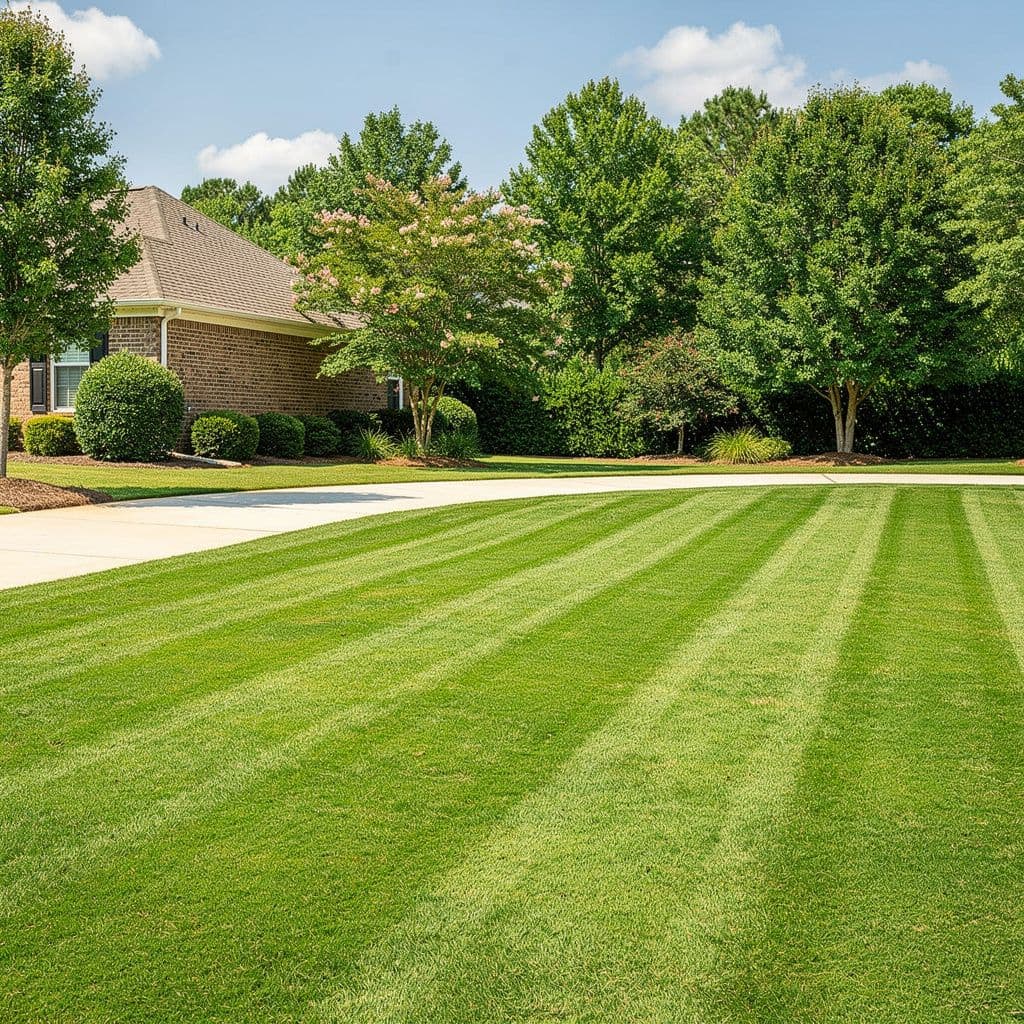
Lawn Care Myths Debunked: What Henry County Homeowners Get Wrong
Published: June 12, 2026
Your neighbor swears by it. Your dad always did it that way. You read it on a lawn care forum once. So it must be true, right?
Not necessarily. Some of the most widely believed lawn care "rules" in Henry County are actually myths — and following them could be the reason your lawn looks worse every year instead of better. From watering at the wrong time to bagging your grass clippings, these common mistakes cost homeowners in Locust Grove, McDonough, Stockbridge, and throughout Henry County thousands of dollars in wasted water, fertilizer, and lawn repairs every year.
After years of providing professional lawn care across Henry County, we've heard them all. Let's set the record straight on the ten biggest lawn care myths that are holding your yard back — and what you should do instead.
Myth 1: Water Your Lawn Every Day
The myth: A little water every day keeps your grass hydrated and green, especially during Georgia's brutal summers.
The truth: Daily watering is one of the worst things you can do for your lawn. Shallow, frequent watering trains grass roots to stay near the surface where they're vulnerable to heat, drought, and disease. You're essentially creating a dependent lawn that can't survive without constant attention.
What to do instead: Water deeply and infrequently — 1 to 1.5 inches of water per session, 2-3 times per week during summer. This encourages roots to grow 4-6 inches deep into the soil, where they can access moisture even during dry stretches. In Henry County's heavy clay soil, deep watering is especially important because clay holds moisture at depth but resists surface penetration.
Pro tip: Place a tuna can or rain gauge on your lawn while watering. When it collects 1 inch of water, you've watered enough for that session.
Myth 2: Cut Your Grass Short So You Mow Less Often
The myth: Scalping your lawn to 1-2 inches means you can wait longer between mowings and your yard looks "cleaner."
The truth: Cutting more than one-third of the grass blade height at once shocks the plant. Short grass can't photosynthesize effectively, has no shade protection for its roots, and dries out faster. Scalped lawns in McDonough and Locust Grove are usually the first to turn brown when July temperatures hit 95°F.
What to do instead: Follow the one-third rule — never remove more than one-third of the grass blade in a single mowing. For most warm-season grasses in Henry County (Bermuda, Zoysia, Centipede), maintain a height of 1.5-2.5 inches depending on the variety. During peak summer heat, raise your mowing height by half an inch to give roots more shade.
Professional lawn mowing services adjust cutting heights seasonally and never scalp — there's a reason for that.
Myth 3: Leave All the Clippings, No Matter What
The myth: Grass clippings are always good for your lawn because they return nitrogen to the soil.
The truth: This is mostly right — but with an important exception. When clippings are light and evenly distributed, they decompose quickly and return valuable nutrients. But when you've let the grass get too long and mow off thick clumps, those clumps mat down, block sunlight, and create perfect conditions for fungus and disease. This is especially problematic during Henry County's humid summers.
What to do instead: If you mow regularly and follow the one-third rule, leave the clippings. They can provide up to 25% of your lawn's nitrogen needs. If you've fallen behind and the clippings are thick, either double-mow to break them up or bag the heavy areas. The light stuff stays; the heavy stuff goes.
Myth 4: Fertilize in Summer for a Green Lawn
The myth: If your lawn looks tired in July and August, hit it with fertilizer to green it up.
The truth: Fertilizing during extreme heat is like giving a marathon runner a huge meal mid-race. Nitrogen pushes top growth when the plant is already struggling to survive heat stress. The result is tender new growth that burns easily, increased water demand, and heightened susceptibility to fungal diseases like brown patch — which thrives in Henry County's hot, humid conditions.
What to do instead: Apply your primary fertilizer in late spring (May) when warm-season grasses are actively growing. A light maintenance feeding in early summer is fine, but avoid heavy nitrogen applications during July and August. If your lawn looks peaked in mid-summer, the issue is likely water, mowing height, or soil compaction — not lack of fertilizer.
A professional lawn treatment plan times applications precisely to Henry County's growing season.
Myth 5: Weed Killer Fixes Everything
The myth: Got weeds? Spray weed killer and your problems are solved.
The truth: Weed killer treats the symptom, not the cause. Weeds are nature's way of filling bare or thin spots in your lawn. They thrive where grass struggles — compacted soil, poor drainage, nutrient imbalances, and excessive shade. Kill the weeds without fixing the underlying conditions and new weeds will return within weeks.
In Henry County, common weeds like crabgrass, dallisgrass, and clover each signal different lawn problems:
- Crabgrass = thin turf, soil compaction, or mowing too short
- Dallisgrass = overwatering or poor drainage in clay soil
- Clover = low nitrogen levels in the soil
- Nutsedge = consistently wet areas or poor drainage
What to do instead: Combine professional weed control with cultural practices that thicken your turf. Aerate compacted soil, correct drainage issues, mow at proper heights, and fertilize appropriately. A thick, healthy lawn naturally crowds out weeds.
Myth 6: Aeration Is Optional
The myth: Aeration is a luxury service that nice-to-have lawns get. Your lawn will be fine without it.
The truth: In Henry County, aeration might be the single most beneficial thing you can do for your lawn. Our heavy Georgia clay soil compacts easily — foot traffic, rainfall, mowing equipment, and even natural settling press soil particles together, squeezing out the air pockets that roots need to grow.
Compacted clay soil causes a cascade of problems: water runs off instead of soaking in, fertilizer sits on the surface instead of reaching roots, and grass struggles to develop the deep root system it needs to survive summer heat. Aeration relieves this compaction by pulling small plugs of soil from the ground, creating channels for air, water, and nutrients.
What to do instead: Aerate your lawn annually, ideally in late spring or early summer when warm-season grasses are actively growing and can quickly fill in the aeration holes. For heavily used lawns or newer developments in areas like McDonough where construction compaction is common, aerating twice per year makes a significant difference.
Myth 7: The Best Time to Water Is in the Evening
The myth: Water in the evening or at night so the moisture has all night to soak in before the sun evaporates it.
The truth: Evening watering is actually one of the fastest ways to encourage lawn disease. When grass stays wet for extended periods — especially overnight when humidity is already high — fungal pathogens thrive. Brown patch, dollar spot, and pythium blight all love moist, warm conditions. In Henry County's humid climate, watering in the evening is basically rolling out the red carpet for lawn diseases.
What to do instead: Water between 5:00 AM and 9:00 AM. The grass has time to absorb the moisture before the heat of the day, and any water on the blades dries quickly as the sun comes up, minimizing disease risk. If you have an irrigation system, set it to start at 5:00 AM for the best results.
Myth 8: All Grass Is the Same — Just Plant Whatever's Cheap
The myth: Grass is grass. Buy whatever seed or sod is on sale at the home improvement store and it'll be fine.
The truth: Different grass types have dramatically different needs for sun, water, traffic tolerance, and maintenance. Plant the wrong grass for your Henry County yard and you'll fight it forever. Bermuda thrives in full sun but turns patchy in shade. St. Augustine handles shade well but needs more water. Zoysia is beautiful but slow to establish. Centipede is low maintenance but can't handle heavy foot traffic.
What to do instead: Choose grass based on your specific yard conditions:
- Full sun, active family yard → Bermuda (durable, drought-tolerant)
- Partial shade, moderate traffic → Zoysia (versatile, dense)
- Shady areas, low traffic → St. Augustine or tall fescue in problem spots
- Low maintenance, full sun → Centipede (needs less fertilizer than others)
If you're renovating or starting fresh, a professional landscaping assessment can evaluate your property's sun exposure, soil type, and drainage to recommend the right grass for each zone of your yard.
Myth 9: You Don't Need Professional Lawn Care — Just Do It Yourself
The myth: Lawn care is just mowing and sprinkling some fertilizer. Anyone can do it. Why pay someone?
The truth: There's nothing wrong with DIY lawn care if you have the time, knowledge, and equipment. But most homeowners in Locust Grove and McDonough significantly underestimate what proper lawn care involves throughout the year.
Professional lawn care includes:
- Soil testing to determine exact nutrient needs (not guessing)
- Precisely timed applications of pre-emergent and post-emergent herbicides
- Calibrated fertilizer spreading based on grass type, season, and soil conditions
- Disease identification and treatment before small problems become lawn-killers
- Proper mowing techniques with sharp blades and correct heights
- Aeration and overseeding at the right time of year for maximum effectiveness
The cost of doing it wrong — wasted products, damaged grass, replacing dead sections, buying equipment — often exceeds the cost of hiring professionals. Not to mention the hours every week you get back.
Myth 10: Brown Grass in Summer Is Always Dead
The myth: If your lawn turns brown in July or August, it's dead and needs to be replaced.
The truth: Brown grass is often just dormant, not dead. Warm-season grasses like Bermuda and Zoysia can go dormant during extreme heat and drought as a survival mechanism. The crown of the plant stays alive underground even when the blades look completely brown and dead. With proper care — deep watering, correct mowing height, and patience — most "dead" lawns green back up when temperatures cool and moisture returns.
How to tell the difference:
- Dormant grass: Brown but evenly colored, crowns are still firm at soil level, responds to water within 7-10 days
- Dead grass: Brown and brittle, crowns are mushy or hollow, no response to watering after two weeks
- Disease-damaged grass: Brown patches with distinct borders, often circular, may have visible fungal growth (white, pink, or gray threads)
Before you rip out your Locust Grove lawn and start over, have a professional assess whether it can be revived. Restoration is almost always cheaper than replacement.
Why Professional Lawn Care in Henry County Saves You From These Mistakes
Every myth on this list costs real money and time. Buying the wrong grass seed, overwatering daily, scalping your lawn, fertilizing in the wrong season — these aren't just harmless misconceptions. They're the reasons homeowners in Stockbridge, Jonesboro, Morrow, and throughout Henry County spend hundreds of dollars on lawn products every year without seeing results.
Hedgecoth Property Solutions provides professional lawn care services and property maintenance throughout Henry County. We know Henry County's red clay soil, our humid summers, our unpredictable rainfall, and exactly what your lawn needs in every season. No myths, no guesswork — just proven practices that keep your yard looking its best.
Frequently Asked Questions About Lawn Care in Henry County
How often should I water my lawn in Henry County during summer?
Water 2-3 times per week, applying 1-1.5 inches of water per session. Water between 5:00 AM and 9:00 AM for best absorption and minimal disease risk. Henry County's clay soil benefits from deep, infrequent watering that pushes moisture below the surface.
What's the right mowing height for Georgia lawns?
For warm-season grasses common in Henry County: Bermuda at 1-2 inches, Zoysia at 1-2.5 inches, Centipede at 1.5-2 inches, and St. Augustine at 3-4 inches. During peak summer heat, raise each by 0.5 inches to reduce stress.
When is the best time to fertilize my lawn in Locust Grove or McDonough?
The primary fertilization window for warm-season grasses in Henry County is late April through June when grass is actively growing. Avoid heavy nitrogen applications during July and August when heat stress is highest.
Does professional lawn care really make a difference compared to DIY?
Yes. Professional lawn care provides soil-specific treatment plans, precisely timed applications, disease monitoring, and proper equipment calibration. Most homeowners see measurable improvement within 4-6 weeks of starting professional service.
How do I know if my brown lawn is dead or just dormant?
Pull gently on a few brown grass blades. If they resist and stay anchored, the crown is likely alive and the grass is dormant. If they pull out easily and the base is mushy, that section may be dead. Water a small test area thoroughly — dormant grass typically shows signs of green within 7-10 days.
What's the most important thing I can do for my Henry County lawn?
Aerate annually to relieve clay soil compaction, water deeply and infrequently, and mow at the correct height for your grass type. These three practices solve more lawn problems than any product you can buy.
Ready for a Lawn That Actually Works?
Stop fighting myths and start working with facts. Hedgecoth Property Solutions has been helping homeowners across Locust Grove, McDonough, Stockbridge, Jonesboro, and Henry County get lawns they're proud of — without the guesswork.
Call us at 770-490-9519 or visit our contact page to schedule a free lawn assessment. We'll evaluate your yard, identify exactly what it needs, and build a plan that works for your property and your budget.
Your lawn deserves better than myths. Let's get it right.