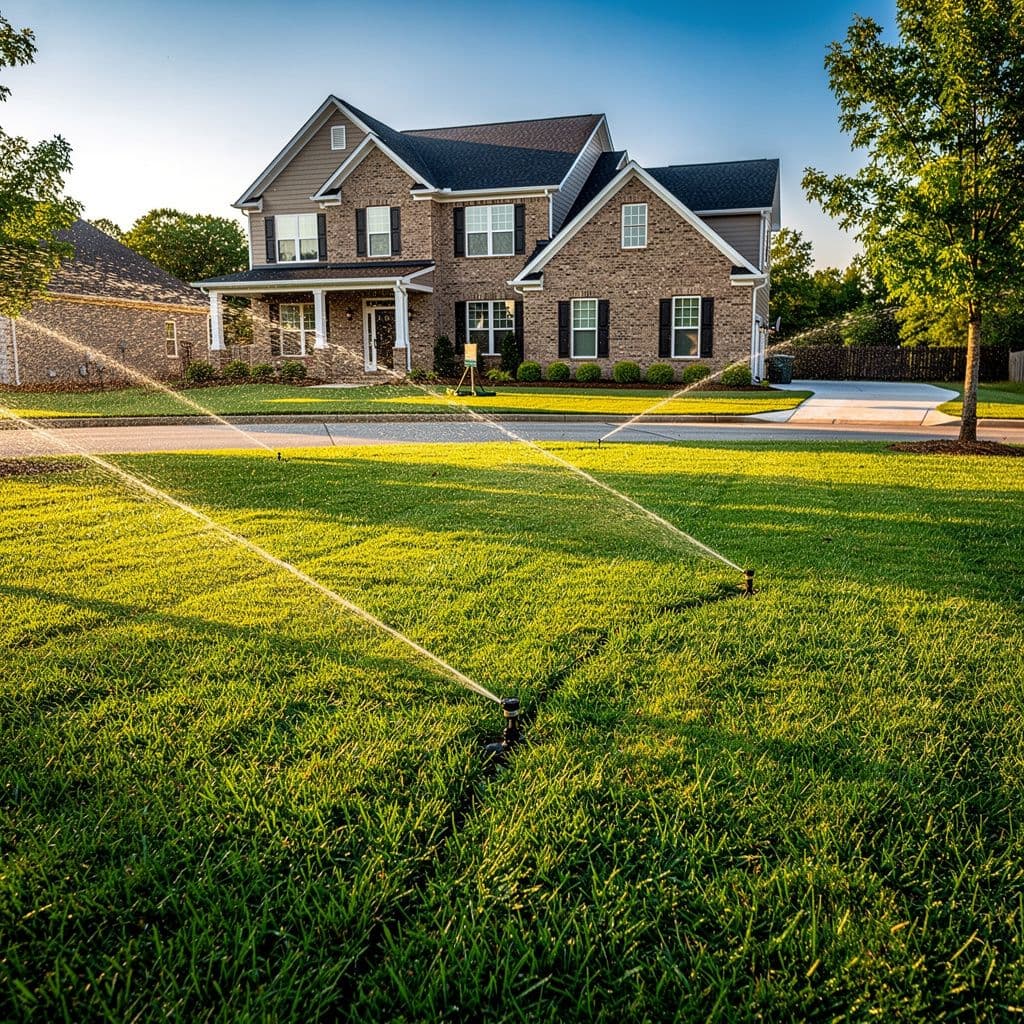
How to Keep Your Lawn Green All Summer in Henry County, GA
Published: June 10, 2026
There's a specific moment every summer in Henry County when the heat shifts from "warm" to "punishing." The thermometer crosses 95°F, the humidity wraps around you like a wet blanket, and lawns that were lush and green in May start looking tired, patchy, and brown.
If you've lived in Locust Grove or McDonough for more than one summer, you know the pattern. June starts strong. July tests your patience. By August, half the neighborhood has given up and is just waiting for fall rain to fix everything.
But here's what most Henry County homeowners don't realize: brown summer lawns aren't inevitable. The yards that stay green through August aren't lucky — they're maintained with a specific set of strategies that account for Georgia's unique climate, clay soil, and extreme summer conditions.
Whether you handle your own lawn care or work with a professional service, these 10 strategies will keep your yard looking like a golf course while your neighbors watch their grass crisp up.
Why Henry County Lawns Struggle in Summer
Before we get into solutions, it helps to understand the problem. Henry County sits in Georgia's piedmont region, where the combination of heavy clay soil, high humidity, and sustained heat creates a triple threat to lawn health.
The three biggest summer lawn killers in Henry County:
-
Clay soil compaction — Georgia's red clay is nutrient-rich but physically dense. When it bakes in summer heat, it becomes nearly impenetrable, preventing water and oxygen from reaching grass roots. Lawns in newer developments around Stockbridge and McDonough are especially vulnerable because construction compacts the soil even further.
-
Fungal disease pressure — Our summer humidity regularly hits 70-85%, creating perfect conditions for brown patch, dollar spot, and other fungal diseases. These spread fastest when grass stays wet overnight, which is common when homeowners water at the wrong time of day.
-
Heat accumulation — Surface temperatures on Henry County lawns can exceed 110°F during peak afternoon sun. Grass plants go into survival mode, shutting down growth to conserve energy. Without intervention, this survival mode becomes semi-permanent dormancy — and your lawn turns brown.
The good news? Every one of these problems has a solution. Let's get into them.
Strategy 1: Water Deeply, Not Frequently
This is the single most impactful change most Henry County homeowners can make. If you're watering your lawn 15 minutes every day, you're training your grass to have shallow roots — and shallow roots can't survive summer heat.
The right approach:
- Water 2-3 times per week during summer (not daily)
- Apply 1 inch of water per session — roughly 60-90 minutes with a standard sprinkler
- Use a rain gauge or empty tuna can to measure output
- Reduce frequency during rainy weeks but maintain depth when you do water
Why this works: Deep watering forces grass roots to grow downward in search of moisture. Deeper roots access water that's still available in the soil even when the surface is bone dry. A lawn with 6-inch roots survives drought far better than one with 2-inch roots.
Local tip: Henry County's clay soil absorbs water slowly. If you see water running off into the street during irrigation, split your watering into two shorter sessions 30 minutes apart to allow absorption.
Strategy 2: Water at the Right Time — Early Morning Only
When you water matters almost as much as how much you water. And in Henry County's humid climate, this one decision can determine whether your lawn stays green or gets eaten by fungus.
Water between 4:00 AM and 8:00 AM. Period.
Why this matters:
- Early morning watering gives grass blades time to dry before nightfall
- Wet grass overnight = fungal disease paradise (brown patch loves warm, wet conditions)
- Morning watering loses less water to evaporation compared to midday
- Grass can actually absorb the water before the sun heats up the soil surface
The biggest mistake: Watering in the evening. This is the #1 cause of brown patch disease in Henry County. If you can't water in the morning, late afternoon (before 5 PM) is your second choice — never after sunset.
If you have an irrigation system, set it to start at 5:00 AM. If you're using hose-end sprinklers, set them up the night before and turn them on first thing when you wake up. For more complex irrigation needs, a professional landscaping service can install or repair an automated system that handles the timing for you.
Strategy 3: Raise Your Mowing Height
This feels counterintuitive to most homeowners. When the lawn looks stressed, the instinct is to cut it shorter so it "looks neat." But in summer, shorter grass is dead grass.
Summer mowing heights for Henry County grass types:
| Grass Type | Spring/Fall Height | Summer Height |
|------------|-------------------|---------------|
| Bermuda | 1.5-2 inches | 2-2.5 inches |
| Zoysia | 1.5-2 inches | 2-2.5 inches |
| Centipede | 1.5-2 inches | 2-2.5 inches |
| Tall Fescue | 3-3.5 inches | 3.5-4 inches |
Why higher is better in summer:
- Taller grass shades the soil, keeping it cooler and reducing evaporation
- Longer leaf blades produce more energy through photosynthesis
- The crown of the grass plant (where growth happens) stays protected from heat
- Weed seeds can't germinate as easily when soil is shaded
Pro tip: Never remove more than one-third of the grass blade in a single mowing. If your lawn has grown too tall between mowings, raise the mower height and gradually bring it back down over the next 2-3 mowings. For professional lawn care that maintains the correct height all season, Hedgecoth Property Solutions handles this automatically.
Strategy 4: Keep Your Mower Blades Sharp
Dull mower blades tear grass instead of cutting it. Torn grass blades lose moisture through the ragged edges, turn brown at the tips, and become more susceptible to disease. In summer, when grass is already stressed, dull blades can be the difference between a green lawn and a brown one.
Signs your blades need sharpening:
- Grass tips look frayed, shredded, or whitish after mowing
- The lawn has a brownish haze even though it's freshly cut
- Your mower sounds like it's struggling or tearing rather than cutting
Maintenance schedule:
- Sharpen blades every 20-25 hours of mowing (roughly monthly for average yards)
- Keep a spare set of sharp blades on hand
- Inspect blades before each mow for nicks and dings
- If you hit a rock or stump, sharpen immediately — the blade is almost certainly damaged
Strategy 5: Don't Fertilize During Heat Waves
This surprises a lot of people. Fertilizer makes grass grow, and growth is good, right? Not in the middle of a Georgia heat wave.
The problem with summer fertilizing:
Nitrogen fertilizer pushes top growth. When temperatures are above 90°F, grass plants are already stressed just trying to survive. Forcing new growth during extreme heat is like making someone sprint when they have heat exhaustion — it pushes the plant past its limits and can cause serious damage or death.
The right fertilizing schedule for Henry County:
- Late spring (May): Apply a slow-release nitrogen fertilizer to build energy reserves before summer
- Summer (June-August): Apply iron-only supplements if the lawn looks pale — iron provides green color without pushing growth. Or skip fertilizer entirely during extreme heat
- Early fall (September): This is your most important fertilization. Apply a balanced fertilizer when temperatures drop and grass can actually use the nutrients
If your lawn looks yellow in summer: This is likely an iron deficiency, not a nitrogen deficiency. Iron sulfate or chelated iron will restore the green color without the growth push. Many professional lawn treatment services include iron applications in their summer service plans for exactly this reason.
Strategy 6: Aerate Your Lawn (Yes, Even in Summer)
Soil compaction is the silent killer of Henry County lawns. Our clay soil compacts naturally, and foot traffic, mowing equipment, and summer heat make it worse. Compacted soil can't absorb water, can't exchange gases, and restricts root growth.
Signs your lawn needs aeration:
- Water pools on the surface or runs off instead of soaking in
- Grass feels spongy but looks thin
- You can't push a screwdriver more than 2 inches into the soil
- Heavy clay is visible at the surface
- Tree roots are becoming exposed
Summer aeration for warm-season grasses:
Bermuda, Zoysia, and Centipede grasses (the most common types in Locust Grove, McDonough, and Stockbridge) are warm-season varieties. They're actively growing during summer, which means they recover from aeration quickly. In fact, core aeration during the growing season can stimulate new root growth and improve drought resistance within weeks.
For Fescue lawns, wait until early fall to aerate — summer aeration stresses cool-season grasses.
Professional property maintenance services have the equipment to do core aeration properly, pulling actual plugs of soil rather than just poking holes that close back up.
Strategy 7: Apply a Thin Layer of Compost Topdressing
This is one of the most underrated lawn care strategies in Henry County, and it's something most homeowners never think about.
What compost topdressing does:
- Adds organic matter that improves clay soil structure over time
- Provides a slow, steady release of nutrients without the burn risk of synthetic fertilizer
- Insulates the soil surface, reducing temperature extremes
- Helps retain moisture in the root zone
- Introduces beneficial microorganisms that fight lawn diseases
How to apply it:
- Use screened, finished compost (no large chunks)
- Apply a thin layer — about 1/4 inch thick
- Spread with a drop spreader or shovel and rake
- Water in lightly after application
- The grass should still be visible through the compost — don't smother it
Timing: Late spring or early summer is ideal. You can apply compost topdressing once or twice per year for cumulative soil improvement. For Locust Grove homeowners dealing with hard clay, this strategy alone can transform your lawn over 2-3 seasons.
Strategy 8: Control Weeds Before They Steal Your Lawn's Resources
Weeds are more than an eyesore in summer — they're resource thieves. Every weed in your lawn is competing with your grass for water, nutrients, and sunlight. During summer drought stress, this competition can push your grass over the edge from "stressed" to "dead."
Common summer weeds in Henry County:
- Crabgrass: Germinates in bare soil when temperatures consistently hit 80°F. Spreads fast, crowds out turf grass
- Nutsedge: Looks like grass but grows faster and taller. Thrives in wet areas — a sign of overwatering or poor drainage
- Spotted spurge: Low-growing, forms dense mats that smother grass. Common along sidewalks and driveways
- Dallisgrass: Coarse, clump-forming grass weed that's extremely difficult to eradicate once established
The strategy:
- Prevention: Apply pre-emergent herbicide in early spring (February-March) to stop crabgrass before it starts
- Spot treatment: Use post-emergent herbicides on existing weeds — but be careful during summer heat, as some herbicides can damage stressed grass
- Manual removal: For small infestations, hand-pulling is the safest summer option
- Professional treatment: A professional weed control program applies the right products at the right time without risking heat damage to your grass
Strategy 9: Manage Lawn Traffic During Drought Stress
This one is simple but often overlooked. When your lawn is already stressed from heat and limited water, foot traffic causes real damage.
How traffic damages stressed grass:
- Footsteps crush grass crowns that are already struggling
- Compacts soil further, reducing water infiltration
- Wears away the protective layer of grass blades, exposing soil to direct sun
- Creates worn paths that fill in with weeds
Practical tips for Henry County homeowners:
- Avoid walking on the same path every day — vary your route across the lawn
- Keep kids' play areas to one section so damage is concentrated and manageable
- Don't park vehicles or trailers on the grass during summer
- If you have a dog, create a designated potty area with mulch or gravel to prevent urine burn spots on stressed grass
- Consider stepping stones for high-traffic paths
Strategy 10: Invest in Professional Lawn Care
Here's the honest truth: keeping a lawn green through a Georgia summer requires timing, knowledge, and consistency that most homeowners struggle to maintain. Missing one watering cycle, fertilizing at the wrong time, or cutting too short once can undo weeks of careful maintenance.
What professional lawn care provides that DIY can't match:
- Consistency — Your lawn gets maintained on schedule regardless of your work schedule, vacation plans, or how hot it is outside
- Expertise — Professionals know the difference between drought stress, heat stress, disease, and pest damage — and treat each one differently
- Right products, right time — Professional-grade products applied at optimal timing based on actual conditions, not a generic calendar
- Equipment — Commercial mowers with sharp blades, proper aeration equipment, and calibrated sprayers that apply exact rates
- Monitoring — A trained eye catches problems early, before a small brown patch becomes a dead zone that requires expensive renovation
For Henry County homeowners juggling work, family, and everything else, professional lawn care isn't a luxury — it's often the most cost-effective way to protect your property value and actually enjoy your yard all summer.
The Henry County Summer Lawn Care Calendar
Here's a quick-reference schedule to keep your lawn on track through the hottest months:
June:
- Raise mowing height to summer settings
- Deep water 2-3 times per week (1 inch per session)
- Apply iron supplement if grass looks pale
- Spot-treat weeds as needed
- Check sprinkler heads for proper coverage
July:
- Maintain higher mowing height
- Increase watering to 3 times per week during drought periods
- Skip fertilizer during heat waves
- Monitor for brown patch disease (circular brown spots)
- Reduce foot traffic on stressed areas
August:
- Continue deep watering schedule
- Watch for chinch bugs and other summer pests
- Begin planning fall aeration and overseeding (for Fescue lawns)
- Order fall fertilizer
- Schedule fall property maintenance services early — fall books up fast in Henry County
Why Hedgecoth Property Solutions Keeps Henry County Lawns Green
We've been maintaining lawns in Locust Grove, McDonough, Stockbridge, and throughout Henry County long enough to know exactly what works here. Not in Atlanta. Not in a textbook. Here — in Georgia's clay soil and brutal summer humidity.
Our summer lawn care program includes:
- Weekly mowing with sharp, commercial-grade equipment at the correct height for your grass type
- Scheduled fertilization and iron applications timed to weather conditions
- Weed control treatments using products safe for summer application
- Disease monitoring and treatment before brown patch spreads
- Irrigation system checks and adjustment recommendations
- Soil health assessments to identify compaction and drainage issues
Every yard is different, and we tailor our approach to your specific lawn, grass type, soil conditions, and sun exposure. Whether you're in a new development in McDonough with compacted builder soil or an established neighborhood in Locust Grove with mature trees and shade challenges, we have a plan that works.
Ready for a lawn that stays green all summer? Call Hedgecoth Property Solutions at 770-490-9519 or visit our contact page to schedule a free lawn assessment. We'll evaluate your yard, identify what's keeping it from looking its best, and create a custom plan that fits your budget and your schedule.
Your neighbors will be asking for your secret by July.
Frequently Asked Questions
How often should I water my lawn in summer in Henry County, GA?
Water your lawn 2-3 times per week during summer, applying about 1 inch of water per session. Water between 4:00 AM and 8:00 AM to allow grass blades to dry before nightfall and reduce the risk of fungal disease. Deep, infrequent watering promotes deeper root growth than daily shallow watering.
What is the best mowing height for summer in Georgia?
For warm-season grasses common in Henry County (Bermuda, Zoysia, Centipede), raise your mowing height to 2-2.5 inches during summer. For Tall Fescue, maintain 3.5-4 inches. Higher mowing heights shade the soil, reduce water evaporation, and protect the grass crown from heat damage.
Why does my lawn turn brown in summer even when I water it?
Brown grass despite regular watering can be caused by compacted clay soil preventing water absorption, fungal diseases like brown patch from watering at the wrong time, heat stress unrelated to soil moisture, or improper mowing height. A professional lawn assessment can identify the specific cause and recommend the right fix.
Should I fertilize my lawn during summer in Henry County?
Avoid nitrogen fertilizer during peak summer heat (July-August). Instead, use iron-only supplements to maintain green color without pushing growth that the grass can't sustain. Apply your main nitrogen fertilizer in late spring and early fall when temperatures are moderate and grass can actually use the nutrients.
How do I know if my lawn has brown patch disease?
Brown patch appears as circular patches of brown grass, typically 6 inches to several feet in diameter. The patches often have a darker "smoke ring" border at the edges. It's most common in Henry County during humid summer weather and spreads fastest when grass stays wet overnight. If you spot it, reduce watering frequency and improve air circulation.
How much does professional lawn care cost in Henry County, GA?
Professional lawn care costs vary based on yard size, services needed, and frequency. Most Henry County homeowners pay between $40-80 per week for basic mowing service, with full-service lawn care programs (fertilization, weed control, aeration) ranging from $150-400 per month. Contact Hedgecoth Property Solutions at 770-490-9519 for a free estimate tailored to your specific property.