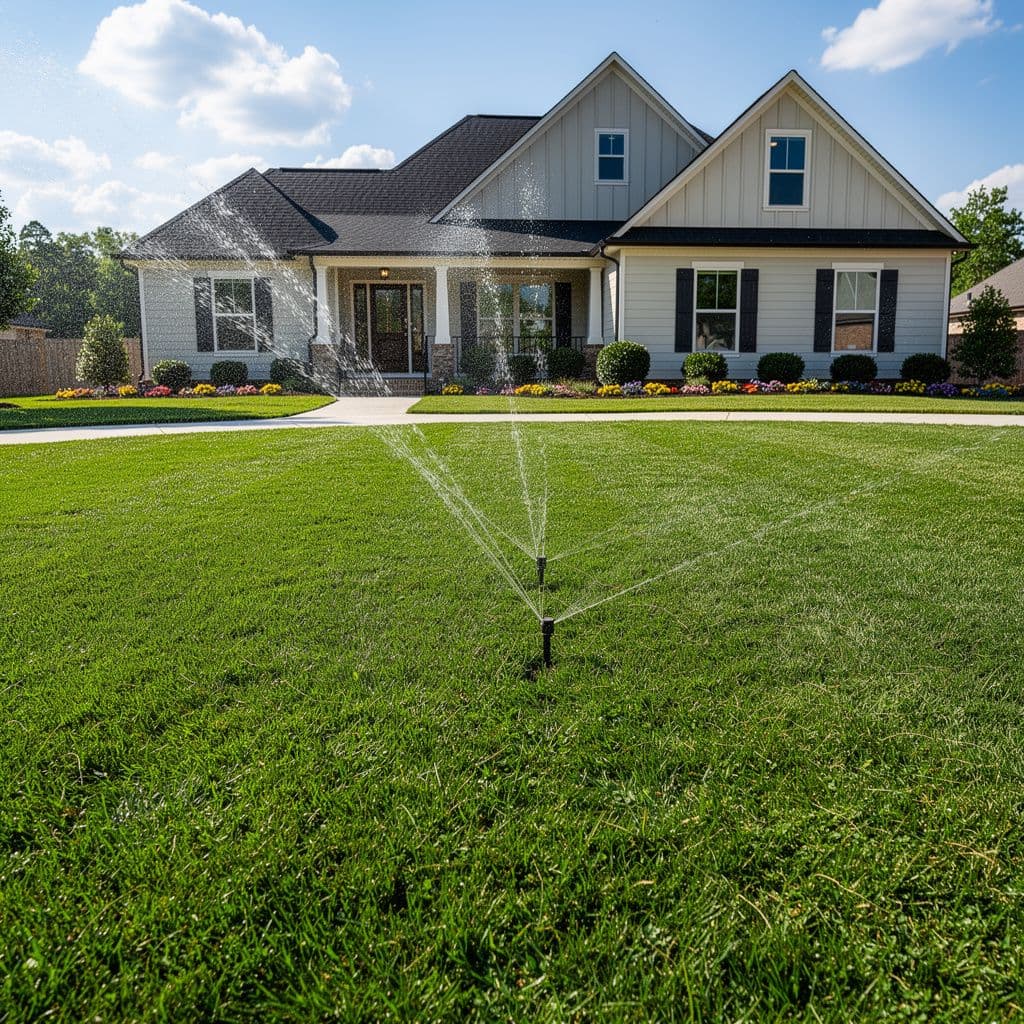
How to Get a Thicker, Greener Lawn in Henry County, GA
Published: June 3, 2026
If you're walking through your neighborhood in Locust Grove or McDonough and wondering why some lawns look like carpet while yours is thin and patchy, you're not alone. It's one of the most common questions we hear from homeowners across Henry County: "How do I get my lawn thicker and greener?"
The frustrating truth is that most of what makes a lawn thick and green happens below the surface. You can mow, water, and fertilize all you want — but if the foundation isn't right, you'll always be fighting an uphill battle.
The good news? Georgia's warm-season grasses are built for density. Bermuda, Zoysia, and Centipede grass all have the genetic potential to form a thick, weed-choking mat of turf when given the right conditions. The trick is understanding what your lawn is missing and fixing those issues in the right order.
This guide breaks down the exact strategies that actually work for building a thicker lawn in Henry County's red clay soil and Georgia heat. Whether you're starting with bare spots or just want to take your already-decent lawn to the next level, these are the steps that produce real results.
Why Lawns in Henry County Struggle to Get Thick
Before we get into solutions, it helps to understand what's working against you. Henry County presents some specific challenges that make thick lawns harder to achieve here than in other parts of the country.
Red Clay Soil
Most of Henry County sits on heavy red clay. Clay soil compacts easily, drains poorly, and holds nutrients inconsistently. When the soil is compacted, grass roots can't push deep enough to access water and nutrients. The result is shallow-rooted grass that thins out under stress.
Clay soil also tends toward alkaline pH in some areas, which locks up iron and other micronutrients your grass needs for that deep green color. Without a soil test, you might be fertilizing and still seeing yellowish grass because the nutrients are there but unavailable.
Heat and Drought Stress
Georgia summers are brutal on lawns. Daytime temperatures regularly exceed 95°F from June through August, and soil temperatures can push past 90°F. At those temperatures, grass roots stop absorbing nutrients efficiently. The lawn goes into survival mode — growth slows, color fades, and thin areas get thinner.
Properties near McDonough and Stockbridge that don't have irrigation systems are especially vulnerable. Even a week without rain during peak summer can set your lawn back significantly.
Incorrect Mowing Practices
This is the single most common mistake we see across Henry County. Homeowners either mow too short (scalping the grass and weakening roots), mow with dull blades (tearing grass instead of cutting it), or mow too infrequently (removing too much at once).
All three of these mistakes stress the grass and prevent it from building the density you want. Mowing correctly is one of the fastest ways to improve lawn thickness — and it costs nothing extra.
Weed Competition
Weeds don't just look bad — they actively steal water, nutrients, and sunlight from your grass. Crabgrass, dallisgrass, nutsedge, and clover are all aggressive competitors in Henry County. If you have a weed problem, your grass will never reach its full thickness potential because the weeds are taking resources away from the turf.
A thick lawn is actually the best weed control there is. Dense turf shades the soil surface, preventing weed seeds from germinating. But you have to get the grass thick first, which means eliminating the weeds that are already there.
Strategy 1: Fix Your Soil First
Everything starts with soil. You can apply all the fertilizer in the world, but if your soil is compacted, acidic, or lacking organic matter, your lawn won't respond. Here's how to build the foundation for a thick lawn.
Get a Soil Test
This is step one, and it's non-negotiable. A soil test from the University of Georgia Extension (available through the Henry County Extension office) costs about $10-15 and tells you:
- pH level — Most warm-season grasses want 6.0-6.5. Henry County clay often runs higher or lower.
- Nutrient levels — Phosphorus, potassium, calcium, and magnesium levels guide your fertilization plan.
- Organic matter — Low organic matter means poor nutrient retention and weak microbial activity.
- Recommendations — The test results include specific application rates for amendments.
Without a soil test, you're guessing. And guessing with lawn care is expensive.
Aerate to Relieve Compaction
Core aeration is the most impactful thing you can do for a thin lawn in Henry County. Aeration pulls small plugs of soil from the ground, creating channels for air, water, and nutrients to reach the root zone.
For thin lawns, aerate twice per year:
- Late spring (May): When grass is actively growing and recovers quickly
- Early fall (September): To relieve summer compaction and prep for fall growth
If your lawn is severely compacted — common with newer construction in Locust Grove and McDonough — consider aeration three times per year until density improves.
Add Organic Matter
Henry County clay needs organic matter to improve structure, water retention, and nutrient availability. The most effective ways to add it:
- Compost topdressing — Spread a thin layer (¼ inch) of compost over the lawn after aeration. It fills the aeration holes and gradually improves soil structure.
- Humic acid applications — Liquid humic acid can be applied with fertilizer to improve nutrient uptake and soil biology.
- Leaving grass clippings — Grasscycling returns nitrogen and organic matter to the soil. It's free fertilizer every time you mow.
Adjust pH if Needed
If your soil test shows pH outside the 6.0-6.5 range, you need to correct it:
- Too acidic (below 6.0): Apply pelletized lime at the recommended rate. Lime takes months to work, so apply in fall for spring results.
- Too alkaline (above 6.5): Apply elemental sulfur. This is less common in Henry County but does occur.
Correct pH unlocks nutrients already in your soil. Many homeowners see a dramatic green-up just from pH correction alone.
Strategy 2: Master Your Mowing
Mowing is the lawn care task you do most often, and it has the biggest impact on thickness. Done right, mowing encourages lateral growth (spreading) and denser turf. Done wrong, it thins your lawn week by week.
Follow the One-Third Rule
Never remove more than one-third of the grass blade height in a single mowing. If your Bermuda grass is supposed to be mowed at 1.5 inches and it's grown to 3 inches, don't cut it all the way down. Take off one-third (down to 2 inches), wait a few days, then cut again to 1.5.
Removing too much at once shocks the grass, forcing it to redirect energy from spreading to recovery. This is how lawns get thin.
Mow at the Right Height for Your Grass Type
| Grass Type | Mowing Height | Frequency |
|-----------|---------------|-----------|
| Bermuda | 1-2 inches | Every 5-7 days |
| Zoysia | 1.5-2.5 inches | Every 7-10 days |
| Centipede | 1.5-2 inches | Every 10-14 days |
| St. Augustine | 3-4 inches | Every 7-10 days |
Key insight: Mowing at the higher end of the range promotes deeper roots and better drought tolerance. During summer heat in Stockbridge and throughout Henry County, raising your mowing height by half an inch provides shade for the soil and reduces water loss.
Keep Blades Sharp
Dull mower blades tear grass instead of cutting it cleanly. Torn blades lose moisture faster, develop brown tips, and are more susceptible to disease. Sharpen blades every 20-25 mowing hours, or about once a month during growing season.
If the tips of your grass look white or frayed after mowing, your blades need sharpening. A clean cut heals in hours. A torn cut takes days.
Mow Frequently Enough
During peak growing season (May through July), warm-season grasses in Henry County need mowing every 5-7 days. When you mow frequently, you're trimming a small amount each time, which encourages the grass to spread laterally rather than grow tall.
Infrequent mowing forces you to remove too much at once, which stresses the grass and thins it out. It also creates clumps of clippings that smother the turf below.
Strategy 3: Water Deeply, Not Daily
Watering strategy directly affects root depth, which directly affects lawn thickness. Deep roots make thick lawns. Shallow roots make thin ones.
The Deep-and-Infrequent Method
Apply 1-1.5 inches of water per week in 2-3 sessions. Each session should run long enough to wet the soil to a depth of 6-8 inches. This pushes roots deeper into the soil, making the grass more drought-tolerant and better able to access nutrients.
Why this works better than daily watering:
- Daily watering keeps roots in the top 1-2 inches of soil where they're vulnerable to heat and drought
- Deep watering trains roots to grow downward toward moisture
- Deeper roots access nutrients that shallow roots can't reach
- The soil surface dries between waterings, reducing disease pressure
Best Time to Water
Water between 5:00 and 8:00 AM. Early morning watering minimizes evaporation, allows the grass blades to dry quickly (reducing disease), and gives the water time to soak into the soil before the heat of the day.
Avoid evening watering — grass stays wet overnight, which promotes fungal diseases like brown patch and large patch, both common in Henry County during summer.
Signs Your Lawn Needs Water
- Footprints remain after walking on the grass (grass doesn't spring back)
- Blades fold or roll lengthwise to conserve moisture
- Color shifts from green to blue-gray, especially in the afternoon
- Soil is hard and difficult to push a screwdriver into
Don't wait until the grass is visibly wilting to water. By that point, the lawn has already been stressed, and recovery takes weeks.
Strategy 4: Fertilize Strategically
Fertilizer is the fuel for lawn thickness, but the wrong fertilizer at the wrong time can actually make your lawn thinner. Here's how to get it right for Henry County.
The Fertilization Schedule for Maximum Density
Spring (April): First Application
- Product: Balanced fertilizer with nitrogen (16-4-8 or similar)
- Purpose: Promote aggressive spreading and fill-in after winter dormancy
- Rate: Follow soil test recommendations, typically 1 lb nitrogen per 1,000 sq ft
Late Spring (May-June): Second Application
- Product: Fertilizer with iron and potassium (15-2-14 + iron)
- Purpose: Sustain growth and deepen green color for summer
- Note: This is the application that makes the biggest visual difference for density
Summer (July-August): Light Application
- Product: Low-nitrogen, high-potassium (5-0-20 or similar)
- Purpose: Support root health and stress resistance without pushing top growth
- Caution: Don't apply high-nitrogen fertilizer during heat waves
Early Fall (September): Recovery Application
- Product: Balanced with phosphorus for root development (12-6-18)
- Purpose: Help the lawn recover from summer stress and build density before dormancy
Late Fall (October-November): Winterizer
- Product: High-potassium winterizer (5-10-20)
- Purpose: Strengthen roots for winter survival and improve spring green-up
Why Iron Matters for Green Color
Nitrogen makes grass grow, but iron makes it green. Many Henry County lawns have adequate nitrogen but show yellowing because iron is locked up in the alkaline clay soil. An iron supplement (iron sulfate or chelated iron) can produce a dramatic green-up within days without pushing growth.
This is especially useful in summer when you don't want to apply nitrogen (which could burn the lawn in heat) but want to maintain color.
Don't Over-Fertilize
More is not better. Over-fertilizing causes:
- Rapid, weak growth that's susceptible to disease
- Excessive thatch buildup
- Root damage from salt accumulation
- Nutrient runoff into local waterways
Follow your soil test recommendations exactly. If you don't have a soil test, err on the side of less rather than more.
Strategy 5: Control Weeds Aggressively
Weeds and turfgrass are in direct competition for the same resources. You can't build a thick lawn while weeds are stealing water, nutrients, and sunlight. Weed control needs to happen alongside your soil and fertilization efforts.
Pre-Emergent: Your First Line of Defense
Spring pre-emergent (March): Apply when soil temperatures reach 55°F to prevent crabgrass and summer annual weeds. This is the single most important weed control treatment of the year.
Fall pre-emergent (September): Apply when soil temperatures drop to 70°F to prevent winter weeds like annual bluegrass, henbit, and chickweed.
If you're not applying pre-emergent, you're fighting a losing battle. Prevention is dramatically more effective than treating existing weeds.
Post-Emergent Weed Control
For weeds that break through pre-emergent:
- Spot-treat individual weeds rather than blanket-spraying the entire lawn
- Treat weeds when they're actively growing — herbicides are much more effective on healthy weeds than stressed ones
- Be patient — perennial weeds like dallisgrass may require multiple treatments over a full season
Thicken Turf to Outcompete Weeds
Here's the positive feedback loop: as your lawn gets thicker, it shades the soil surface, preventing weed seeds from germinating. A truly dense lawn can reduce weed pressure by 80-90% without any herbicides.
This is why all five strategies work together. Fix the soil, mow correctly, water deep, fertilize strategically, and control weeds — each one reinforces the others.
Strategy 6: Manage Thatch and Promote Spreading
Thatch is the layer of dead and living organic matter that accumulates between the soil surface and the green grass blades. A thin layer (¼ to ½ inch) is beneficial — it insulates roots and retains moisture. But excessive thatch (over ½ inch) prevents water, nutrients, and air from reaching the soil.
Check Your Thatch Level
Cut a small wedge of turf and soil (2-3 inches deep) and look at the cross-section. The spongy brown layer between soil and green grass is thatch.
Less than ½ inch: Normal, no action needed
½ to 1 inch: Monitor and consider dethatching during active growth
Over 1 inch: Dethatch immediately — this is preventing your lawn from getting thicker
How to Dethatch
For warm-season grasses in Henry County, the best time to dethatch is late spring (May-June) when the grass is actively growing and can recover quickly. Use a vertical mower (power rake) set to cut into the thatch layer without damaging the soil.
After dethatching:
- Remove the debris
- Water deeply
- Apply fertilizer to fuel recovery
- The lawn will look rough for 2-3 weeks, then bounce back thicker than before
Encourage Lateral Spreading
Bermuda and Zoysia grasses spread through stolons (above-ground runners) and rhizomes (below-ground runners). To encourage spreading into thin areas:
- Keep the area moist — runners need moisture to establish roots at each node
- Reduce foot traffic in thin areas while they fill in
- Light fertilizer applications encourage runner growth
- Topdressing thin areas with a sand/compost mix gives runners a medium to root into
For severely thin areas where runners won't close the gap in one season, consider plugging or sodding the bare spots. A professional landscaping service can handle this efficiently.
The Quick-Action Plan for a Thinner Lawn
If your lawn is thin right now and you want to start improving it this month, here's your priority list in order:
Week 1:
- Get a soil test (or call a professional for a free assessment)
- Check your mower blades — sharpen if needed
- Raise mowing height by half an inch
- Start deep watering 2-3 times per week (if not already)
Week 2-3: 5. Apply a balanced fertilizer with iron (June application) 6. Spot-treat any visible weeds 7. Schedule aeration if not done in the past 6 months
Week 4 and beyond: 8. Maintain weekly mowing at proper height 9. Monitor for disease and pests 10. Plan fall aeration and winterizer application
Within 4-6 weeks of following this plan, most Henry County homeowners see noticeable improvement in density and color. Full transformation typically takes one full growing season.
When to Call a Professional
Some lawn problems are beyond DIY territory. Call a professional lawn care service if you notice:
- Large dead patches that don't respond to watering and fertilizer
- Grass pulling up easily (roots have been eaten — likely grub damage)
- Circular patches of discolored grass (fungal disease that needs specific treatment)
- Persistent weeds that keep coming back after treatment
- Standing water that doesn't drain within 24 hours
- Severe compaction where water runs off instead of soaking in
Professional services have access to commercial-grade products, specialized equipment, and the expertise to diagnose problems quickly. For most homeowners, professional property maintenance ends up costing less than DIY once you factor in equipment, products, and the cost of mistakes.
Why Henry County Trusts Hedgecoth Property Solutions
At Hedgecoth Property Solutions, we've helped hundreds of homeowners across Locust Grove, McDonough, Stockbridge, Jonesboro, and throughout Henry County transform thin, patchy lawns into thick, green turf they're proud of.
We don't take a one-size-fits-all approach. Every lawn is different — different soil, different grass type, different sun exposure, different problems. That's why we start with a thorough assessment of your property before recommending any treatments.
Our approach:
- Soil-first philosophy — We test before we treat
- Seasonal precision — Every application timed for maximum effectiveness
- Integrated programs — Fertilization, weed control, aeration, and pest management working together
- Local knowledge — We understand Henry County clay, Georgia heat, and the specific challenges of our area
Ready for a thicker, greener lawn? Call us at 770-490-9519 or visit our contact page to schedule a free lawn assessment. We'll evaluate your property, identify what's holding your lawn back, and build a custom plan to get you the thick, green lawn you want.
Don't spend another summer looking at your neighbor's lawn and wishing yours looked like that. Let's make it happen.
Frequently Asked Questions
How long does it take to get a thicker lawn in Henry County?
Most homeowners see noticeable improvement in 4-6 weeks after starting a proper lawn care program. However, transforming a thin, struggling lawn into a thick, carpet-like turf typically takes one full growing season (April through October). Lawns with severe compaction or major soil issues may need two seasons for full transformation. The key is consistency — every week of proper mowing, watering, and treatment compounds the results.
What's the best grass type for a thick lawn in Henry County?
Bermuda grass produces the densest turf in Henry County when properly maintained. It spreads aggressively through both above-ground stolons and below-ground rhizomes, filling in thin areas quickly. Zoysia grass is an excellent second choice — slightly less aggressive but more shade-tolerant and lower maintenance. Centipede grass is the most low-maintenance option but grows and spreads slower. For shady areas where Bermuda won't thrive, Zoysia varieties like Zenith or Palisades perform well in Locust Grove and throughout Henry County.
Can I make my lawn thicker without hiring a professional service?
Yes, absolutely. The strategies in this guide — proper mowing height, deep watering, strategic fertilization, weed control, and aeration — can all be done by homeowners. You'll need to invest in quality equipment (sharp mower, spreader, sprinklers) and commit to a consistent schedule. The trade-off is time: expect to spend 2-4 hours per week on lawn care during growing season. For many homeowners in McDonough and Stockbridge, hiring a professional lawn care service ends up being more cost-effective when you factor in the value of your time and the cost of mistakes.
Why does my lawn have thin spots even though I fertilize regularly?
Thin spots despite regular fertilization usually indicate an underlying issue that fertilizer alone can't fix. The most common causes in Henry County are soil compaction (roots can't penetrate the clay), incorrect pH (nutrients are present but unavailable to the grass), improper mowing height (cutting too short weakens roots), or insufficient water reaching the root zone. A soil test is the fastest way to identify which of these factors is limiting your lawn's thickness. Once you address the root cause, your fertilizer applications become much more effective.
How much does it cost to have a professional thicken my lawn?
Professional lawn thickening programs in Henry County typically range from $150-400 per month during growing season, depending on property size and the severity of the lawn's issues. This usually includes fertilization, weed control, and seasonal treatments. Aeration adds $75-200 per session. A comprehensive program with soil testing, custom fertilization, aeration, and ongoing monitoring typically costs $800-2,000 per year for an average-sized residential property. Compared to the cost of replacing a failed lawn with new sod ($3,000-8,000+), professional maintenance is a smart investment.
Is it too late in the year to start thickening my lawn?
June is actually a great time to start in Henry County. Warm-season grasses are in their peak growing period from May through August, which means they respond fastest to fertilization, aeration, and proper maintenance. You won't see full results by fall, but starting now means you'll enter next spring with a much healthier foundation. The key treatments to start immediately: raise your mowing height, begin deep watering, apply a summer fertilizer with iron, and schedule aeration if you haven't aerated this year. Fall is the second critical window — a September fertilizer application and fall aeration set up strong growth for the following spring.
About Hedgecoth Property Solutions:
Serving Henry County since 2020 with comprehensive lawn care, landscaping, and property maintenance services. Our team combines local expertise with proven techniques to deliver exceptional results for homes throughout Locust Grove, McDonough, Stockbridge, Jonesboro, and Morrow.
Contact: 770-490-9519 | hedgecoth.pro