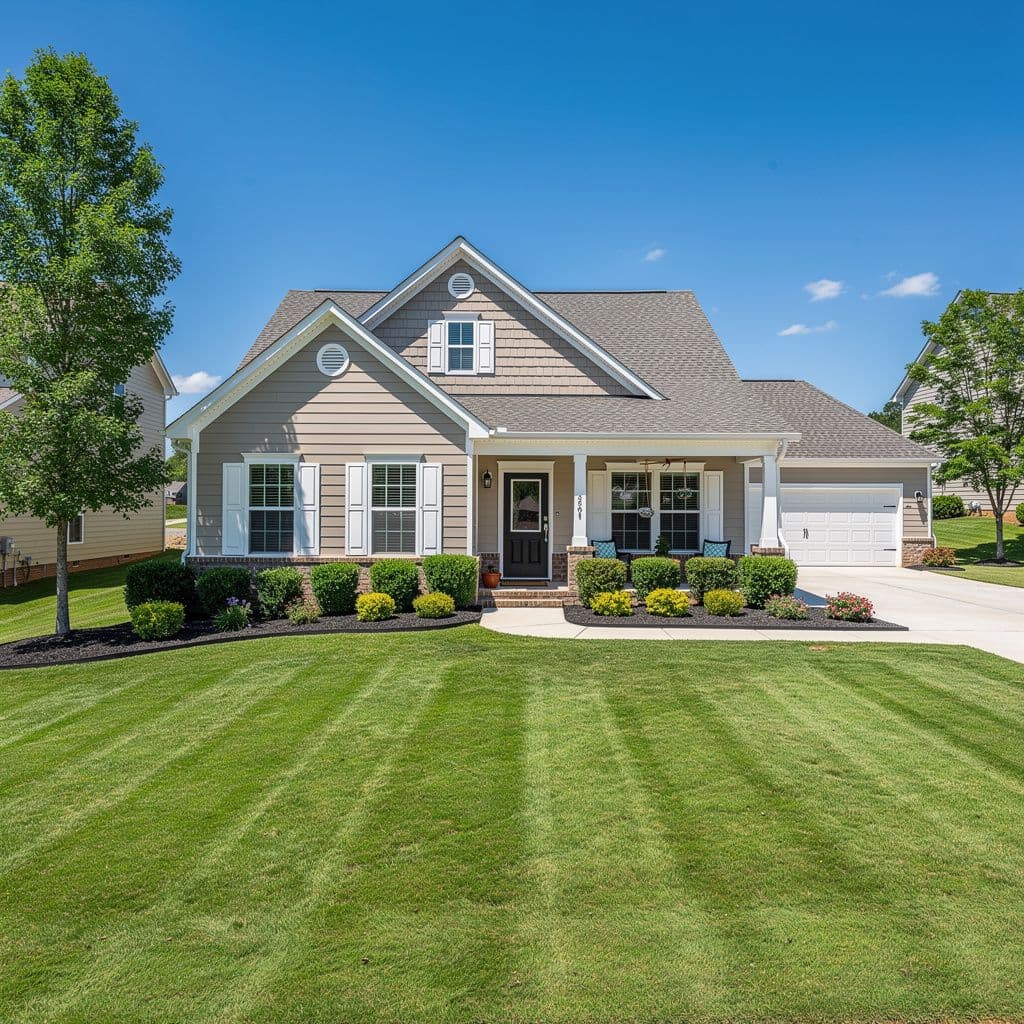
HOA Lawn Care Compliance in Henry County: The Complete Guide to Avoiding Fines and Keeping Your Yard Looking Great
Published: July 17, 2026
If you live in a neighborhood with a Homeowners Association in Henry County, you already know the drill. The letter arrives in your mailbox — usually with a photo of your yard attached and a deadline to fix the problem. Your grass is too tall. Your weeds are out of control. Your hedges need trimming. That flower bed by the mailbox is looking rough. Fix it within fourteen days, or face a fine.
HOA lawn care compliance is one of the most stressful parts of homeownership in Locust Grove, McDonough, Stockbridge, Hampton, and Jonesboro. Georgia's fast grass growth during spring and summer means your lawn can go from compliant to violating in the space of a single week. Add in Henry County's notorious red clay soil, relentless weed pressure, and summer heat stress, and staying on top of HOA requirements becomes a full-time job — one that most busy homeowners simply don't have time for.
At Hedgecoth Property Solutions, we've spent years helping Henry County homeowners navigate HOA landscaping requirements while building healthy, beautiful lawns that make their properties the envy of the neighborhood. This guide breaks down everything you need to know about HOA lawn care compliance in Henry County — from understanding your neighborhood's specific rules to building a maintenance plan that keeps you on the right side of the HOA board all year long.
Understanding HOA Lawn Care Rules in Henry County
Every HOA in Henry County has its own set of covenants, conditions, and restrictions (CC&Rs) that govern how your property must be maintained. While the specifics vary from neighborhood to neighborhood, most HOA lawn care rules cover the same core areas.
Common HOA Lawn Care Requirements
Grass Height Limits
The most frequent violation in Henry County HOAs is grass height. Most associations require lawns to be maintained below a specific height — typically 4 to 6 inches for most warm-season grasses common in Georgia. Some stricter neighborhoods have a 3-inch maximum during the active growing season. Given that Bermuda grass in July can grow an inch or more per week with adequate rainfall, missing even one mowing can push you over the limit.
Weed Control Standards
Nearly every Henry County HOA requires lawns to be "reasonably free of weeds." This typically means no visible broadleaf weeds like dandelions, clover, or dollarweed in the front lawn, and no crabgrass taking over large patches. Some associations are more lenient, while others — particularly newer upscale developments in McDonough and Locust Grove — have zero tolerance for visible weeds.
Shrub and Hedge Maintenance
Landscaping beds in the front yard must be maintained. This means shrubs trimmed to a uniform shape, hedges kept below window height (usually 6 feet), and no dead or dying plants visible from the street. Many HOAs also require mulch or pine straw to be refreshed annually.
Tree Maintenance
Dead trees must be removed. Low-hanging branches over sidewalks or streets typically need to be cleared to a height of 7-8 feet. Some HOAs require street trees to be maintained in specific species and sizes.
Driveway and Walkway Edging
Most Henry County HOAs require clean, defined edges along driveways and walkways. Overgrown grass creeping onto concrete surfaces is a common citation.
Mailbox Area Maintenance
The area around your mailbox — often the first thing an HOA inspector sees — must be neat and weed-free. Many neighborhoods have specific requirements for plants or mulch around mailbox posts.
How HOA Violations Work in Georgia
In Georgia, HOAs have significant legal authority to enforce their CC&Rs. Here's how the typical violation process works in Henry County:
-
Initial Notice: You'll receive a written notice (often by mail) identifying the specific violation and giving you a deadline to correct it — usually 10 to 21 days.
-
Re-Inspection: After the deadline, the HOA or their management company will re-inspect your property.
-
Fines: If the violation isn't corrected, fines begin. In Henry County, these typically range from $25 to $100 per violation, per day, until the issue is resolved. Some HOAs cap total fines; others don't.
-
Hearing: You have the right to request a hearing before the HOA board before fines are imposed.
-
Lien: In extreme cases, unpaid HOA fines can result in a lien being placed on your property.
The key takeaway: it's far easier — and cheaper — to stay ahead of HOA requirements with consistent lawn care than to deal with violations after they happen.
Henry County Neighborhoods with Strict HOA Requirements
Henry County has experienced explosive residential growth over the past decade, and with that growth has come a proliferation of HOA-managed neighborhoods. Here's what to expect in different parts of the county:
Locust Grove HOA Neighborhoods
Locust Grove has seen some of the fastest residential development in Henry County. Neighborhoods along Bill Gardner Parkway, near Tanger Outlets, and in the Belmont Farms area tend to have active HOAs with detailed landscaping requirements. These neighborhoods often mandate:
- Professional lawn service (not just DIY mowing)
- Approved plant lists for front-yard landscaping
- Specific mailbox designs and surrounding plant requirements
- Seasonal color (annual flowers) in some upscale communities
- No visible irrigation equipment or garden hoses
If you live in one of the newer Locust Grove developments, review your CC&Rs carefully — the property maintenance requirements are often more detailed than homeowners expect.
McDonough HOA Neighborhoods
McDonough has the highest concentration of HOA-managed neighborhoods in Henry County. Communities near J.P. Moseley Park, along Highway 81, and in the East Lake area tend to have particularly active HOA boards. Common compliance issues in McDonough include:
- Grass height exceeding limits during summer growth surges
- Weed pressure from adjacent undeveloped lots
- Drainage issues causing standing water (which can violate mosquito control rules)
- Faded or thin mulch in landscape beds requiring annual refresh
- Trees planted too close to property lines creating disputes
Many McDonough HOAs require quarterly or biannual property inspections, meaning compliance isn't a one-time effort — it's year-round.
Stockbridge HOA Neighborhoods
Stockbridge's mix of established and newer neighborhoods creates a wide range of HOA requirements. Older communities near Eagle's Landing tend to have more traditional rules focused on basic maintenance, while newer developments along Highway 138 may have detailed architectural and landscaping guidelines. Stockbridge HOAs commonly cite:
- Failure to maintain fences and visible property borders
- Vegetable gardens visible from the street (often prohibited)
- Parking on grass or unpaved surfaces
- Unkempt front porch landscaping
Hampton HOA Neighborhoods
Hampton's rapid growth has brought new HOA communities, particularly along Highway 20 and near the Atlanta Motor Speedway area. These newer neighborhoods often have the strictest landscaping requirements because they're trying to maintain a uniform, polished appearance during build-out. If you're in a newer Hampton development, expect:
- Builder-grade landscaping that must be maintained or upgraded within a specific timeframe
- Strict tree preservation rules
- Requirements for professional landscaping installation in front yards
- Seasonal inspections tied to the association's calendar
Jonesboro and Morrow Considerations
While Jonesboro and Morrow have fewer new HOA developments than northern Henry County, the established neighborhoods that do have HOAs tend to be well-organized and consistent with enforcement. Mature trees and older landscapes mean violations often involve:
- Overgrown mature shrubs exceeding height limits
- Tree limbs overhanging sidewalks
- Aging landscape timbers or borders needing replacement
- Thin or patchy lawns in older yards with depleted soil
Building an HOA-Compliant Lawn Care Plan
Staying compliant with your HOA's landscaping requirements doesn't have to be stressful — but it does require a plan. Here's how to build a maintenance schedule that keeps your yard looking great and keeps those violation letters out of your mailbox.
Weekly Maintenance (April–October)
During Georgia's active growing season, your lawn needs weekly attention to stay HOA-compliant:
Professional Mowing
Weekly lawn mowing at the correct height for your grass type is the foundation of HOA compliance. Bermuda should be cut at 1–2 inches, Zoysia at 1.5–2.5 inches, and Centipede at 1.5–2 inches. Consistent weekly mowing prevents the grass from exceeding HOA height limits between cuts.
Edging and Trimming
Every mowing should include edging along driveways, sidewalks, and landscape beds. This is what gives your property that clean, professional appearance that HOA inspectors look for. String trimming around fence lines, trees, and mailbox posts completes the polished look.
Debris Removal
Clippings blown onto sidewalks, driveways, or streets should be cleaned up after every mowing. Many HOAs specifically cite grass clippings on pavement as a violation.
Bi-Weekly Maintenance (Year-Round)
Every two weeks, your property should receive:
Shrub and Hedge Inspection
Check for rapid growth that could exceed HOA height limits. Fast-growing shrubs like Ligustrum, Hollies, and Elaeagnus can add 6–8 inches of growth per month during summer. Trim as needed to maintain shape and compliance.
Weed Patrol
Walk your property and spot-treat any new weeds before they become visible. A single dandelion can go from seed to flower in a week during summer. Staying ahead of weeds is far easier than dealing with an infestation that triggers an HOA notice.
Monthly Maintenance
Landscape Bed Maintenance
Check mulch or pine straw depth — many HOAs require a minimum of 2 inches of coverage. Refresh as needed, particularly after heavy rains that can wash away ground cover. Remove any weeds that have crept into beds.
Tree and Shrub Assessment
Look for dead branches, diseased foliage, or growth that's approaching violation territory. Early intervention prevents the kind of visible problems that trigger HOA inspections.
Quarterly Maintenance
Fertilization and Weed Treatment
Professional lawn treatment applications timed to the season keep your grass healthy and weed-free. A typical program includes:
- Spring pre-emergent to prevent crabgrass and summer weeds
- Late spring fertilization for green-up and growth
- Summer weed control and spot treatment
- Fall pre-emergent for winter annuals
- Winterization to strengthen roots for dormancy
Aeration (Late Spring/Early Summer)
Core aeration relieves soil compaction from Henry County's clay soil, allowing roots to grow deeper and grass to thicken naturally. Thicker grass means fewer weeds, which means fewer HOA violations.
Seasonal Tasks
Spring (March–May): Mulch installation or pine straw refresh. Spring clean-up of leaves and debris. First fertilization and pre-emergent application. Shrub pruning before new growth hardens off.
Summer (June–August): Consistent weekly mowing. Heat-stress monitoring. Insect and disease scouting. Water management during dry spells.
Fall (September–November): Leaf removal — critical for HOA compliance. No neighborhood will tolerate a lawn buried in leaves. Fall fertilization. Pre-emergent for winter weeds.
Winter (December–February): Dormant pruning of trees and shrubs. Winter weed control for annual bluegrass and chickweed. Planning landscape improvements for spring.
The Real Cost of HOA Non-Compliance
Many homeowners underestimate how much HOA violations can cost — both in direct fines and indirect consequences.
Direct Costs
- Typical fines: $25–$100 per day per violation in Henry County
- Common violation resolution cost: $75–$200 for emergency mowing and cleanup
- Re-inspection fees: Some HOAs charge $25–$50 per re-inspection
- Legal fees: If a dispute escalates, attorney fees can reach thousands
A single grass-too-tall violation that takes two weeks to resolve can cost $350–$1,400 in fines alone — more than an entire season of professional lawn care.
Indirect Costs
- Property value impact: HOA violations on record can complicate a home sale
- Time and stress: Dealing with violation notices, hearings, and resolutions consumes your time and energy
- Emergency service premiums: Last-minute lawn care to meet a compliance deadline costs more than scheduled maintenance
- Neighborhood reputation: Consistently non-compliant properties draw negative attention and can affect relationships with neighbors
The Professional Care Advantage
Here's what most Henry County homeowners don't realize: professional lawn care services often cost less per month than a single HOA fine. A typical weekly mowing program runs $40–$70 per visit, while a single violation can cost $200+. Professional service means you never have to worry about compliance — it's handled automatically, on schedule, by people who know exactly what your HOA requires.
Common HOA Landscaping Mistakes Henry County Homeowners Make
Even with the best intentions, certain mistakes tend to trigger HOA violations more than others. Here are the most common ones we see across Henry County:
1. Waiting Too Long Between Mowings
Georgia's warm-season grasses grow explosively from May through September. If you're on a two-week mowing schedule during peak season, your grass is almost certainly exceeding HOA height limits between cuts. Weekly mowing isn't optional in summer — it's mandatory for compliance.
2. Ignoring the Backyard
Many homeowners assume the HOA only cares about the front yard. While front-yard violations are more common, most Henry County HOAs have rules that apply to any yard visible from common areas, streets, or neighboring properties — which often includes side yards and corner-lot backyards.
3. Letting Weeds Go Until They're Visible
By the time you can see weeds from the street, your HOA can see them too. The key to weed compliance is prevention — pre-emergent treatments in spring and fall, regular spot-treatment, and maintaining thick, healthy grass that crowds out weed seeds naturally.
4. Neglecting Landscape Beds
Grass isn't the only thing the HOA inspects. Overgrown landscape beds, weeds growing through mulch, and dead shrubs are all common violations. Beds need attention at least monthly during the growing season.
5. Forgetting About Trees
Overhanging branches, dead limbs, and trees that have grown too tall are frequent citation triggers — especially after summer thunderstorms that can bring down weak limbs. Regular tree trimming keeps your property safe and compliant.
6. Using the Wrong Ground Cover
Some HOAs prohibit certain ground covers. For example, many Henry County associations don't allow gravel or rock as a primary ground cover in front yards, while others prohibit vegetable gardens visible from the street. Always check your CC&Rs before making landscape changes.
Working With a Professional Lawn Care Service for HOA Compliance
For most Henry County homeowners — especially busy professionals, families with children, and retirees — professional lawn care is the simplest and most reliable way to maintain HOA compliance. Here's what to look for and what to expect.
What to Look For in an HOA-Compliant Service
Consistent Weekly Scheduling
Your lawn care provider should commit to a regular weekly schedule during the growing season. Missing a week during summer can mean a violation notice within days.
Complete Service Packages
Look for a provider that offers mowing, edging, trimming, and debris cleanup in one visit. You shouldn't have to coordinate multiple contractors to keep your property compliant.
Knowledge of Local HOA Requirements
A lawn care company that works in your Henry County neighborhood should already know what the local HOAs require. They should be familiar with typical height limits, common violation triggers, and seasonal inspection schedules.
Reliable Communication
If a problem develops — a disease outbreak, an irrigation issue, a sudden weed invasion — your provider should notify you promptly so you can address it before the HOA does.
What Professional HOA-Compliant Care Includes
At Hedgecoth Property Solutions, our comprehensive property maintenance programs for Henry County HOA neighborhoods typically include:
- Weekly mowing at the correct height for your grass type, with crisp edging and cleanup
- Bi-weekly shrub and hedge trimming to maintain shape and height compliance
- Seasonal fertilization and weed control to keep grass thick and weed-free
- Annual mulch or pine straw installation to keep landscape beds looking fresh
- Leaf removal in fall and winter to prevent smothering grass
- Tree trimming as needed to maintain clearance and remove hazards
- Property inspections before HOA sweep dates (we track many neighborhoods' inspection schedules)
The Cost of Professional HOA-Compliant Care
Professional lawn care for HOA properties in Henry County typically costs:
- Weekly mowing (front and back yard): $45–$80 per visit depending on lot size
- Full-service annual program (mowing + treatments + seasonal cleanup): $150–$300 per month
- One-time cleanup for violation remediation: $150–$500 depending on scope
Compare these costs to a single HOA fine of $200–$1,400, and the math is clear. Professional care pays for itself by preventing even one violation.
Tips for Henry County HOA Homeowners
Know Your CC&Rs
Read your HOA's landscaping rules thoroughly. Every neighborhood is different. Keep a copy of the specific requirements — grass height limits, approved plant lists, mulch requirements — so you can reference them easily.
Drive Your Street Weekly
Take a quick walk or drive around your block once a week. If your yard looks worse than your neighbors', an HOA inspector will notice. This quick check helps you catch problems early.
Address Violations Immediately
If you receive a violation notice, don't wait. Call a professional lawn care service right away to correct the issue before the deadline. Document the correction with photos and dates.
Communicate With Your HOA Board
If you're dealing with a legitimate issue — a sick tree, an irrigation repair, a landscaping project in progress — let your HOA know. Most boards will grant extensions for homeowners who communicate proactively.
Invest in Prevention
The most cost-effective approach to HOA compliance is preventing violations before they happen. A healthy, well-maintained lawn naturally resists weeds, withstands heat stress, and looks great year-round. That requires consistent professional care — not emergency interventions.
Frequently Asked Questions
How tall can my grass be before my HOA can fine me in Henry County?
Most Henry County HOAs require grass to be maintained below 4–6 inches during the growing season. Some stricter neighborhoods have a 3-inch maximum. Check your specific CC&Rs for exact limits. During peak summer growth, Bermuda and Zoysia grasses can grow 1–2 inches per week, so weekly mowing is essential to stay compliant.
Can my HOA force me to hire a professional lawn care service?
While most Henry County HOAs don't explicitly require professional service, they do require your lawn to meet maintenance standards regardless of who does the work. If you struggle to keep up with mowing, weed control, and landscape maintenance on your own, a professional service is the most reliable way to avoid violations and fines.
What happens if I don't fix an HOA lawn care violation?
In Georgia, HOAs can levy daily fines (typically $25–$100 per day), place a lien on your property for unpaid fines, and in extreme cases pursue legal action. Most Henry County HOAs give 10–21 days to correct a violation before fines begin. Addressing the issue promptly is always the cheapest and least stressful option.
Does my HOA care about my backyard or just the front yard?
Most Henry County HOAs have rules that apply to any part of your property visible from the street, common areas, or neighboring properties. This often includes side yards and, on corner lots, portions of the backyard. Some HOAs do inspect backyards if they're visible through fences or from adjacent streets.
How often should I refresh mulch or pine straw to stay HOA-compliant?
Most Henry County HOAs require landscape beds to have adequate ground cover — typically 2–3 inches of mulch or fresh pine straw. In Georgia's climate, mulch typically needs refreshing once per year (spring is ideal), while pine straw may need refreshing twice annually due to faster decomposition. Faded or thin ground cover is a common HOA citation.
Can Hedgecoth Property Solutions help me fix an existing HOA violation?
Yes. We provide emergency cleanup and remediation services for Henry County homeowners who have received HOA violation notices. We can quickly bring your property into compliance, document the correction, and set up ongoing maintenance to prevent future violations. Call us at 770-490-9519 for fast service.
Don't let HOA violation letters ruin your week. Hedgecoth Property Solutions provides reliable, professional lawn care and property maintenance tailored to Henry County's HOA neighborhoods. From weekly mowing to complete landscape management, we'll keep your yard compliant, healthy, and beautiful — all year long.
Call 770-490-9519 or contact us online to schedule your free property assessment today.