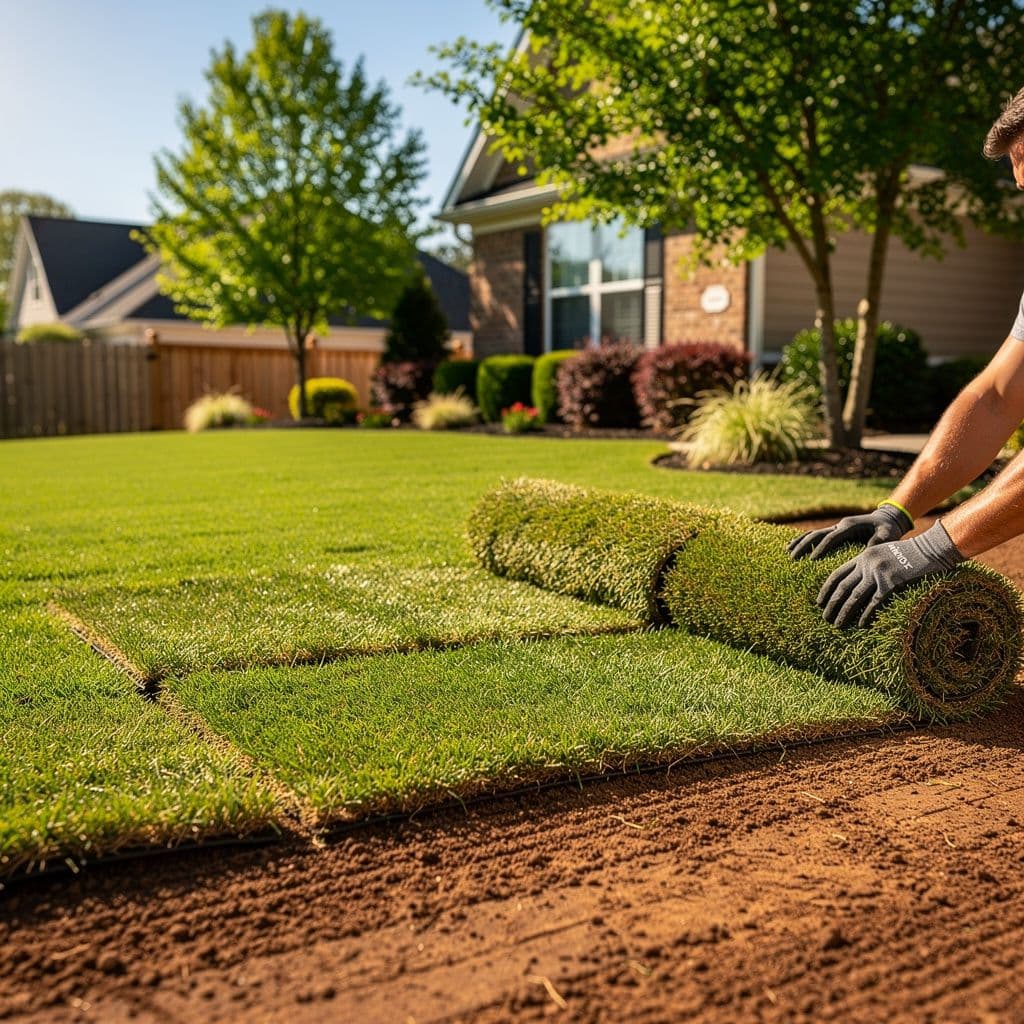
Sod Installation in Henry County, GA: Everything You Need to Know Before Replacing Your Lawn
Published: May 15, 2026
If your lawn is more weeds than grass, if bare patches keep spreading, or if you've tried everything and your yard still won't grow — you're not alone. Georgia's heavy clay soil, relentless summer heat, and unpredictable rainfall make growing a healthy lawn from seed a real challenge in Henry County.
For homeowners in Locust Grove, McDonough, Stockbridge, Jonesboro, and surrounding areas, sod installation is often the fastest, most reliable way to get the lawn you actually want. Not next year. Not after three seasons of trial and error. Now.
But sod installation isn't as simple as unrolling grass carpet and watering it. Done wrong, you'll waste thousands of dollars on sod that dies within weeks. Done right, you'll have a thick, green lawn that establishes quickly and lasts for years.
This guide covers everything Henry County homeowners need to know about sod installation — from choosing the right grass and timing your project to understanding costs and deciding between DIY and professional installation.
Why Your Lawn Won't Grow in Henry County
Before jumping into sod installation, it helps to understand why so many lawns in our area struggle in the first place. If you've been fighting a losing battle with your yard, there's probably a reason — and knowing that reason is the first step toward a permanent solution.
Georgia Clay Soil: The Double-Edged Sword
Henry County sits on some of the densest clay soil in Georgia. Clay holds nutrients well, but it also:
- Compacts easily, preventing roots from penetrating deep enough to survive drought
- Drains poorly, causing standing water that rots grass roots and promotes disease
- Hardens like concrete during dry spells, making it nearly impossible for seed to establish
If your lawn has areas where water pools after rain or where the ground feels rock-hard in summer, clay compaction is likely your primary enemy. Proper soil preparation before sod installation addresses these issues directly — which is why preparation matters more than the sod itself.
Common Lawn Failures in Our Area
Disease and Fungus
Georgia's humidity creates perfect conditions for brown patch, dollar spot, and other fungal diseases that can decimate a lawn in days. Once disease takes hold in an established lawn, it's extremely difficult to eradicate completely without starting over.
Weed Takeover
When grass thins from disease, drought, or poor soil, weeds move in fast. Bermuda grass lawns get invaded by crabgrass and dallisgrass. Zoysia lawns struggle with nutsedge. Once weeds comprise more than 40-50% of your lawn, renovation is usually more cost-effective than treatment.
Improper Grass Selection
Many Henry County lawns were planted with grass types that don't suit our climate or the property's specific conditions. Tall fescue in full sun, Bermuda in deep shade, or St. Augustine in areas with poor drainage — wrong grass in the wrong place will always struggle.
Construction Damage
Newer subdivisions in Locust Grove, McDonough, and Stockbridge often have lawns that were never properly established during construction. Topsoil was stripped, compacted, and covered with minimal grass — setting up decades of frustration for homeowners.
When to Repair vs. When to Replace
Your lawn can likely be repaired if:
- Grass covers more than 60% of the area
- Problems are limited to one or two specific areas
- The existing grass type is appropriate for the conditions
- Issues appeared recently and have a clear cause (drought, disease outbreak)
In this case, professional lawn care including aeration, overseeding, fertilization, and targeted treatments can restore your lawn over one to two growing seasons.
You should consider sod installation if:
- Weeds or bare spots cover more than 40% of the lawn
- The wrong grass type was originally planted
- Disease has damaged the root system extensively
- Construction or grading issues need to be corrected
- You need results immediately (selling the home, event, etc.)
Sod installation isn't giving up — it's starting fresh with the right foundation.
Choosing the Right Grass for Henry County
Not all sod is created equal. The grass type you choose will determine how your lawn looks, how much maintenance it requires, and how well it handles our local conditions.
Warm-Season Grasses (Recommended)
Warm-season grasses thrive in Henry County's hot summers and go dormant (turn brown) in winter. They're the standard for our area because they're built for Georgia heat.
Bermuda Grass
- Best for: Full sun areas, high-traffic yards, athletic, manicured look
- Texture: Medium to fine
- Sun requirement: 6+ hours of direct sun daily
- Drought tolerance: Excellent
- Wear tolerance: Excellent
- Maintenance level: Moderate to high
- Dormant season: November through March (brown)
- Ideal for: Families with kids and pets, properties in full sun, homeowners who want that classic green lawn
Bermuda is the most popular choice in Henry County for good reason. It establishes quickly, handles foot traffic, and looks great with proper lawn care. The trade-off is it needs full sun — Bermuda in shade will thin out and eventually fail.
Zoysia Grass
- Best for: Sun to partial shade, lower-maintenance lawns, premium appearance
- Texture: Fine to medium (varies by variety)
- Sun requirement: 4-6+ hours (more shade-tolerant than Bermuda)
- Drought tolerance: Very good
- Wear tolerance: Good
- Maintenance level: Low to moderate
- Dormant season: November through March (brown)
- Ideal for: Homeowners wanting a beautiful lawn with less maintenance, properties with some shade
Zoysia is gaining popularity in Locust Grove and McDonough because it tolerates shade better than Bermuda, requires less mowing, and develops a thick carpet that naturally resists weeds. It establishes slower than Bermuda but rewards patience with a dense, luxurious lawn.
Centipede Grass
- Best for: Low-maintenance, acidic soil, minimal fertilizer needs
- Texture: Medium, coarse
- Sun requirement: 6+ hours (some shade tolerance)
- Drought tolerance: Moderate
- Wear tolerance: Low
- Maintenance level: Very low
- Dormant season: November through March
- Ideal for: Homeowners who want a decent lawn with minimal effort
Centipede is the "lazy person's grass" — and that's not an insult. It thrives in Henry County's acidic clay soil without lime or heavy fertilization. It doesn't handle heavy traffic well and isn't as visually striking as Bermuda or Zoysia, but for a low-effort, acceptable lawn, it's hard to beat.
Cool-Season Grasses (Limited Use)
Tall Fescue
- Best for: Heavily shaded areas, North-facing slopes
- Challenge in Henry County: Summer heat stress, disease pressure
- When to use: Only in deep shade where warm-season grasses fail
Tall fescue stays green year-round, which makes it appealing. But in Henry County's summer heat and humidity, it requires significant irrigation and disease management to survive. We generally recommend it only for shaded areas where Bermuda and Zoysia can't get enough sun.
Which Grass Should You Choose?
| Factor | Bermuda | Zoysia | Centipede |
|--------|---------|--------|-----------|
| Full sun | ⭐⭐⭐ | ⭐⭐⭐ | ⭐⭐⭐ |
| Partial shade | ⭐ | ⭐⭐⭐ | ⭐⭐ |
| Low maintenance | ⭐⭐ | ⭐⭐⭐ | ⭐⭐⭐ |
| High traffic | ⭐⭐⭐ | ⭐⭐ | ⭐ |
| Quick establishment | ⭐⭐⭐ | ⭐⭐ | ⭐⭐ |
| Premium appearance | ⭐⭐⭐ | ⭐⭐⭐ | ⭐⭐ |
| Drought tolerance | ⭐⭐⭐ | ⭐⭐⭐ | ⭐⭐ |
| Clay soil adaptation | ⭐⭐⭐ | ⭐⭐⭐ | ⭐⭐⭐ |
Our recommendation for most Henry County homeowners: Bermuda for full-sun properties, Zoysia for properties with mixed sun and shade. Both thrive in our area and deliver excellent results with proper property maintenance.
When to Install Sod in Henry County
Timing is critical for sod installation. Lay sod at the wrong time and you're fighting an uphill battle. Lay it at the right time and it establishes quickly with minimal problems.
The Best Windows
For Warm-Season Grasses (Bermuda, Zoysia, Centipede):
Primary Window: Mid-April through August
- Soil is warm enough for rapid root growth
- Long growing season ahead for establishment
- Grass is actively growing and recovers quickly from transplant
- Ideal timing: May through June for fastest establishment
Secondary Window: September through early October
- Soil is still warm from summer
- Less heat stress on new sod
- Shorter establishment period before dormancy
- Higher risk if early freeze arrives
Avoid: November through March
- Warm-season grasses are dormant or near-dormant
- Roots won't establish before winter
- Freeze risk can kill unestablished sod
- Sod may survive but establishment takes until the following summer
Right now (mid-May) is prime time for sod installation in Henry County. The soil is warm, grass is growing vigorously, and you have four full months of growing season ahead. If you've been thinking about replacing your lawn, this is the window.
Factors That Affect Timing
Weather Patterns
- Extended dry periods require more irrigation during establishment
- Heavy rain can make soil preparation difficult
- Ideal conditions: warm temperatures with regular rainfall
Property-Specific Factors
- Shaded properties may benefit from slightly later installation (June-July) when days are longest
- Properties near Noah's Ark Animal Sanctuary or other low-lying areas in Locust Grove may need drainage correction before sod installation
- New construction should allow 2-3 months for soil settling before sod
Sod Availability
- Bermuda and Zoysia sod farms in middle Georgia harvest April through October
- Peak demand in May-June can affect availability
- Order early for best selection and scheduling
The Sod Installation Process: Step by Step
Understanding the installation process helps you evaluate quotes, whether you're considering DIY or hiring a professional like Hedgecoth Property Solutions.
Step 1: Soil Testing and Analysis
Before anything else, test your soil. This determines:
- pH level (target: 6.0-6.5 for Bermuda/Zoysia, 5.0-5.5 for Centipede)
- Nutrient deficiencies
- Organic matter content
- Whether amendments are needed
Cost: $50-100 for a professional soil test
Why it matters: Installing sod on untested soil is like building a house without checking the foundation. Henry County clay often needs specific amendments before sod will thrive.
Step 2: Site Preparation (The Most Important Step)
This is where DIY installations most commonly fail. Proper preparation takes time and effort, but it determines whether your sod lives or dies.
Kill Existing Vegetation
- Apply non-selective herbicide to kill all grass and weeds
- Wait 7-14 days for complete kill
- May require a second application for stubborn weeds like Bermuda or nutsedge
Remove Debris
- Clear dead grass, weeds, rocks, roots, and construction debris
- Grade should be 1 inch below sidewalks, driveways, and patios (to account for sod thickness)
- Address any drainage issues at this stage
Soil Amendment
- Spread 2-3 inches of quality topsoil or compost over the area
- Till into existing soil to a depth of 4-6 inches
- This breaks up clay compaction and improves drainage
- Add lime or sulfur based on soil test results
Grading and Leveling
- Establish proper grade (minimum 1% slope away from structures for drainage)
- Fill low spots that would collect water
- Create smooth, even surface
- Lightly compact soil (not too much — you want it firm but not hard)
Apply Starter Fertilizer
- Spread starter fertilizer (high phosphorus) at recommended rate
- Rake lightly into soil surface
- This gives new roots immediate access to nutrients
Step 3: Sod Delivery and Installation
Sod Freshness Matters
- Sod should be installed within 24-48 hours of harvest
- In hot weather (above 80°F), install within 24 hours
- Sod left on pallets heats up and begins decomposing — once it smells like compost, it's too late
Installation Technique
- Start along a straight edge (sidewalk, driveway, or string line)
- Lay sod pieces tightly together, staggering joints like brickwork
- Avoid stretching sod — it shrinks as it dries, creating gaps
- Cut pieces to fit around curves, trees, and obstacles
- Do not overlap pieces (causes rotting)
- Roll the installed sod to ensure soil contact
Watering Immediately
- Begin watering within 30 minutes of installation
- First watering should saturate sod and soil beneath to a depth of 6 inches
- This is non-negotiable — delayed watering kills sod
Step 4: Post-Installation Care (Weeks 1-4)
Week 1: Critical Establishment
- Water 2-3 times daily (morning, midday, late afternoon)
- Keep sod and soil consistently moist but not flooded
- Stay off the lawn entirely — no foot traffic
- Check for drying edges or gaps
Week 2: Root Development
- Water 1-2 times daily
- Begin reducing frequency, increasing duration
- Light foot traffic is acceptable
- Roots should begin grabbing soil (lift a corner gently to check)
Week 3: Transition
- Water once daily, then every other day
- Begin mowing when grass reaches 1/3 taller than desired height
- Sharpen mower blade — dull blades tear new roots out of soil
Week 4: Establishment
- Water 2-3 times per week deeply
- Normal mowing schedule can begin
- Light fertilization if needed
- New sod should be anchored and growing
Sod Installation Costs in Henry County
Understanding costs helps you budget realistically and evaluate quotes.
Sod Material Costs (Per Pallet)
One pallet covers approximately 450-500 square feet.
| Grass Type | Cost per Pallet | Cost per 1,000 sq ft | Cost per 5,000 sq ft Lawn |
|------------|----------------|---------------------|--------------------------|
| Bermuda | $150-250 | $330-550 | $1,650-2,750 |
| Zoysia | $250-400 | $550-880 | $2,750-4,400 |
| Centipede | $180-280 | $400-620 | $2,000-3,100 |
Professional Installation Costs
| Service | Cost Range | Notes |
|---------|-----------|-------|
| Site prep only | $500-1,500 | Kill, remove, amend, grade |
| Sod installation only (you buy sod) | $0.30-0.60/sq ft | Layout, rolling, initial watering |
| Complete installation (prep + sod + install) | $0.80-1.75/sq ft | Full service, turnkey |
| 5,000 sq ft complete | $4,000-8,750 | Typical medium-sized lawn |
| 10,000 sq ft complete | $8,000-17,500 | Larger residential lawn |
What Affects Your Final Cost
Property Size: Larger areas cost more in materials but may have a lower per-square-foot rate.
Site Condition: Lawns requiring extensive debris removal, grading correction, or drainage work will cost more in preparation.
Accessibility: Backyards accessible only through gates, properties on steep slopes, or areas requiring hand-carrying sod increase labor costs.
Grass Selection: Zoysia costs 40-60% more than Bermuda in material costs alone.
Soil Amendment Needs: Properties requiring significant topsoil or compost additions will see higher preparation costs.
Time of Year: Peak season (May-June) may have slightly higher prices due to demand.
DIY vs. Professional Sod Installation
Many homeowners consider installing sod themselves to save money. Here's an honest comparison.
DIY Sod Installation
What You'll Save: $0.30-0.60/sq ft in labor costs ($1,500-3,000 for a 5,000 sq ft lawn)
What You'll Need:
- Sod cutter rental: $75-150/day
- Rototiller rental: $50-100/day
- Wheelbarrow, rakes, sod knife, hose, sprinklers
- Herbicide, starter fertilizer, soil amendments
- Access to a truck or delivery for sod pickup
- Help (sod pallets weigh 1,500-2,000 lbs each — you can't do this alone)
What Can Go Wrong:
- Improper soil preparation leads to poor establishment
- Sod sits too long on pallets and dies before installation
- Gaps between pieces create weed problems
- Uneven grading causes drainage issues
- Underwatering in the first week kills entire sections
- Overwatering causes root rot and disease
The Reality: DIY sod installation has a significantly higher failure rate than professional installation. The money saved on labor is often spent replacing dead sod — sometimes the entire project.
Professional Installation
What You Pay For:
- Expert soil assessment and preparation
- Proper equipment and technique
- Fresh sod sourced and delivered on schedule
- Experienced crew working efficiently
- Establishment guarantee (quality companies)
- Knowledge of local conditions and common pitfalls
The Value: Professional installation costs more upfront but has a much higher success rate. When you factor in the cost of failed DIY attempts, professional installation is often cheaper overall.
What to Look for in a Sod Installation Company:
- Local experience (Henry County soil and conditions)
- Willingness to perform soil testing
- Clear, detailed quotes with preparation scope defined
- References from local installations
- Establishment guarantee or warranty
- Comprehensive service (prep through establishment period)
Maintaining Your New Sod Lawn
The first year after installation is critical. Here's what your new lawn needs to thrive long-term.
Year One Care Schedule
Months 1-2 (Establishment)
- Follow the watering schedule from the installation section
- Begin mowing at proper height (1-1.5" Bermuda, 1-2" Zoysia)
- No herbicides — new sod is too tender
- Light fertilization at week 6-8
Months 3-6 (Growth Phase)
- Transition to regular watering (1-1.5" per week)
- Normal mowing schedule
- First weed control application (if needed, by a professional)
- Begin regular lawn care program
Months 7-12 (Maturation)
- Full lawn fertilization program
- Regular mowing and maintenance
- Fall pre-emergent application
- Monitor for disease and treat promptly
Long-Term Maintenance
After the first year, your sod lawn requires the same care as any established lawn:
- Regular mowing at proper height
- Seasonal fertilization program
- Weed prevention and control
- Annual aeration (especially important for clay soil)
- Disease and pest monitoring
- Proper irrigation
A well-installed, properly maintained sod lawn will last decades. The investment pays for itself in curb appeal, property value, and enjoyment.
FAQ: Sod Installation in Henry County, GA
How long does it take for new sod to root?
Most warm-season sod (Bermuda, Zoysia) begins rooting within 7-14 days. Full establishment typically takes 4-6 weeks during the growing season. You can test by gently lifting a corner of the sod — if it resists, roots are grabbing the soil. Avoid pulling hard, as this can damage new roots.
When is the best time to install sod in Henry County?
Mid-April through August is ideal for warm-season grasses. May and June offer the best combination of warm soil, active growth, and a long establishment period before winter. Avoid installing warm-season sod between November and March when grass is dormant.
How much does sod installation cost for a typical Henry County lawn?
For a 5,000 square foot lawn, complete professional installation (site preparation, sod, and installation) typically costs $4,000-8,750 depending on grass type, site conditions, and soil preparation needs. Bermuda is the most affordable option; Zoysia costs 40-60% more in materials.
Can I install sod over my existing lawn?
No. Installing sod over existing grass virtually guarantees failure. The old grass creates a barrier that prevents the new sod's roots from reaching the soil. Proper installation requires killing existing vegetation, preparing the soil, and laying sod on a clean, amended surface.
How often should I water new sod?
During the first week, water 2-3 times daily to keep the sod and soil consistently moist. Week two, reduce to 1-2 times daily. By weeks three and four, transition to deeper, less frequent watering (every other day, then 2-3 times per week). The goal is keeping the root zone moist without flooding.
Do I need to have my soil tested before sod installation?
Yes, absolutely. Soil testing ($50-100) reveals pH levels, nutrient deficiencies, and organic matter content that directly affect sod establishment. Henry County clay soil often requires specific amendments before sod will thrive. Skipping this step is one of the most common causes of sod failure.
How soon can I walk on new sod?
Stay off new sod entirely for the first two weeks. Light foot traffic is acceptable in weeks 2-3. Normal use can resume after 4-6 weeks when the sod is firmly rooted. Heavy activity (kids playing, parties, pets running) should wait until the lawn is fully established at 6-8 weeks.
What's the difference between sod and seed?
Sod provides an instant lawn — it's mature grass with a developed root system that establishes quickly. Seed takes 6-12 months to fill in and is highly vulnerable to erosion, weeds, and weather during establishment. In Henry County, sod has a much higher success rate due to our clay soil, heat, and weed pressure.
Ready for a Lawn You'll Love?
If you're tired of fighting a lawn that won't grow, sod installation is the fastest path to the yard you deserve. Hedgecoth Property Solutions provides professional sod installation for homeowners throughout Henry County, from site preparation through establishment.
Our Sod Installation Services Include:
- Soil testing and analysis — we start with the science
- Complete site preparation — proper kill, removal, amendment, and grading
- Premium sod sourced from Georgia growers — fresh, high-quality, delivered on schedule
- Professional installation — correct technique, tight joints, proper rolling
- Establishment guidance — watering schedule, mowing timeline, care instructions
- Follow-up lawn care programs — keep your investment looking great for years
Why Henry County Trusts Us
We've been helping homeowners in Locust Grove, McDonough, Stockbridge, Jonesboro, and throughout Henry County transform their properties. We understand the local soil, the climate, and the challenges — because we live here too.
From sod installation to ongoing landscaping and lawn care, we're your single source for a property that looks its best year-round.
Get Your Free Sod Installation Estimate
📞 Call: 770-490-9519
🌐 Web: hedgecoth.pro/contact
📍 Serving: Locust Grove, McDonough, Stockbridge, Jonesboro, Morrow & Henry County
Free estimates. No pressure. Just honest answers about your lawn.
Hedgecoth Property Solutions — Professional Sod Installation & Lawn Care for Henry County Homeowners