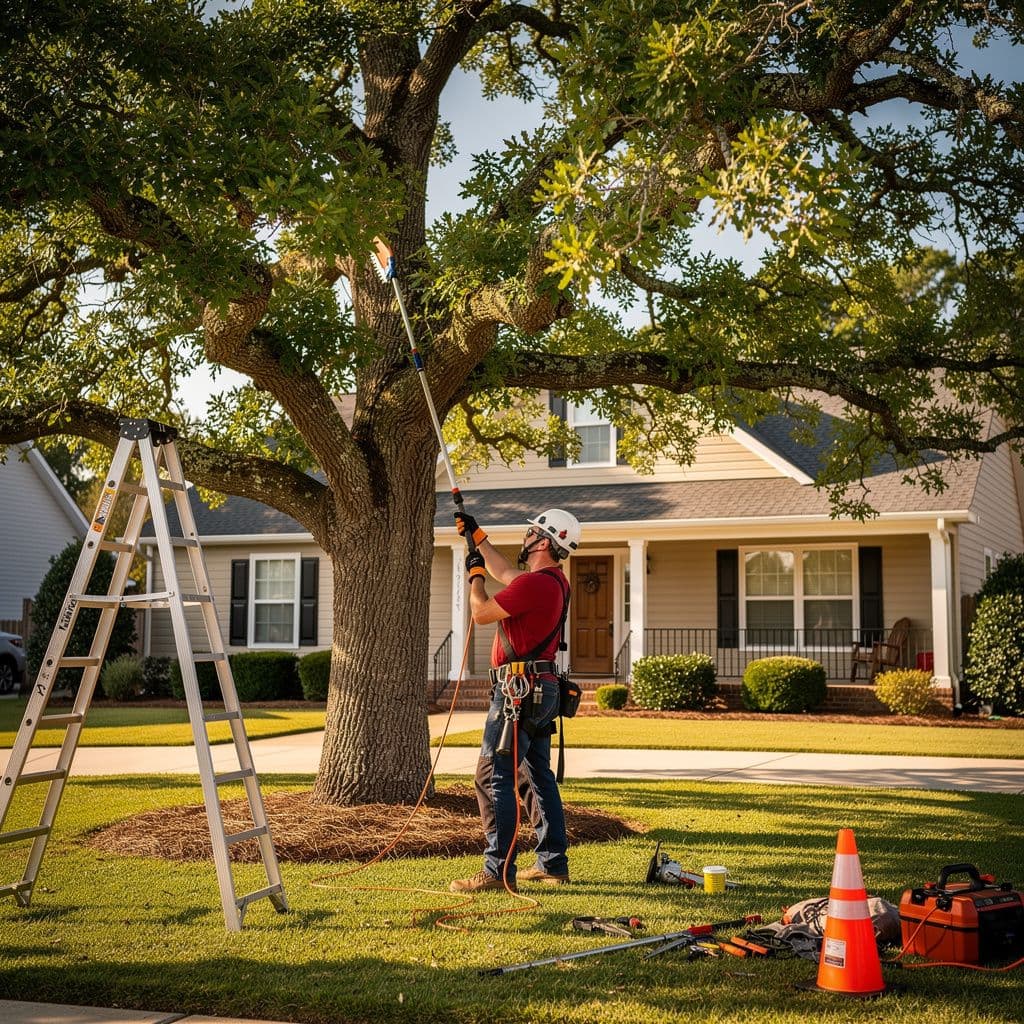
Professional Tree Trimming Services in Henry County, GA: Why Your Trees Need Expert Care
Published: May 22, 2026
If you live in Henry County, you know trees are part of the landscape — literally. From the mature oaks lining the streets near downtown Locust Grove to the pines and hardwoods scattered through McDonough and Stockbridge subdivisions, trees add shade, beauty, and value to your property. But here's what most homeowners don't realize: neglected trees are a liability, not an asset.
Dead limbs crash during summer thunderstorms. Overgrown branches scrape your roof and siding. Trees growing too close to power lines create fire hazards. And thick, unmanaged canopies block sunlight from reaching your lawn, killing the grass underneath.
Professional tree trimming isn't just about making your yard look neat. It's about protecting your home, your family, and your investment. This guide covers everything Henry County homeowners need to know about tree trimming — when to do it, what it involves, what it costs, and why hiring a professional matters.
Why Tree Trimming Matters in Henry County
Henry County's climate creates specific challenges for tree care. Our long, hot summers and frequent afternoon thunderstorms put stress on trees — especially mature hardwoods that haven't been maintained. Add in the heavy clay soil that dominates the area, and you've got trees that need regular attention.
Here's what happens when trees go untrimmed in Locust Grove, McDonough, and surrounding areas:
Storm damage risk increases dramatically. Henry County averages 45-55 thunderstorm days per year. Dead, weak, or overextended branches are the first things to break — and they land on roofs, cars, fences, and power lines. A single storm can cause thousands of dollars in damage that a $300 trimming job would have prevented.
Tree health declines. Dense canopies trap moisture and block airflow, creating ideal conditions for fungal diseases and insect infestations. Oak wilt, pine beetle damage, and root rot are all common in unmanaged trees throughout Henry County.
Your lawn suffers. Trees with thick, unmanaged canopies block rain and sunlight from reaching the grass below. If you've got bare patches under your trees no matter how much you fertilize or water, overgrown branches are likely the culprit. Our lawn care team sees this issue constantly.
Property values drop. Overgrown, unhealthy trees make a property look neglected. Whether you're planning to sell or just want to maintain your home's value, well-maintained trees signal that the entire property has been cared for.
When Do Your Trees Need Trimming?
Most Henry County homeowners wait until there's a problem — a broken branch, a near-miss with the roof, or a neighbor's complaint. But proactive trimming is always cheaper and safer than reactive emergency work. Here are the signs it's time to call a professional:
Visible Warning Signs
- Dead or hanging branches — These can fall at any time, especially during wind or ice storms
- Branches touching your roof, siding, or fence — Constant rubbing damages building materials and creates entry points for pests and water
- Limbs growing into power lines — Never attempt to trim near power lines yourself; this requires professional expertise
- Crossing or rubbing branches — These create wounds that invite disease and decay
- Excessive density — If you can't see sky through the canopy, wind can't flow through it either, increasing storm damage risk
- Leaning trunk or heaving soil — May indicate structural problems that need immediate assessment
Seasonal Timing for Tree Trimming in Georgia
Winter (December–February): The ideal time for most tree trimming in Henry County. Trees are dormant, which means less stress, less sap bleeding, and easier cleanup. Without leaves, arborists can clearly see the branch structure and identify problems. Winter pruning also reduces the spread of diseases like oak wilt.
Spring (March–May): Acceptable for most species, but avoid pruning spring-flowering trees until after they bloom. This is also when new growth begins, so trimming stimulates the tree's natural healing response.
Summer (June–August): Best reserved for corrective pruning, removing dead or damaged limbs after storms, and managing growth that's interfering with structures. Avoid heavy pruning during extreme heat.
Fall (September–November): Generally acceptable, though you want to complete major trimming before the first frost. Avoid pruning oaks in spring and fall to reduce oak wilt risk in Georgia.
What Professional Tree Trimming Actually Involves
There's a big difference between someone showing up with a chainsaw and a professional tree trimming service. Here's what proper tree care includes:
Crown Thinning
Selective removal of branches throughout the canopy to improve light penetration and air flow. This is the most common type of trimming for mature shade trees in Henry County. Thinning reduces wind resistance (lowering storm damage risk) while maintaining the tree's natural shape.
Crown Raising
Removing lower branches to provide clearance for buildings, vehicles, pedestrians, and lines of sight. If you can't walk under your trees or your garbage truck can't access your bins, crown raising solves the problem.
Crown Reduction
Decreasing the overall size of the tree's canopy — not the same as "topping" (which destroys trees). Proper crown reduction reduces height and spread while maintaining the tree's structural integrity and natural appearance.
Deadwood Removal
Cutting out dead, dying, or diseased branches. This is essential safety maintenance and should be performed annually on mature trees near homes, driveways, and play areas.
Clearance Pruning
Trimming branches away from structures, power lines, and other trees. If branches are touching your roof or growing under your siding, clearance pruning prevents costly damage.
DIY Tree Trimming vs. Hiring a Professional
We get it — tree trimming looks simple from the ground. Grab a ladder and a saw, cut some branches, done. But tree trimming is genuinely one of the most dangerous DIY tasks a homeowner can attempt. Here's the reality:
The Risks of DIY Tree Trimming
Falls are the number one danger. Working at height with sharp tools is inherently risky. Emergency rooms treat over 100,000 ladder-related injuries annually in the U.S., and tree work is one of the most common causes.
Improper cuts damage trees permanently. Cutting branches flush to the trunk, leaving stubs, or making ragged tears creates wounds that don't heal properly. These wounds become entry points for decay, insects, and disease. A poorly pruned tree can die within a few years.
You can't see the whole picture from the ground. Professional arborists assess the entire tree — root health, trunk integrity, branch structure, canopy density — before making a single cut. From a ladder, you're guessing.
Property damage is expensive. A branch that falls the wrong direction can crush a roof, smash a car, or take down a power line. Professionals use rigging, ropes, and controlled lowering techniques to prevent this.
Liability is real. If a branch you trim falls on a neighbor's property or a public sidewalk, you can be held liable for damages. Professional tree services carry insurance that covers this.
When DIY Is Okay
- Small branches you can reach while standing on the ground
- Limbs under 2 inches in diameter
- Suckers and water sprouts at the base of the tree
- Light hedge and shrub trimming
For anything above shoulder height, anything thicker than 2 inches, or anything near structures and power lines — call a professional. Our property maintenance team at Hedgecoth Property Solutions has the equipment, training, and insurance to handle tree work safely.
Tree Trimming Costs in Henry County, GA
Cost is one of the most common questions we get. Here's a straightforward breakdown of what to expect for tree trimming in Locust Grove, McDonough, Stockbridge, and throughout Henry County:
Factors That Affect Cost
- Tree size — Larger trees require more time, more crew, and sometimes specialized equipment like bucket trucks
- Tree species — Hardwoods (oaks, maples, hickories) are denser and harder to trim than pines
- Tree condition — Dead, diseased, or storm-damaged trees require extra caution and slower work
- Access — Trees close to buildings, fences, or power lines require rigging and controlled lowering
- Location — Trees in backyards with limited access may require hand-carrying debris, adding labor time
- Debris removal — We haul away all branches and debris unless you prefer to keep the wood
Typical Price Ranges
| Service | Typical Cost Range |
|---------|-------------------|
| Small tree trimming (under 20 ft) | $150 – $350 |
| Medium tree trimming (20–40 ft) | $300 – $700 |
| Large tree trimming (40–60 ft) | $500 – $1,200 |
| Extra-large trees (60+ ft) | $800 – $2,000+ |
| Deadwood removal only | $200 – $600 |
| Clearance pruning (roof/power lines) | $250 – $800 |
| Emergency storm damage | $500 – $3,000+ |
Every property is different, so we provide free on-site estimates. Call 770-490-9519 or visit our contact page to schedule yours.
Common Trees in Henry County and Their Trimming Needs
Different trees have different requirements. Here's what we see most often in the Henry County area:
Oak Trees
Oaks are the most common shade trees in established Henry County neighborhoods. They're strong, long-lived, and beautiful — but they need regular deadwood removal and crown thinning. In Georgia, we prune oaks during dormancy (winter) to minimize oak wilt risk. If you have mature oaks near your home near downtown Locust Grove or older McDonough subdivisions, annual inspections are essential.
Pine Trees
Loblolly and slash pines are everywhere in Henry County. They grow fast, drop needles year-round, and can become top-heavy if not managed. Pine trimming focuses on removing dead lower branches (limbing up) and reducing canopy density to improve wind resistance during storms.
Sweetgum Trees
Love them or hate them, sweetgums are common throughout Stockbridge and McDonough. They need regular structural pruning when young to develop strong branch architecture. Mature sweetgums benefit from crown thinning to reduce their tendency to drop limbs in storms.
Maple Trees
Red maples and sugar maples add beautiful fall color to Henry County properties. They're relatively fast-growing and benefit from structural pruning every 2-3 years to prevent weak branch unions.
Bradford Pear Trees
Still found in many Henry County developments from the 1990s and 2000s. These trees have notoriously weak branch structure and tend to split apart in storms as they mature. If you have Bradford pears, proactive trimming or removal should be on your radar. Learn more in our tree removal guide.
How Tree Trimming Supports Your Entire Landscape
Tree trimming doesn't exist in isolation — it affects everything else on your property. Here's how keeping your trees maintained supports your overall landscape:
More sunlight for your lawn. Thinning dense canopies allows sunlight to reach grass, flower beds, and garden areas below. If your lawn care efforts aren't producing results under trees, canopy thinning might be the missing piece.
Better drainage. Overgrown trees intercept rainfall, and their roots compete with grass for water and nutrients. Properly thinned trees allow more even water distribution across your property.
Reduced pest habitat. Dense, unmanaged trees provide habitat for squirrels, raccoons, insects, and other pests that can find their way into your attic or crawl space. Keeping branches away from your roof eliminates easy access.
Improved landscaping results. New plantings, mulch beds, and hardscape features all look better and perform better when the tree canopy above them is properly managed.
Easier leaf removal. Healthy, well-trimmed trees drop fewer dead branches and produce more manageable leaf loads in fall.
Choosing a Tree Trimming Service in Henry County
Not all tree services are created equal. Here's what to look for when hiring someone to work on your trees:
Must-Haves
- Proper insurance — General liability and workers' comp. Ask for certificates and verify they're current
- Experience with local tree species — Henry County's mix of oaks, pines, and hardwoods requires species-specific knowledge
- Written estimates — Get everything in writing before work begins
- References or reviews — Check Google reviews and ask for recent local references
- Clean-up included — Make sure debris removal and site cleanup are part of the quoted price
Red Flags
- Door-to-door solicitors offering "today only" deals
- Quotes significantly below market rate — corners are being cut somewhere
- No physical business address or online presence
- Pressure to remove trees that don't actually need removal
- Requests for full payment upfront
At Hedgecoth Property Solutions, we've been serving Henry County homeowners with honest, professional property maintenance services for years. Our tree care work is insured, our estimates are free, and we never recommend work you don't need.
Frequently Asked Questions
How often should trees be trimmed in Henry County, GA?
Most mature shade trees benefit from professional trimming every 2-3 years. Fast-growing species like pines and sweetgums may need annual attention. Young trees should be structurally pruned every 1-2 years to establish strong form. After major storms, schedule an inspection even if damage isn't obvious.
Can I trim trees myself?
Ground-level pruning of small branches (under 2 inches in diameter) is safe for most homeowners. Any work at height, near power lines, near structures, or involving larger branches should be left to professionals with proper equipment and insurance. Tree work is one of the most dangerous DIY activities — it's not worth the risk.
When is the best time to trim trees in Georgia?
Winter dormancy (December through February) is ideal for most tree species in Henry County. Trees are less stressed, diseases are less active, and the bare canopy makes structural assessment easier. Avoid pruning oaks during spring and fall to reduce oak wilt risk. Storm-damaged limbs should be removed immediately regardless of season.
How much does tree trimming cost in Locust Grove and McDonough?
Most residential tree trimming jobs in Henry County range from $200 to $1,200 depending on tree size, species, condition, and access. Small trees under 20 feet typically cost $150-$350. Large trees over 40 feet can range from $500-$2,000+. We provide free on-site estimates — call 770-490-9519 to schedule.
Does tree trimming help prevent storm damage?
Absolutely. Professional crown thinning reduces wind resistance, allowing wind to pass through the canopy instead of pushing against it. Removing dead, weak, and overextended branches eliminates the limbs most likely to break during storms. Henry County's frequent thunderstorms make this preventive maintenance essential for any trees near your home.
What's the difference between tree trimming and tree removal?
Tree trimming maintains the health, safety, and appearance of a living tree by selectively removing branches. Tree removal completely takes down a tree that is dead, diseased beyond recovery, structurally unsound, or causing problems that can't be resolved through pruning. We always recommend trimming when possible — preserving mature trees protects your property value and the local ecosystem.
Ready to Get Your Trees in Shape?
Don't wait for the next storm to expose the problem. Whether you have a single oak that needs deadwood removal or an entire property that needs tree care, Hedgecoth Property Solutions is here to help homeowners throughout Locust Grove, McDonough, Stockbridge, Jonesboro, and Henry County.
We combine professional tree trimming with comprehensive lawn care, landscaping, and property maintenance services so your entire property looks its best — from the canopy to the curb.
Call 770-490-9519 for a free estimate or contact us online to schedule your tree trimming consultation today.