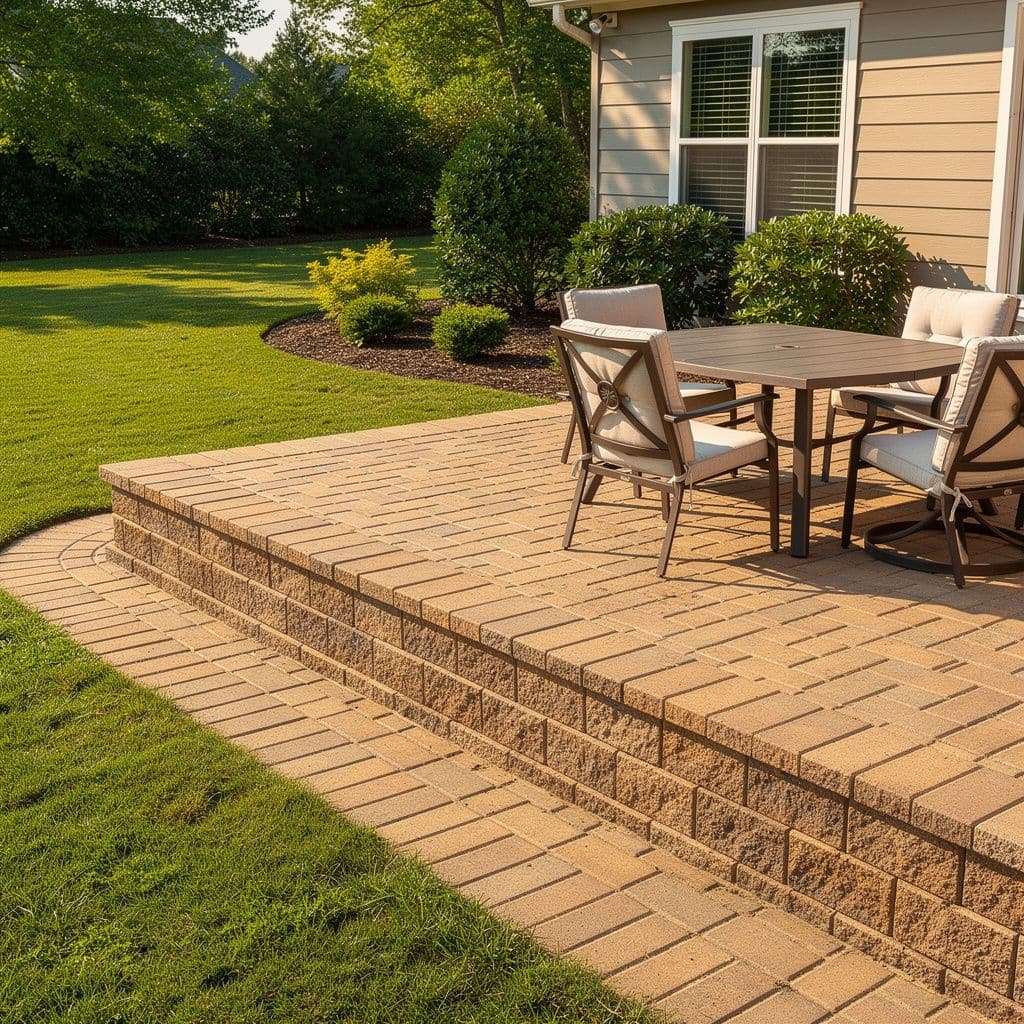
Patio and Hardscape Maintenance: Protecting Your Outdoor Investment in Locust Grove, GA
Published: July 14, 2026
You spent good money on that patio. Maybe it was a concrete paver installation last spring, a natural stone walkway connecting your driveway to your backyard, or a retaining wall that finally tamed the slope behind your house. For the first few months, it looked perfect — clean lines, level surfaces, that satisfying crisp edge where hardscape meets lawn.
Then Georgia happened.
A year of intense UV radiation, torrential summer downpours, clay soil expansion and contraction, pollen accumulation, moss growth, and the general punishment of Henry County weather leaves its mark. Pavers shift. Joint sand washes out. Dark stains appear where leaves sat too long. Weeds sprout in the gaps. That beautiful fire pit area you were so proud of starts looking tired.
Here's the good news: with the right maintenance routine, a professionally installed hardscaping feature in Locust Grove should last 20 to 30 years or more. The bad news? Most homeowners don't know what that maintenance routine looks like — and by the time problems become visible, the damage is already done.
Whether you live near Locust Grove, McDonough, Stockbridge, or anywhere in Henry County, this guide walks you through exactly how to maintain your patio, retaining walls, walkways, and outdoor living features so they look great and perform flawlessly for decades.
Why Hardscape Maintenance Matters More in Henry County
Henry County's climate and soil conditions are uniquely tough on hardscape features. Understanding why helps you know what to watch for and when to act.
The Clay Soil Factor
Locust Grove sits on dense red clay that expands dramatically when wet and shrinks as it dries. This continuous cycle of movement puts enormous stress on everything built above it. Pavers that were perfectly level in March might show slight lifting by September after a summer of drying soil underneath.
This doesn't mean your patio was installed incorrectly — even well-built hardscapes shift slightly in clay soil. What matters is catching movement early before it compounds. A paver that's risen a quarter inch this season will keep rising if the underlying cause isn't addressed. Regular inspections and minor adjustments prevent small shifts from becoming trip hazards or drainage problems.
Georgia Heat and UV Damage
Summer temperatures in Henry County regularly hit the mid-90s from June through September, and surface temperatures on stone and concrete pavers can exceed 140 degrees on a sunny July afternoon. This extreme heat causes several issues:
- Polymeric sand degradation — The flexible joint sand between pavers breaks down faster under intense UV and heat exposure, leading to loose joints and weed intrusion
- Color fading — Sealers and certain natural stones lose their richness after multiple seasons of direct sun
- Thermal expansion — Materials expand during the day and contract at night, stressing joints and connections
- Surface wear — High-traffic areas like the path from your back door to the grill experience faster surface degradation during hot months
Heavy Rainfall and Drainage Challenges
Georgia receives over 50 inches of rain annually, much of it arriving in violent summer thunderstorms. When several inches of rain fall in an hour — a common occurrence in July and August — the water has to go somewhere. If your patio's drainage slope has shifted even slightly, or if debris has accumulated along the edges, water can pool, seep into joints, and undermine the base material beneath your hardscape.
This is why property maintenance inspections after major storms are so important. A quick check for standing water, eroded joint sand, or debris buildup takes five minutes and can prevent thousands of dollars in damage.
Seasonal Hardscape Maintenance Calendar for Locust Grove
Different seasons demand different maintenance approaches. Here's what to focus on throughout the year in Henry County.
Spring (March–May): Inspection and Repair
Spring is your most important maintenance window. After winter dormancy, this is when you assess what the cold months did to your hardscape and address issues before summer heat makes them worse.
Key tasks:
- Sweep and inspect all surfaces — Remove winter debris, leaves, and twigs. Walk every square foot of your patio and walkways, looking for cracked pavers, settled areas, or joints where sand has washed out
- Replenish joint sand — Polymeric sand should be topped up in any areas where it's visibly missing. This prevents weeds from establishing and keeps pavers locked in place
- Check drainage paths — Ensure water still flows away from your home and off your patio surface. Clear any debris from drainage channels or gravel trenches
- Power wash cautiously — A gentle pressure wash removes winter grime, pollen, and organic staining. Use wide-fan tips and keep pressure below 3,000 PSI to avoid etching the surface
- Inspect retaining walls — Look for bowing, cracking, or separation between blocks. Early signs of wall failure are much easier and cheaper to fix than a collapse
- Test lighting and features — If your patio includes integrated lighting, fire features, or water elements, spring is the time to make sure everything works
Summer (June–August): Protection and Cleaning
Summer is about managing heat stress, organic growth, and heavy use. This is when your patio gets the most traffic and takes the most abuse.
Key tasks:
- Remove stains promptly — Food spills, grease from grilling, and organic matter like leaves and pollen will stain if left in the heat. Clean spots immediately with mild detergent and water
- Control weeds and moss — Georgia's humidity makes moss and algae growth a constant battle, especially in shaded areas. Treat with appropriate cleaners — avoid acid-based products on natural stone
- Rinse pollen regularly — Pine pollen in April and May leaves a yellow film, but summer brings ongoing pollen from various sources. A weekly rinse keeps surfaces clean and prevents staining
- Monitor for settling — After heavy rain events, check for new low spots or areas where water pools. These indicate base material migration and should be addressed before they worsen
- Protect furniture contact points — Metal furniture legs can rust and stain pavers. Use protective caps or pads, and move furniture periodically to prevent uneven wear
Fall (September–November): Preparation and Sealing
Fall is the best time for protective treatments and preparing your hardscape for winter.
Key tasks:
- Apply sealer — Fall offers ideal temperatures (50–70 degrees) for applying penetrating sealers. Sealer protects against winter freeze-thaw damage, UV fading, and stain penetration. Most patios need resealing every 2–3 years
- Deep clean before winter — A thorough pressure washing and stain treatment before sealing ensures contaminants aren't trapped under the sealer
- Leaf removal from hardscape surfaces — Wet leaves sitting on stone or concrete cause tannin staining that's very difficult to remove. Keep surfaces clear through fall, especially around Locust Grove neighborhoods with mature oak and hickory trees
- Final joint sand top-up — Ensure all joints are full before winter freezes. Water in empty joints can freeze, expand, and pry pavers apart
- Clean and cover fire features — If you have a fire pit or outdoor fireplace, give it a thorough cleaning and consider a cover to protect against winter moisture
Winter (December–February): Monitoring and Restraint
Winter hardscape maintenance is mostly about avoiding damage and planning improvements.
Key tasks:
- Avoid de-icing chemicals — Salt and chemical de-icers can damage concrete pavers, natural stone, and mortar joints. Use sand for traction instead
- Don't shovel aggressively — Metal shovel blades can chip and scratch paver surfaces. Use a plastic or rubber-edged shovel, and push snow rather than chopping at ice
- Inspect after freeze events — Henry County doesn't get many hard freezes, but when temperatures drop into the teens, check for new cracks or heaving after the ground thaws
- Plan spring projects — Winter is the time to plan new hardscaping additions or schedule major repairs before the spring rush
Common Hardscape Problems and How to Fix Them
Problem: Pavers Are Sinking or Settling
What causes it: Base material erosion, improper initial compaction, or underground drainage issues washing away the aggregate layer beneath your pavers.
The fix: Individual sunken pavers can be lifted, the base re-compacted, and the pavers re-set. This is a relatively quick repair when caught early. If large sections are settling, the drainage issue causing the erosion needs to be addressed first — otherwise, the repair won't last. Professional assessment is recommended for any settling affecting more than a few pavers.
Problem: Weeds Growing Between Pavers
What causes it: Wind-blown seeds landing in joints where polymeric sand has degraded or washed away. Georgia's long growing season means weed pressure from March through November.
The fix: Remove visible weeds by hand (don't use vinegar-based killers near pavers — they can etch the surface). Re-apply polymeric sand to fill gaps where weeds were growing. The sand hardens after wetting and creates a barrier that prevents future seed germination. For persistent weed issues, a professional joint sand replacement may be needed.
Problem: White Hazy Film on Surface
What causes it: Efflorescence — a natural process where soluble salts in the concrete or base material migrate to the surface as moisture evaporates. Common on new installations and after periods of heavy rain.
The fix: Efflorescence typically resolves on its own over several months as the salts work their way out. For stubborn cases, specialized efflorescence cleaners can speed up the process. Don't use pressure washers to remove efflorescence — it drives the salts back into the paver where they'll re-emerge later.
Problem: Dark Stains or Black Spots
What causes it: Organic growth (moss, algae, mildew) in shaded areas, or tannin staining from leaves and debris left on the surface.
The fix: For organic stains, a solution of one part bleach to ten parts water applied with a stiff brush will kill and remove most growth. Rinse thoroughly. For tannin stains from leaves, a commercial oxalic acid cleaner works well on most paver materials. Always test cleaning products in an inconspicuous area first.
Problem: Retaining Wall Bowing or Leaning
What causes it: Hydrostatic pressure building behind the wall due to inadequate drainage, soil saturation from heavy rainfall, or tree roots growing behind the structure.
The fix: This is a serious issue that requires professional assessment. A retaining wall that's visibly bowing is at risk of failure, and the repair cost increases dramatically the longer it's left. If you notice any movement in a retaining wall on your property, contact a professional immediately. Catching wall movement early often means the difference between adding drainage and tiebacks versus rebuilding the entire wall.
Professional Hardscape Maintenance Services in Henry County
Some maintenance tasks are perfect DIY weekend projects. Others require professional equipment, materials, and expertise. Here's when to call in professionals.
When to DIY
- Routine sweeping and rinsing
- Spot-cleaning minor stains
- Removing weeds from joints
- Replacing a single damaged paver (if you have extras)
- Basic inspection and documentation
When to Call Professionals
-
Joint sand replacement — Removing old degraded sand from all joints and re-installing polymeric sand across an entire patio requires specialized tools and takes several hours for a medium-sized space. Done wrong, the sand won't set properly and you'll be dealing with weeds within weeks.
-
Sealing and resealing — Professional-grade penetrating sealers provide far superior protection compared to consumer products. Application requires even coverage, proper drying conditions, and surface preparation that makes the difference between a sealer that lasts three years and one that lasts three months.
-
Leveling and resetting — When multiple pavers have shifted or settled, the affected area needs to be lifted, the base re-compacted with proper aggregate, and the pavers re-laid with attention to slope and drainage patterns.
-
Retaining wall repairs — Any structural issue with a retaining wall should be evaluated by a professional. What looks like a cosmetic crack could indicate serious hydrostatic pressure behind the wall.
-
Drainage corrections — If water is pooling on your patio or flowing toward your foundation, the grading needs to be corrected. This often means lifting and re-laying portions of the hardscape to establish proper slope.
At Hedgecoth Property Solutions, we provide comprehensive hardscaping installation and maintenance services across Locust Grove, McDonough, Stockbridge, Hampton, and throughout Henry County. Whether your patio needs a seasonal tune-up or you're dealing with settling pavers and failing joints, our team can assess the situation and provide lasting repairs that protect your investment.
How Much Does Hardscape Maintenance Cost in Henry County?
Pricing varies based on the size of your hardscape, the scope of work, and the materials involved. Here are general ranges for common maintenance services in the Locust Grove area:
- Joint sand replacement — $200–$500 for a standard patio (200–400 sq ft)
- Professional pressure washing — $150–$400 depending on size and staining
- Sealer application — $300–$800 including surface preparation and materials
- Individual paver replacement — $15–$40 per paver including labor
- Section leveling and reset — $500–$1,500 depending on area size
- Retaining wall inspection and minor repair — $300–$1,000
- Comprehensive annual maintenance package — $500–$1,200 covering cleaning, sand top-up, sealing, and minor repairs
These are investment figures, not expenses. Proper maintenance extends the life of a $10,000–$30,000 patio by decades and prevents the need for premature replacement. A $500 annual maintenance budget on a hardscape that costs $20,000 to replace is smart math.
Maximizing the Lifespan of Your Hardscape Features
Choose the Right Materials from the Start
If you're planning a new patio or hardscape project, material selection has the biggest impact on long-term maintenance requirements. In Henry County's climate:
- Concrete pavers offer the best balance of durability, repairability, and cost. Individual pavers can be replaced if damaged, and the flexible joint system handles clay soil movement better than rigid materials
- Natural stone (flagstone, bluestone) provides premium aesthetics and excellent longevity but requires more careful installation and periodic sealing
- Poured concrete is cost-effective but cracks in clay soil conditions unless properly jointed and supported. Once cracked, repairs are visible and permanent
- Brick offers classic appearance but becomes slippery with algae growth in shaded, humid Henry County yards
Don't Skip the Sealer
Penetrating sealer is the single most effective protection you can apply to your hardscape. It repels water, resists stains, prevents UV fading, and inhibits organic growth. A properly sealed patio in Locust Grove stays cleaner, looks newer, and requires less maintenance between treatments.
Most hardscapes should be sealed every 2–3 years. High-traffic areas or properties with heavy tree cover may need annual application. Spring and fall are the best times to seal, when temperatures are moderate and rain is less likely to interfere with curing.
Keep Up With Leaf and Debris Removal
It sounds simple, but keeping your hardscape surfaces clear of leaves, twigs, and organic debris is the easiest way to prevent staining, moss growth, and moisture damage. A quick weekly sweep during fall — or more often if you have mature trees near your patio — prevents the vast majority of cosmetic issues.
Our leaf removal services include hardscape surface clearing as part of comprehensive fall cleanup, ensuring your patio goes into winter clean and protected.
Address Drainage Issues Immediately
Water is the enemy of hardscape longevity. If you notice water pooling on your patio surface, flowing toward your foundation, or collecting at the base of a retaining wall, address it immediately. Drainage problems never fix themselves — they only get worse and more expensive over time.
Common drainage solutions for hardscape areas include surface drains, gravel-filled trench drains, regrading to redirect flow, and installing or clearing weep holes in retaining walls.
Frequently Asked Questions
How often should I seal my patio in Locust Grove?
Most concrete paver patios should be sealed every 2–3 years. Natural stone surfaces may need annual sealing depending on the stone type and sun exposure. The best time to seal is during spring or fall when temperatures stay between 50 and 70 degrees and rain isn't expected for at least 48 hours.
Can I pressure wash my paver patio myself?
Yes, but with caution. Use a wide-fan nozzle tip, keep pressure under 3,000 PSI, and maintain a distance of at least 12 inches from the surface. Never use a zero-degree or turbo nozzle on pavers — it will etch the surface and cause permanent damage. If your patio has polymeric sand in the joints, avoid spraying directly into joints as the water can wash out the sand.
What's the white powdery stuff on my new pavers?
That's efflorescence — a natural byproduct of the concrete curing process. Soluble salts in the paver material migrate to the surface as moisture evaporates. It's completely harmless and typically disappears on its own within 6–12 months. You can speed up the process with specialized efflorescence cleaners, but avoid pressure washing as it drives the salts back into the paver.
My retaining wall is slightly bowing. Is that an emergency?
It's not necessarily an emergency, but it needs professional attention soon. A bowing retaining wall indicates hydrostatic pressure building behind the structure — usually from inadequate drainage. The wall will continue to move until the pressure is relieved. Catching it early often means adding drainage features behind the wall. Waiting too long could mean a complete rebuild. Call a professional within the week for assessment.
Do you offer hardscape maintenance as a standalone service?
Yes. Hedgecoth Property Solutions provides hardscape maintenance — including cleaning, sealing, joint sand replacement, leveling, and repairs — as standalone services for homeowners throughout Henry County. You don't need to be on a weekly lawn care plan to schedule maintenance work. Call us at 770-490-9519 to schedule an assessment.
How long should a paver patio last in Henry County?
A professionally installed and properly maintained concrete paver patio should last 25–50 years in Henry County. The pavers themselves are rated for 50+ years of durability. The base preparation, drainage, and ongoing maintenance determine where in that range your patio falls. Neglected patios may show significant settling, weed intrusion, and surface degradation within 5–10 years.
Protecting Your Outdoor Investment
Your patio, walkways, fire pit area, and retaining walls represent a significant investment in your property — one that adds real value, extends your living space, and improves your quality of life. Like any investment, it needs regular attention to perform at its best.
The homeowners who get the most from their hardscape features in Locust Grove and across Henry County are the ones who treat maintenance as an ongoing commitment, not a one-time event. A few hours of seasonal attention and a professional tune-up every couple of years keeps everything looking sharp, functioning properly, and lasting decades longer than neglected installations.
If your patio or hardscape features need attention — whether it's a routine cleaning and sealing or repairs for settling pavers and drainage issues — we're here to help. Hedgecoth Property Solutions has been maintaining and installing outdoor living features for Henry County homeowners for years, and we know exactly what Georgia's climate does to hardscape materials.
Ready to get your patio looking like new again? Call us at 770-490-9519 or reach out through our contact page to schedule a hardscape maintenance assessment. We serve Locust Grove, McDonough, Stockbridge, Hampton, Jonesboro, and communities throughout Henry County, GA.