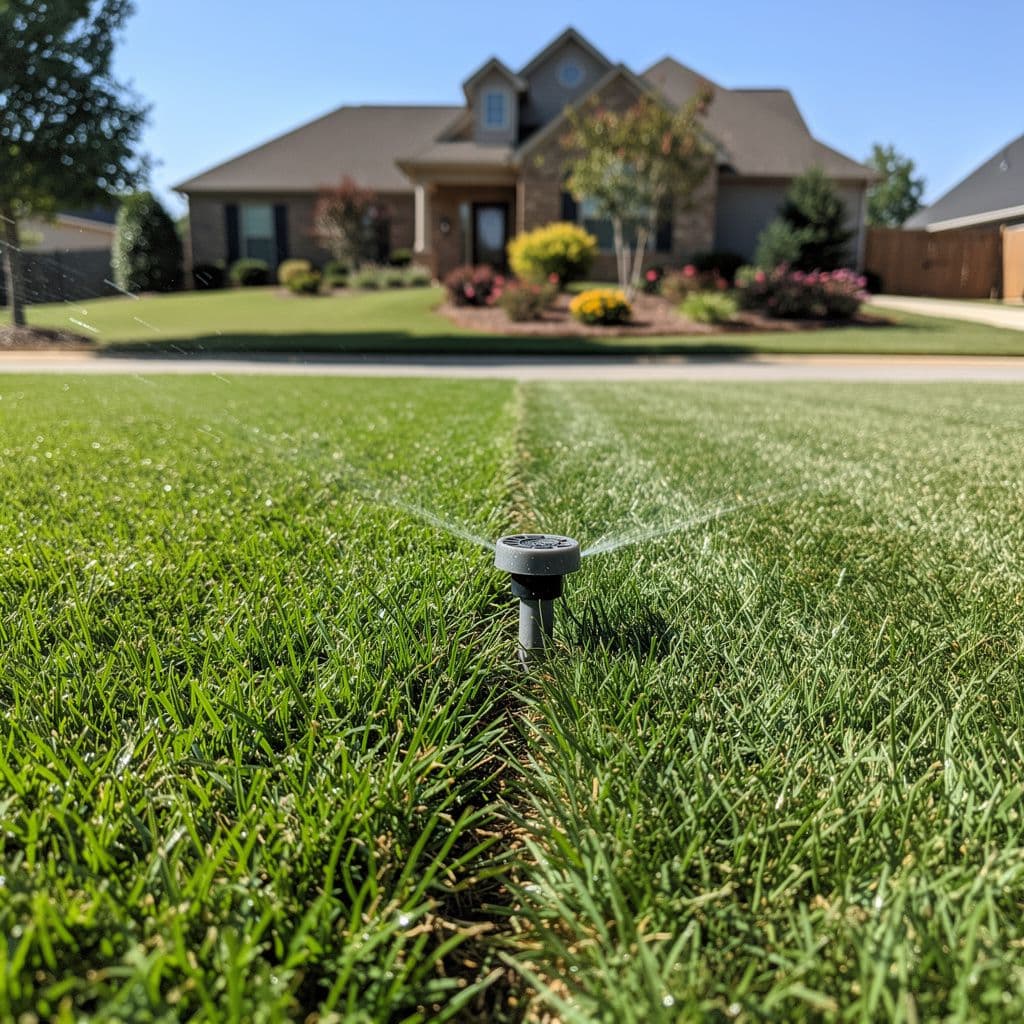
Best Grass Types for Henry County, GA: Choosing the Right Lawn for Your Property
Published: May 22, 2026
You've seen it driving through Henry County — one yard is thick, green, and lush while the neighbor's lawn is patchy, thin, and struggling. Same street, same weather, same red Georgia clay underneath. The difference almost always comes down to one thing: grass type.
Choosing the right grass for your property in Locust Grove, McDonough, Stockbridge, or anywhere in Henry County isn't just about picking something green. It's about matching the grass to your soil, sunlight, water availability, and — honestly — how much time and money you're willing to invest in maintaining it.
Plant the wrong grass type and you'll fight it forever. Plant the right one, and your lawn practically takes care of itself with a basic maintenance plan. This guide covers every grass type that grows well in Henry County, the pros and cons of each, and how to decide which one belongs on your property.
Understanding Henry County's Growing Conditions
Before we talk about specific grass types, you need to understand what you're working with. Henry County sits in USDA Plant Hardiness Zone 8a, which means our winters are mild but our summers are brutal. Here's what your grass has to deal with:
Soil: Henry County's native soil is heavy clay — that famous Georgia red dirt. Clay soil holds nutrients well but drains poorly, compacts easily, and can suffocate grass roots if not managed properly. If your home was built in the last 20 years, especially in growing areas around Locust Grove and McDonough, you're likely dealing with compacted construction fill dirt on top of native clay.
Climate: We get 48-52 inches of rain per year, but it doesn't come evenly. Spring and fall are typically wet, while mid-summer can bring extended dry spells with temperatures consistently above 90°F. High humidity (60-80% in summer) creates perfect conditions for fungal diseases.
Sunlight: Most Henry County subdivisions were built on former farmland or timber land, meaning mature shade trees are limited in newer developments but abundant in established neighborhoods near downtown Locust Grove and older parts of McDonough.
These conditions favor warm-season grasses — grasses that thrive in heat, go dormant (brown) in winter, and spread via stolons (above-ground runners) or rhizomes (below-ground stems). Cool-season grasses struggle here unless they're in heavily shaded, irrigated areas.
The 4 Grass Types That Grow Best in Henry County
1. Bermuda Grass — The Most Popular Choice
Best for: Full sun, high-traffic areas, athletic, manicured look
Bermuda grass is the king of Southern lawns, and for good reason. It's aggressive, drought-tolerant, handles foot traffic better than any other warm-season grass, and develops that deep green color that makes a yard look like a golf course.
Varieties that perform well in Henry County:
- Common Bermuda — Grows from seed, affordable, rugged. Good for large properties and rental homes.
- Tifway 419 — Hybrid, finer texture, denser turf. The standard for high-end lawns and sports fields.
- TifTuf — Newer hybrid with exceptional drought tolerance. Stays green longer into dry spells.
Pros:
- Tolerates drought better than Zoysia or Centipede
- Handles heavy foot traffic (kids, dogs, outdoor gatherings)
- Spreads aggressively to fill in bare spots
- Can be mowed short (1-1.5 inches) for a clean, formal look
- Establishes quickly from sod
Cons:
- Requires full sun — thins out dramatically in shade
- Needs regular fertilization to look its best (4-6 applications per year)
- Aggressive growth means it invades flower beds, sidewalks, and neighbor's yards
- Goes fully dormant (brown) from roughly November through April
- Requires frequent mowing during peak season (weekly at minimum)
Maintenance level: High. Bermuda wants to be mowed low and often, fed regularly, and treated for weeds preventatively. If you want that showpiece lawn, Bermuda demands attention.
Local note: Bermuda dominates in newer subdivisions throughout Henry County because most of these properties have full sun exposure and limited tree canopy. If you live in Arlington Park, Liberty Hill, or similar developments near Locust Grove, Bermuda is probably your best bet.
2. Zoysia Grass — The Premium Option
Best for: Moderate sun to partial shade, lower maintenance, premium appearance
Zoysia is the grass for people who want a beautiful lawn without the constant upkeep that Bermuda demands. It grows slower, requires less mowing, and has a finer, softer texture that feels luxurious under bare feet.
Varieties that perform well in Henry County:
- Zenith Zoysia — Grows from seed or sod, good cold tolerance, medium texture
- Empire Zoysia — Broad blade, excellent wear tolerance, chokes out weeds well
- Zeon Zoysia — Finest texture, deep green color, the premium choice for high-end properties
Pros:
- Excellent shade tolerance for a warm-season grass (handles 4-6 hours of filtered sun)
- Chokes out weeds naturally once established — forms an extremely dense turf
- Requires less frequent mowing than Bermuda (every 10-14 days during peak season)
- Soft, carpet-like feel
- Good drought tolerance once established
- Fewer disease problems than Bermuda
Cons:
- Slow to establish — can take a full season to fill in from plugs or seed
- More expensive to install (sod costs run 30-50% higher than Bermuda)
- Goes dormant in winter like all warm-season grasses
- Can develop thatch buildup if over-fertilized
- Slow to recover from damage compared to Bermuda
Maintenance level: Moderate. Zoysia is forgiving and low-demand once established, but that first year requires patience and consistent care.
Local note: Zoysia performs beautifully in established neighborhoods near downtown McDonough and in yards with mature hardwoods that provide dappled shade. If your property has oak or hickory trees casting partial shade, Zoysia will outperform Bermuda.
3. Tall Fescue — The Shade Champion
Best for: Heavy shade, cool-season green color, northern-facing properties
Tall Fescue is the outlier on this list because it's a cool-season grass — it stays green through winter but struggles in Georgia's summer heat. However, for properties with heavy shade where Bermuda and Zoysia fail, Tall Fescue can be the right answer.
Pros:
- Stays green year-round (including winter, when warm-season grasses go dormant)
- Excellent shade tolerance — grows well under dense tree canopies
- Deep root system helps with drought tolerance once established
- Good for erosion control on slopes and hillsides
- Doesn't spread aggressively into beds (bunch-type growth)
Cons:
- Severely stressed by Georgia summer heat — needs irrigation to survive July and August
- Susceptible to brown patch disease in humid conditions
- Requires reseeding every fall to maintain density (thin areas develop over summer)
- Not as traffic-tolerant as Bermuda
- Needs more water than warm-season grasses during summer
Maintenance level: Moderate to high. The catch with Fescue in Henry County is summer survival. Without irrigation and proper lawn care, Fescue will thin out or die during hot, dry stretches.
Local note: We recommend Tall Fescue primarily for heavily shaded properties in wooded areas around Hampton and the northern parts of Henry County. If your yard gets less than 4 hours of direct sunlight, Fescue may be your only viable option.
4. Centipede Grass — The Low-Maintenance Southern Favorite
Best for: Low-maintenance preference, acidic soil, partial shade
Centipede grass is sometimes called "lazy man's grass" because it genuinely requires less work than any other warm-season option. It grows slowly, needs little fertilizer, and tolerates poor soil conditions that stress other grasses.
Pros:
- Lowest maintenance of any warm-season grass
- Tolerates acidic soil (common in Henry County's pine-forested areas)
- Needs little to no fertilizer — actually performs worse when over-fertilized
- Good shade tolerance (better than Bermuda, less than Zoysia)
- Naturally resists many common lawn pests
Cons:
- Coarser texture — doesn't have that "golf course" look
- Slow to establish and slow to recover from damage
- Very sensitive to excessive fertilizer (especially phosphorus)
- Poor traffic tolerance — not ideal for yards with active kids or dogs
- Has a yellowish-green color that some homeowners don't prefer
- Susceptible to "centipede decline" — a mysterious condition that kills patches for no obvious reason
Maintenance level: Low. Centipede is the set-it-and-forget-it option, but you give up aesthetics for convenience.
Local note: Centipede does well in the sandy-loam pockets found in southern Henry County near Hampton and in established properties with mature pine trees. If your soil test comes back acidic (pH 5.0-5.5), Centipede might actually thrive where Bermuda struggles.
How to Choose the Right Grass for Your Property
Still not sure which grass is right for your yard? Answer these questions:
How much sun does your yard get?
- 8+ hours of direct sun: Bermuda is your best bet
- 5-7 hours with some shade: Zoysia handles it well
- 3-5 hours of filtered sun: Zoysia or Centipede
- Less than 4 hours of direct sun: Tall Fescue
How much maintenance do you want to do?
- I want a showpiece lawn: Bermuda (but expect to work for it)
- I want nice but not obsessive: Zoysia
- I want green with minimal effort: Centipede
- I'll irrigate and reseed annually: Tall Fescue
What's your budget?
- Sod installation: Bermuda is the most affordable, Zoysia costs 30-50% more, Centipede falls in between
- Seed establishment: Bermuda and Centipede seed are affordable; Zoysia seed is pricier; Tall Fescue seed is moderate
- Long-term maintenance: Bermuda costs the most to maintain, Centipede costs the least
Do you have kids or dogs?
If your yard sees heavy use from children, pets, or outdoor activities, Bermuda is the clear winner. Zoysia handles moderate traffic. Centipede and Tall Fescue are not great for high-activity yards.
Planting and Establishment Tips for Henry County
Once you've chosen your grass type, getting it established properly makes all the difference. Here's what matters most in our area:
Soil Preparation Is Everything
Georgia clay needs amendment before any grass will thrive. Before laying sod or spreading seed:
- Get a soil test — Henry County Extension Office offers affordable soil testing that tells you exactly what your soil needs
- Till in compost — 2-3 inches of compost tilled into the top 4-6 inches of soil dramatically improves drainage and root penetration
- Correct the pH — Most Henry County soil needs lime to raise pH into the 6.0-6.5 range that warm-season grasses prefer (Centipede is the exception at 5.0-5.5)
- Address drainage — If water pools in your yard after rain, consider yard drainage solutions before planting
When to Plant
- Bermuda, Zoysia, Centipede (warm-season): Late April through July. The soil needs to be consistently above 65°F. Planting later than mid-July gives the grass insufficient time to establish before winter.
- Tall Fescue (cool-season): Late September through October. Fall planting allows roots to develop during cool weather before summer heat arrives.
Watering New Grass
New sod needs water within 30 minutes of installation. For the first two weeks, water daily (or twice daily during hot stretches) to keep the soil consistently moist but not saturated. After establishment, transition to deep, infrequent watering — 1 inch per session, 2-3 times per week for warm-season grasses.
Maintaining Your Grass Type Through the Seasons
Each grass type has different maintenance needs throughout the year. Here's a quick seasonal guide:
Spring (March-May)
- Bermuda: Apply pre-emergent weed control when soil reaches 55°F. Start mowing at 1.5 inches, lowering gradually. Apply first fertilizer application after green-up is complete.
- Zoysia: Similar timing to Bermuda but mow at 2 inches. Less fertilizer needed — one application after full green-up is usually sufficient.
- Centipede: Do NOT fertilize until the grass is fully green. Centipede needs only one light fertilizer application per year — too much nitrogen kills it.
- Tall Fescue: Apply pre-emergent weed control. Mow at 3.5-4 inches. This is Fescue's best season — enjoy it.
Summer (June-August)
- Bermuda: Peak growing season. Mow weekly at 1-1.5 inches. Apply fertilizer every 6-8 weeks. Watch for armyworms and sod webworms.
- Zoysia: Mow every 10-14 days at 1.5-2 inches. Water deeply during dry spells. Minimal fertilizer needed in summer.
- Centipede: Mow every 2-3 weeks at 1.5-2 inches. Do not apply nitrogen fertilizer in summer. Watch for ground pearl damage.
- Tall Fescue: Survival mode. Raise mowing height to 4 inches. Water deeply 2-3 times per week. Do not fertilize. Accept some browning — it will recover in fall.
Fall (September-November)
- Bermuda: Apply fall pre-emergent in September. Last fertilizer application in early September. Raise mowing height as growth slows. It will start going dormant after first frost.
- Zoysia: Fall pre-emergent application. Reduce watering as temperatures cool. Going dormant is normal — don't panic.
- Centipede: Fall pre-emergent. No fertilizer. Start reducing mowing frequency as growth slows.
- Tall Fescue: Best time to overseed thin areas. Apply fertilizer. Lower mowing height slightly. This is Fescue's time to shine.
Winter (December-February)
- All warm-season grasses (Bermuda, Zoysia, Centipede) are dormant. No mowing, no fertilizer, minimal watering. Avoid heavy foot traffic on dormant grass to prevent damage.
- Tall Fescue: Continue mowing as needed. Apply winter fertilizer. Water during dry spells.
For a detailed seasonal maintenance schedule, check out our seasonal lawn care guide.
When to Call a Professional
Choosing the right grass is step one. Keeping it healthy year after year is where most Henry County homeowners struggle. If your lawn has thin areas that won't fill in, bare spots that keep returning, or sections that go brown every summer regardless of watering, professional lawn care can diagnose and fix the underlying problems.
Common issues that need professional attention in Henry County include compacted clay soil requiring aeration, incorrect grass type for the sunlight conditions, pH imbalances that prevent nutrient absorption, and fungal diseases that spread fast in our humid climate.
Hedgecoth Property Solutions serves homeowners throughout Locust Grove, McDonough, Stockbridge, Jonesboro, Morrow, Hampton, and all of Henry County. We assess your grass type, soil conditions, and property layout to build a maintenance plan that keeps your lawn looking its best in every season.
Frequently Asked Questions
What is the best grass type for Henry County, GA?
Bermuda grass is the most popular and versatile choice for Henry County because it handles full sun, heavy foot traffic, and our hot summers better than any other option. However, "best" depends on your specific property — Zoysia is better for partially shaded yards, Centipede is better for low-maintenance preferences, and Tall Fescue is better for heavily shaded areas.
Can I mix different grass types in my lawn?
It's generally not recommended. Different grass types have different mowing heights, fertilizer needs, and watering requirements. Mixing Bermuda and Zoysia, for example, creates a patchy, uneven appearance because they grow at different rates and have different textures. If part of your yard is sunny and part is shaded, it's better to choose one grass that tolerates both conditions (like Zoysia) than to mix types.
When should I plant grass in Henry County, Georgia?
Warm-season grasses (Bermuda, Zoysia, Centipede) should be planted as sod between late April and July when soil temperatures are consistently above 65°F. Tall Fescue should be seeded in late September through October when temperatures cool. Planting at the wrong time is the number one reason new lawns fail in Henry County.
Why does my lawn have bare spots every year?
Recurring bare spots in Henry County are usually caused by compacted clay soil, inadequate sunlight for your grass type, grub damage, or fungal disease. Bermuda in shaded areas will always thin out. Fescue without irrigation will always burn in summer. Professional lawn care can identify the specific cause and recommend a permanent fix rather than just reseeding the same spots every year.
How do I know if I have Bermuda or Zoysia grass?
Bermuda grass has a finer blade, grows more aggressively, and produces visible above-ground runners (stolons) that spread rapidly. Zoysia has a slightly broader blade, feels softer and more carpet-like, and grows much slower. If you mow your lawn every week and it still looks overgrown, you likely have Bermuda. If you can skip a week without it looking terrible, it's probably Zoysia.
Is it worth paying for sod instead of planting grass seed?
For Bermuda and Zoysia, sod is almost always worth the investment in Henry County. Sod gives you an instant lawn, prevents erosion on slopes, and eliminates the 2-3 month establishment period where weeds invade seeded areas. Centipede and Tall Fescue establish well from seed and can be more cost-effective for large areas. For a full comparison of costs, see our lawn care pricing guide.
Need Help Choosing or Maintaining Your Lawn?
Don't spend years fighting the wrong grass type on your Henry County property. The right choice — planted correctly and maintained properly — makes all the difference between a yard you're proud of and one you're constantly struggling with.
Call Hedgecoth Property Solutions at 770-490-9519 or visit our contact page for a free property assessment. We'll evaluate your soil, sunlight, and conditions, recommend the right grass type, and build a care plan that keeps your lawn healthy year-round.
We serve homeowners throughout Locust Grove, McDonough, Stockbridge, Jonesboro, Morrow, Hampton, and all of Henry County.